
Is It Normal for Seniors to Lose Interest in Hobbies?

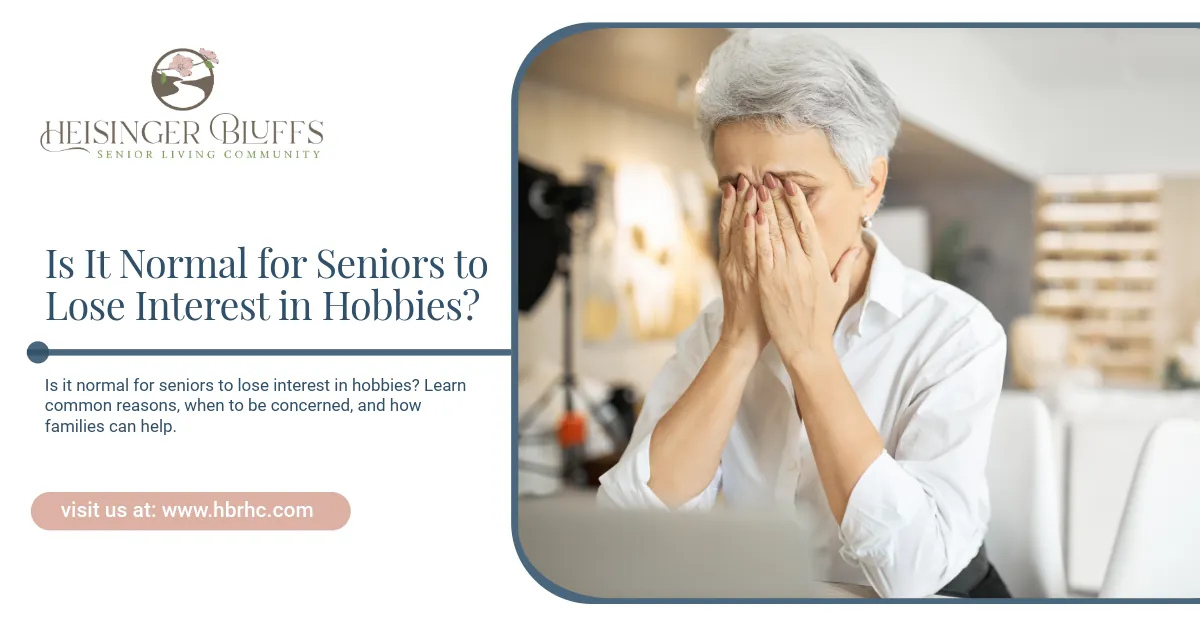
An elderly woman with her hands covering her face, losing interest in her hobby

Many families ask, is it normal for seniors to lose interest in hobbies? In some cases, yes. Changes in energy levels, physical limitations, or sensory decline can make once-loved activities feel difficult or less enjoyable.


Life transitions such as retirement, loss of a spouse, or reduced social interaction may also affect motivation. Seniors may lose interest in hobbies if they feel isolated or lack encouragement to stay engaged.


However, persistent loss of interest can sometimes signal underlying concerns. Depression, cognitive changes, chronic pain, or medication side effects may reduce enjoyment in daily activities. When withdrawal lasts for weeks or affects overall well-being, it’s important to look deeper.


Supporting seniors with adapted activities, social opportunities, and gentle encouragement can help rekindle engagement. Environments that promote connection and purposeful routines often make a positive difference. Communities like Heisinger Bluffs are designed to encourage meaningful activities while supporting changing physical and emotional needs.


Frequently Asked Questions

  • Is losing interest in hobbies always a bad sign?

    No, occasional changes are normal as abilities shift.

  • When should families be concerned?

    If disinterest is sudden, prolonged, or paired with mood changes.

  • How can seniors stay engaged?

    By exploring adapted hobbies and social activities they enjoy.


Sources:

  • https://www.merckmanuals.com/professional/geriatrics/social-issues-in-older-adults/effects-of-life-transitions-on-older-adults
  • https://www.aarp.org/pri/topics/aging-experience/demographics/life-transitions/

Heisinger Bluffs logo
A nurse sitting next to an elderly woman on a couch
SCHEDULE A TOUR
Google rating average 4.65 rating out of 60 reviews

Want to know more?

Share This Article

You May Also Like To Read

A nurse assisting an elderly woman in bed;
By Heisinger Bluffs Editorial January 21, 2026
Learn when physical changes are a medical emergency and which warning signs in older adults require immediate care.
Older adult with hands on face, looking distressed.
By Heisinger Bluffs Editorial January 21, 2026
Learn what causes paranoia in older adults, including medical, cognitive, and emotional factors families should recognize.
A caregiver with her head in her hands, looking exhausted, sits near an elderly person in a wheelcha
By Heisinger Bluffs Editorial January 21, 2026
Learn what caregiver burnout is, its common symptoms, causes, and how families can recognize and prevent caregiver burnout.
An elderly man sitting on a desk, scratching his head, showing confusion
By Heisinger Bluffs Editorial January 21, 2026
Learn the most common challenges seniors face, from health changes to social isolation, and how families can better support aging adults.
Smiling senior couple holding mugs, sitting outdoors with fruits.
By Heisinger Bluffs Editorial January 21, 2026
Discover essential preventive healthcare tips for seniors, from screenings to lifestyle changes, to stay healthy and active.
An elderly person with dementia is seated with a cane, looking out a window.
By Heisinger Bluffs Editorial January 21, 2026
Learn how dementia affects daily life, from memory challenges to routine tasks, and discover practical tips for caregivers and families.
More Posts