

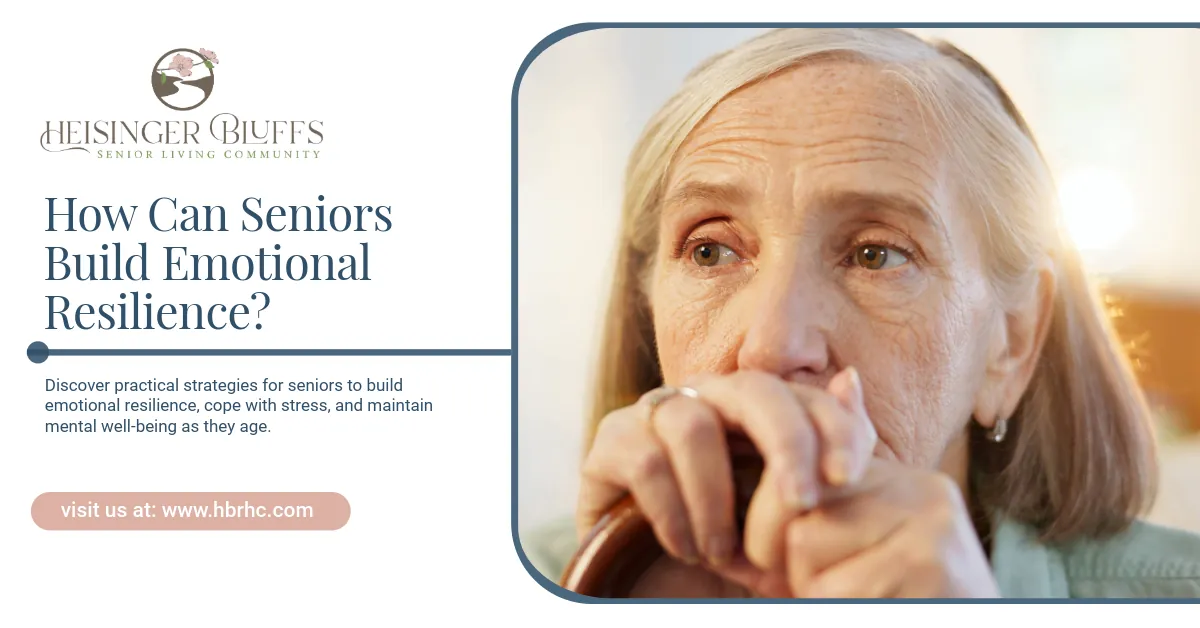
Emotional resilience helps seniors cope with life’s challenges, maintain mental well-being, and recover from stress or loss. Strengthening resilience supports independence, social engagement, and overall quality of life.
Strategies for Seniors:
- Stay Socially Connected: Maintain relationships with family, friends, and community groups to reduce isolation.
- Practice Mindfulness: techniques such as meditation, deep breathing, or journaling can help manage stress and improve focus.
- Engage in Physical Activity: Exercise releases endorphins, which promote mental clarity and reduce anxiety and depression.
- Set Realistic Goals: Focus on achievable daily or weekly goals to create a sense of purpose.
- Seek Support When Needed: Therapy, support groups, or counseling can help process emotions and develop coping strategies.
Example from Practice: We’ve seen seniors participating in group activities and mindfulness programs report improved mood, better stress management, and increased confidence in handling daily challenges.
Building emotional resilience allows seniors to face changes and uncertainties with strength and optimism.
At Heisinger Bluffs, residents benefit from programs that support emotional health, including social activities, counseling resources, and wellness initiatives to promote resilience.
Frequently Asked Questions
What is emotional resilience in seniors?
It’s the ability to adapt, recover, and maintain mental well-being during stressful or challenging situations.
Can exercise improve emotional resilience?
Yes, regular physical activity boosts mood, reduces stress, and strengthens coping skills.
How can seniors practice mindfulness daily?
Through meditation, breathing exercises, journaling, or guided relaxation techniques.
Sources:
- https://www.psychologytoday.com/us/blog/the-psychology-of-aging/202401/embracing-resilience-a-new-perspective-on-aging
- https://pmc.ncbi.nlm.nih.gov/articles/PMC12025708/