
Health Benefits of Spending Time Outdoors for Seniors
Key Highlights
- Spending time outdoors can improve physical health, mobility, and heart function for seniors.
- Fresh air and sunlight help support vitamin D production and stronger immune health.
- Outdoor environments can reduce stress, anxiety, and symptoms of depression.
- Regular time outside encourages social interaction and cognitive stimulation.
- Even simple outdoor activities like walking or gardening can significantly improve the overall quality of life for older adults.
Aging brings changes in physical health, mobility, and lifestyle. Many seniors gradually spend more time indoors due to safety concerns, limited transportation, or declining mobility. However, research consistently shows that spending time outdoors offers powerful health benefits for older adults.
Whether it’s enjoying a morning walk, gardening, sitting in the sun, or participating in outdoor community activities, time spent outside can enhance both physical and mental well-being.
Studies from organizations such as the National Institute on Aging and Harvard Health Publishing highlight how exposure to nature and natural light supports cardiovascular health, cognitive function, and emotional balance in older adults.
In this guide, we’ll explore the many health benefits of spending time outdoors for seniors, along with practical ways older adults can safely enjoy the outdoors.
Why the Outdoors Matter for Senior Health
Natural environments provide a unique combination of benefits that indoor spaces simply cannot replicate. Fresh air, sunlight, movement, and natural scenery work together to support multiple aspects of health.
For seniors, spending time outdoors can contribute to:
- Improved physical activity levels
- Better sleep cycles
- Reduced stress and anxiety
- Stronger bones and muscles
- Enhanced cognitive function
- Greater social interaction
Even short periods outdoors—such as 20 to 30 minutes a day—can make a noticeable difference.
1. Improved Physical Health and Mobility
One of the most immediate benefits of outdoor time is increased physical movement.
Outdoor activities often encourage natural forms of exercise, including:
- Walking
- Gardening
- Light stretching
- Bird watching
- Outdoor games
- Nature trails
These activities help maintain muscle strength, flexibility, and balance.
Real-World Observation
Care teams in senior living communities often observe that residents who regularly participate in outdoor walks or gardening programs tend to maintain better mobility compared to those who remain mostly indoors.
For example, residents who join daily walking groups frequently report improved endurance and fewer complaints of joint stiffness.
Even gentle movement outdoors can help seniors maintain independence longer.
2. Natural Vitamin D and Stronger Bones
Sunlight is one of the most important natural sources of vitamin D, which plays a critical role in bone health.
As people age, their bodies become less efficient at producing vitamin D, increasing the risk of:
- Osteoporosis
- Bone fractures
- Muscle weakness
- Falls
Regular sunlight exposure helps the body produce vitamin D naturally.
Health Recommendation
Healthcare professionals often recommend 15–30 minutes of sunlight exposure several times per week for older adults, depending on skin type and climate.
Of course, safe sun practices—such as wearing sunscreen and protective clothing—are important.
Example from Practice
In wellness programs designed for seniors, staff frequently encourage outdoor morning activities. Many residents report feeling more energized after spending time in the sun, particularly during the warmer months.
3. Improved Mood and Reduced Stress
Nature has a powerful effect on emotional well-being.
Studies in environmental psychology show that spending time in natural settings can lower cortisol levels, the hormone associated with stress.
For seniors, this can help reduce:
- Anxiety
- Depression
- Feelings of isolation
- Mental fatigue
Simply sitting in a garden, listening to birds, or enjoying fresh air can promote relaxation.
Observations in Senior Communities
Activity coordinators often notice that residents who participate in outdoor activities appear more relaxed and socially engaged afterward.
For example, outdoor music events or garden gatherings often lead to increased laughter, conversation, and positive mood among residents.
These moments may seem small, but they play an important role in emotional well-being.
4. Better Cognitive Function
Spending time outdoors can also benefit brain health.
Natural environments stimulate the senses in ways that indoor settings cannot. The sights, sounds, smells, and textures of nature provide gentle cognitive stimulation.
Research suggests that outdoor exposure may support:
- Memory function
- Attention span
- Mental clarity
- Cognitive flexibility
Nature and Cognitive Health
Outdoor activities such as gardening, bird watching, or walking along nature paths can engage multiple parts of the brain.
These experiences may be particularly helpful for seniors experiencing mild cognitive decline.
Example
Memory care professionals often use outdoor sensory gardens where residents can safely explore plants, flowers, and textures.
Care teams frequently report that these environments encourage engagement, curiosity, and conversation among residents.
5. Improved Sleep Patterns
Sleep disturbances are common among older adults.
Factors such as reduced daytime activity and limited exposure to natural light can disrupt circadian rhythms—the body’s internal clock.
Sunlight helps regulate these rhythms.
How Outdoor Time Helps
Exposure to natural light during the day helps the body understand when it should feel alert and when it should prepare for sleep.
Benefits may include:
- Falling asleep faster
- Improved sleep quality
- Reduced nighttime waking
Example from Practice
Wellness coordinators often encourage residents to spend time outdoors earlier in the day. Many seniors report sleeping more comfortably at night after participating in outdoor morning activities.
6. Heart Health and Circulation
Outdoor activities often involve light to moderate physical movement, which supports cardiovascular health.
Regular activity helps:
- Lower blood pressure
- Improve circulation
- Maintain a healthy weight
- Reduce risk of heart disease
Even simple activities like walking through a park or tending to a garden can contribute to heart health.
Real-Life Observation
In many senior communities, walking clubs are among the most popular programs. Participants often report feeling stronger and more energized after several weeks of consistent activity.
Healthcare providers frequently encourage these low-impact activities as part of a heart-healthy lifestyle.
7. Opportunities for Social Interaction
Outdoor spaces naturally bring people together.
Patios, walking paths, gardens, and courtyards create welcoming environments where seniors can interact with others.
Social interaction is essential for healthy aging. It can reduce the risk of:
- Depression
- Cognitive decline
- Loneliness
Outdoor Social Activities
Examples include:
- Group walks
- Outdoor yoga
- Gardening clubs
- Picnic lunches
- Seasonal festivals
- Outdoor games
Observations in Senior Living
Activity coordinators often notice that residents who are reluctant to participate in indoor group activities may feel more comfortable joining outdoor gatherings.
The relaxed atmosphere of outdoor environments often makes socializing easier and more natural.
8. Stronger Immune System
Spending time outdoors can also support immune health.
Fresh air, physical movement, and sunlight contribute to overall wellness, which helps the body maintain a stronger immune response.
Outdoor environments also encourage activity that improves circulation, allowing immune cells to travel more efficiently throughout the body.
Example
Residents who participate in outdoor exercise programs often report feeling more energized and less fatigued, which can contribute to stronger immune resilience.
9. Increased Sense of Purpose
Outdoor activities often provide opportunities for meaningful engagement.
Many seniors find joy in activities like:
- Gardening
- Bird watching
- Landscaping
- Photography
- Nature walks
These hobbies provide a sense of accomplishment and purpose.
Real Example
In many senior communities, gardening programs allow residents to care for flowers, herbs, or vegetables.
Staff often observe that residents take pride in these gardens and look forward to checking on their plants each day.
This sense of responsibility can significantly enhance emotional well-being.
Safe Outdoor Activities for Seniors
Not all outdoor activities need to be physically demanding. Many low-impact options are both enjoyable and beneficial.
| Outdoor Activity | Health Benefits |
|---|---|
| Walking | Improves cardiovascular health and mobility |
| Gardening | Strengthens muscles and reduces stress |
| Outdoor yoga | Enhances balance and flexibility |
| Bird watching | Supports cognitive stimulation and relaxation |
| Picnics or outdoor dining | Encourages social interaction |
| Nature photography | Boosts creativity and mental engagement |
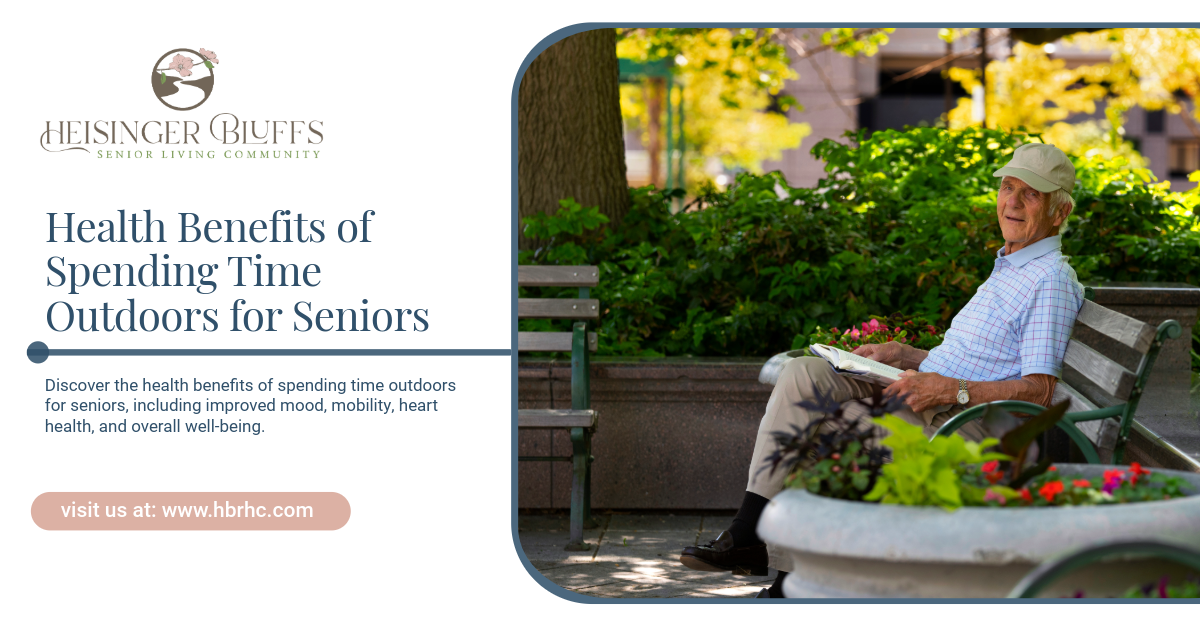
Even brief outdoor moments—such as sitting in the sun with a book—can provide meaningful benefits.
Safety Tips for Seniors Spending Time Outdoors
While outdoor activities are beneficial, safety should always be considered.
Important precautions include:
- Wearing sunscreen and hats
- Staying hydrated
- Avoiding extreme temperatures
- Using supportive footwear
- Choosing well-lit walking paths
- Taking breaks when needed
Senior living communities often design outdoor spaces specifically to ensure safety and accessibility.
Features may include shaded seating areas, flat walking paths, and handrails.
Supporting Outdoor Wellness in Senior Living
Communities that prioritize outdoor engagement often create spaces designed for relaxation, activity, and social connection.
Examples of outdoor amenities may include:
- Landscaped gardens
- Walking trails
- Courtyards
- Outdoor fitness areas
- Patio dining spaces
These environments make it easier and safer for seniors to enjoy the outdoors regularly.
At Heisinger Bluffs, residents have opportunities to enjoy fresh air, scenic surroundings, and outdoor activities that support both physical and emotional well-being. By encouraging outdoor engagement through walking paths, social gatherings, and peaceful outdoor spaces, Heisinger Bluffs helps residents experience the many health benefits of spending time outdoors. Reach out today!
Frequently Asked Questions
How much time should seniors spend outdoors?
Many experts recommend seniors spend at least 20–30 minutes outdoors daily, depending on weather conditions and personal health.
What are the easiest outdoor activities for seniors?
Simple activities such as walking, gardening, bird watching, and sitting in a garden can provide significant health benefits.
Does sunlight help seniors stay healthy?
Yes. Sunlight helps the body produce vitamin D, which supports bone health, immune function, and mood.
Can outdoor time improve mental health in seniors?
Yes. Spending time outdoors can reduce stress, anxiety, and depression while improving mood and overall well-being.
Are outdoor activities safe for seniors with mobility issues?
Yes, many outdoor spaces are designed with accessible walking paths, seating areas, and shaded environments to accommodate different mobility levels.
Sources:
- https://pmc.ncbi.nlm.nih.gov/articles/PMC8125471/
- https://medlineplus.gov/ency/article/004012.htm
- https://www.health.harvard.edu/mind-and-mood/a-20-minute-nature-break-relieves-stress
- https://pubmed.ncbi.nlm.nih.gov/15585788/
- https://www.mentalhealth.org.uk/our-work/research/nature-how-connecting-nature-benefits-our-mental-health



Share This Article
You May Also Like To Read