
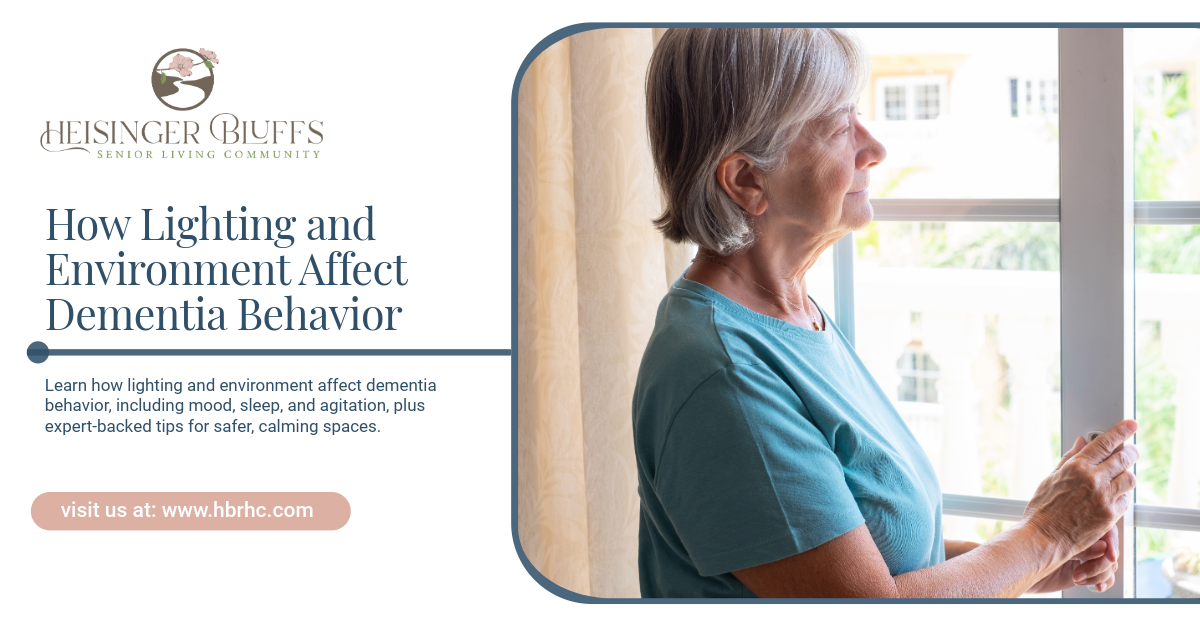
How Lighting and Environment Affect Dementia Behavior
Key Highlights
- Lighting directly influences sleep, mood, and agitation in individuals with dementia
- Poor lighting can worsen confusion, falls, and “sundowning” behaviors
- Bright daytime light supports circadian rhythms and improves sleep quality
- Shadows, glare, and low light can trigger fear, anxiety, and misinterpretation
- Environmental design—color, layout, and noise—works together with lighting
- Simple changes at home or in care settings can significantly improve quality of life
Dementia affects more than memory—it changes how individuals perceive and interact with the world around them. One of the most overlooked yet powerful influences on behavior is lighting and the overall environment.
From triggering agitation to improving sleep and mood, lighting plays a critical role in daily experiences for individuals living with dementia. Understanding how these environmental factors work can help caregivers and families create safer, calmer, and more supportive spaces.
Why Lighting Matters in Dementia Care
Lighting is not just about visibility—it directly impacts the brain’s internal clock, mood regulation, and behavior.
Research shows that individuals with dementia often experience disruptions in their circadian rhythm, the body’s natural sleep-wake cycle. These disruptions can lead to:
- Nighttime wakefulness
- Daytime fatigue
- Increased confusion
- Behavioral changes
Studies have found that consistent exposure to proper lighting can significantly improve sleep, mood, and behavior in people with dementia.
In fact, lighting is now considered a non-pharmacological intervention, meaning it can help manage symptoms without medication.
How Poor Lighting Triggers Dementia-Related Behaviors
1. Increased Confusion and Disorientation
Dim or inconsistent lighting can make it difficult for individuals to interpret their surroundings. Shadows may appear as objects or people, leading to:
- Misinterpretation
- Fear or paranoia
- Wandering
From caregiver experiences, we’ve seen individuals become distressed simply because a dark hallway appeared unfamiliar at night.
2. Sundowning and Late-Day Agitation
“Sundowning” refers to increased confusion and agitation in the late afternoon or evening. Low lighting is a major trigger. As daylight fades:
- Shadows increase
- Visibility decreases
- The brain struggles to distinguish the time of day
This can lead to pacing, anxiety, or even aggression.
In real-life caregiving scenarios, we’ve observed that simply turning on warm, consistent lighting in the early evening can reduce agitation dramatically.
3. Sleep Disturbances
Lighting directly affects melatonin production—the hormone responsible for sleep.
- Too little daylight exposure → poor sleep at night
- Too much light at night → disrupted sleep cycles
Research shows that structured lighting interventions can reduce sleep disturbances and improve overall behavior.
4. Increased Fall Risk
Poor lighting contributes to:
- Difficulty seeing obstacles
- Misjudging depth or distance
- Reduced contrast perception
This significantly increases the risk of falls—one of the leading causes of injury in seniors.
The Positive Impact of Proper Lighting
When lighting is designed thoughtfully, it can transform daily life for individuals with dementia.
1. Improved Sleep and Circadian Rhythm
Bright, natural light during the day helps regulate the body’s internal clock.
A clinical study found that all-day exposure to circadian-effective lighting improved sleep, mood, and behavior in dementia patients.
Real Example: In caregiving environments, we’ve seen residents who previously woke multiple times at night begin sleeping through the night after introducing consistent daytime lighting routines.
2. Reduced Agitation and Anxiety
Proper lighting:
- Minimizes shadows
- Improves visibility
- Creates a sense of safety
Dynamic lighting systems (adjusting brightness and color throughout the day) have been shown to reduce neuropsychiatric symptoms.
3. Better Mood and Emotional Stability
Lighting influences neurotransmitters like serotonin and dopamine, which affect mood.
Brighter environments during the day can:
- Reduce depression
- Increase engagement
- Improve overall well-being
4. Enhanced Independence
Good lighting supports:
- Safe navigation
- Recognition of objects
- Confidence in daily tasks
This helps individuals maintain independence longer.
Key Environmental Factors Beyond Lighting
Lighting works best when combined with a supportive environment.
1. Color and Contrast
People with dementia often struggle with visual perception.
- Use contrasting colors for walls, floors, and furniture
- Avoid busy patterns that can cause confusion
2. Noise Levels
Excess noise can increase agitation.
- Reduce background noise
- Use calming sounds when appropriate
3. Familiar Layouts
A consistent, predictable environment reduces anxiety.
We’ve seen that rearranging furniture, even slightly, can trigger confusion in some individuals.
4. Temperature and Comfort
Environmental discomfort (too hot or cold) can lead to irritability and restlessness.
Ideal Lighting Strategies for Dementia Care
Daytime Lighting
- Maximize natural light exposure
- Use bright, cool-toned lighting
- Encourage time near windows or outdoors
Evening Lighting
- Gradually reduce brightness
- Use warm, soft lighting
- Avoid harsh overhead lights
Nighttime Lighting
- Use low-level night lights
- Ensure pathways (bathroom, hallway) are visible
- Avoid complete darkness
Recommended Lighting Setup
| Time of Day | Lighting Type | Purpose |
|---|---|---|
| Morning | Bright, natural or cool light | Boost alertness, regulate circadian rhythm |
| Afternoon | Moderate, consistent lighting | Maintain energy and mood |
| Evening | Warm, dim lighting | Prepare for sleep, reduce agitation |
| Night | Soft night lights | Prevent falls, reduce confusion |
Case Study: Transforming Behavior Through Lighting
Scenario
A resident in a memory care setting experienced:
- Evening agitation
- Nighttime wandering
- Poor sleep
Intervention
- Increased daytime light exposure
- Added warm lighting in the evening
- Installed hallway night lights
Outcome
Within weeks:
- Agitation decreased significantly
- Sleep improved
- Nighttime wandering reduced
This aligns with research showing that structured lighting interventions can improve behavioral outcomes.
Common Lighting Mistakes to Avoid
- Too much glare: Can cause discomfort and confusion
- Uneven lighting: Creates shadows that may be misinterpreted
- Overly dark spaces: Increase fear and disorientation
- Bright light at night: Disrupts sleep cycles
Practical Tips for Families and Caregivers
- Open curtains during the day
- Use motion-sensor night lights
- Replace harsh bulbs with soft, warm alternatives
- Keep lighting consistent from room to room
- Avoid sudden lighting changes
From experience, even small adjustments, like adding a bedside lamp, can make a noticeable difference in reducing nighttime anxiety.
The Role of Environment in Long-Term Dementia Care
Lighting and environmental design are not just “nice-to-have” features—they are essential components of effective dementia care.
Modern memory care communities are increasingly using:
- Circadian lighting systems
- Thoughtful layouts
- Sensory-friendly environments
These design choices are rooted in research and real-world outcomes.
Creating a Supportive Environment That Works
The goal is not perfection—it’s consistency and comfort.
By aligning lighting and environmental factors with the needs of individuals with dementia, families and caregivers can:
- Reduce challenging behaviors
- Improve sleep and mood
- Enhance safety and independence
Final Thoughts
Understanding how lighting and environment affect dementia behavior empowers families to make meaningful changes that improve daily life.
At Heisinger Bluffs, we’ve seen firsthand how thoughtful environmental design, especially proper lighting, can reduce agitation, improve sleep, and create a greater sense of calm for residents. These small but intentional adjustments make a lasting difference in both quality of life and overall well-being. Contact us today!
Frequently Asked Questions
Can lighting really reduce dementia-related agitation?
Yes. Research shows that proper lighting—especially bright daytime light—can reduce agitation, improve mood, and stabilize behavior in individuals with dementia.
What type of lighting is best for dementia patients?
Bright, natural or cool-toned lighting during the day and warm, dim lighting in the evening is ideal for supporting circadian rhythms.
Why do people with dementia get worse at night?
This is often due to “sundowning,” which is triggered by low lighting, fatigue, and disruptions in the body’s internal clock.
Are night lights helpful for dementia patients?
Yes. Soft night lights can reduce confusion, prevent falls, and provide reassurance without disrupting sleep.
How can I improve my home environment for a loved one with dementia?
Focus on consistent lighting, reduce clutter and noise, use clear contrasts, and maintain a familiar layout to minimize confusion and anxiety.
Sources:
- https://pmc.ncbi.nlm.nih.gov/articles/PMC5836917/
- https://www.alzinfo.org/articles/prevention/how-light-may-help-people-with-alzheimers-disease/
- https://www.sleepfoundation.org/bedroom-environment/light-and-sleep
- https://journals.sagepub.com/doi/abs/10.3233/ADR-200212
- https://www.alzheimers.org.uk/about-dementia/stages-and-symptoms/how-dementia-changes-perception



Share This Article
You May Also Like To Read