
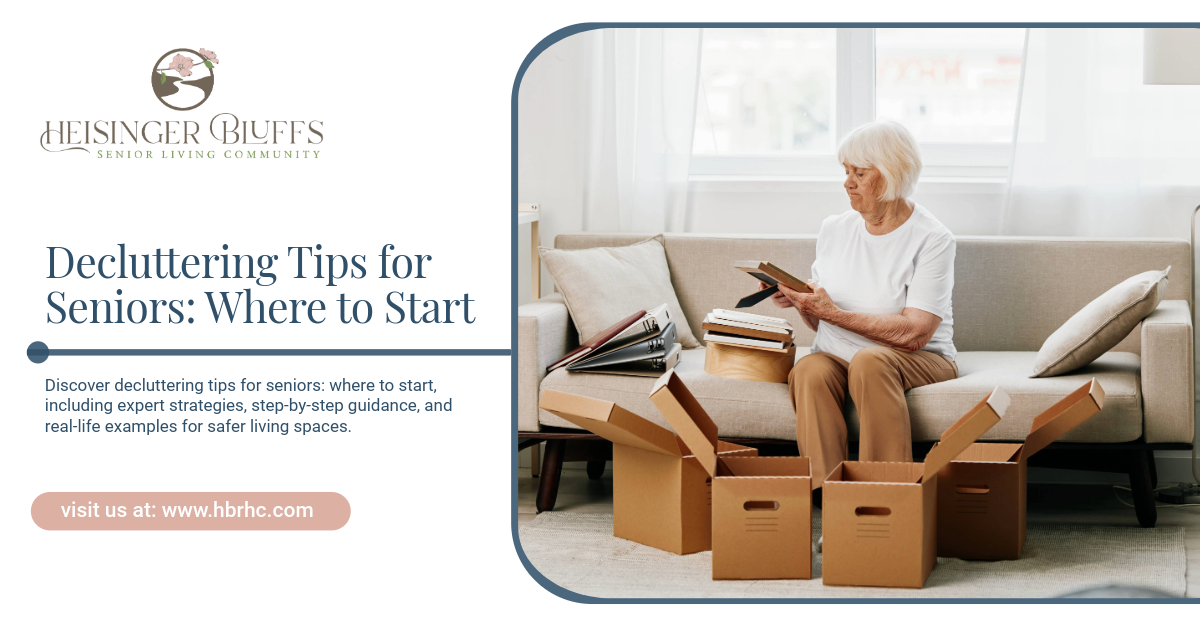
Decluttering Tips for Seniors: Where to Start
Key Highlights
- Decluttering improves safety, reduces fall risks, and enhances emotional well-being for seniors
- Starting small is the most effective way to avoid overwhelm
- Sorting items into clear categories helps simplify decision-making
- Emotional attachment is often the biggest barrier to decluttering
- Professional caregivers often see improved mood and independence after decluttering
- A structured plan makes the process easier and more sustainable
Decluttering can feel overwhelming at any stage of life—but for seniors, it often carries deeper emotional and practical significance. Homes filled with decades of memories can also become crowded with items that increase fall risks, reduce mobility, and create unnecessary stress.
Knowing decluttering tips for seniors is essential for creating a safer, more comfortable, and more manageable living environment. The process is not just about getting rid of things—it’s about making space for safety, clarity, and peace of mind.
Why Decluttering Matters for Seniors
Decluttering is about more than aesthetics. It directly impacts:
1. Safety
Clutter increases the risk of:
- Trips and falls
- Blocked walkways
- Difficulty accessing essential items
2. Mental Health
A cluttered environment can contribute to:
- Stress
- Anxiety
- Cognitive overload
3. Independence
An organized home helps seniors:
- Move more freely
- Find items easily
- Maintain daily routines
4. Caregiver Efficiency
Less clutter allows caregivers to provide safer, more effective assistance.
Where to Start: The Most Important First Step
The biggest mistake people make is trying to declutter everything at once. The most effective approach is:
Start Small, Start Simple
Choose ONE of the following:
- A single drawer
- A bedside table
- A bathroom cabinet
- One shelf
Insight from Practice: In caregiving environments, we’ve seen seniors become overwhelmed when entire rooms are tackled at once. However, when starting with just a single drawer, they often gain confidence and continue voluntarily.
Step-by-Step Decluttering Process for Seniors
Step 1: Set a Realistic Goal
Instead of “clean the house,” aim for:
- “Organize the kitchen drawer today.”
- “Sort one closet shelf this week.”
Small goals build momentum.
Step 2: Gather Simple Supplies
You only need:
- Trash bags
- Donation boxes
- Labels
Avoid overcomplicating the process.
Step 3: Use the “Four-Box Method”
| Box | Purpose |
|---|---|
| Keep | Items used regularly or deeply meaningful |
| Donate | Usable items no longer needed |
| Store | Seasonal or rarely used items |
| Discard | Broken or unusable items |
This method simplifies decision-making.
Step 4: Sort One Category at a Time
Instead of moving room by room, focus on categories:
- Clothing
- Kitchen items
- Papers
- Keepsakes
Step 5: Make Decisions Quickly
A helpful rule:
- If it hasn’t been used in 12 months, reconsider keeping it
Emotional Challenges in Decluttering
Decluttering is often emotional for seniors because items represent:
- Memories
- Independence
- Relationships
- Life milestones
Real Example from Practice: We’ve seen seniors hold onto entire boxes of unused kitchenware simply because “it was a wedding gift.” Acknowledging the emotional value often makes it easier to let go.
Common Emotional Barriers
1. Sentimental Attachment
“I might need this someday” is a common thought.
2. Fear of Loss
Letting go can feel like losing memories.
3. Decision Fatigue
Too many choices can feel overwhelming.
4. Guilt
Many feel guilty about discarding gifts or family heirlooms.
How to Help Seniors Through the Process
1. Be Patient and Supportive
Avoid rushing decisions.
2. Ask Gentle Questions
- “When was the last time you used this?”
- “Does this item still serve you?”
3. Focus on Stories, Not Stuff
Encourage sharing memories before letting go.
4. Involve the Senior in Every Decision
Avoid decluttering without consent.
Insight: In caregiving settings, we’ve observed that forced decluttering often leads to resistance, while collaborative approaches lead to better emotional outcomes.
Room-by-Room Decluttering Guide
Bedroom
- Clear bedside tables
- Organize clothing by season
- Remove unused furniture
Kitchen
- Dispose of expired food
- Simplify utensils
- Keep frequently used items accessible
Bathroom
- Remove expired medications
- Limit products to essentials
- Improve accessibility
Living Room
- Reduce excess décor
- Clear walkways
- Keep seating areas open
Decluttering Priority Guide for Seniors
| Priority Area | Level | Why It Matters |
|---|---|---|
| High | Walkways, floors | Prevent falls |
| Medium | Kitchen & bathroom | Daily functionality |
| Low | Storage areas | Long-term organization |
| Emotional | Keepsakes | Requires sensitive handling |
The “One Touch Rule” for Seniors
When handling items:
- Pick it up
- Decide immediately
- Do not set it aside for later reconsideration
This reduces decision fatigue.
Decluttering and Cognitive Health
A clutter-free environment supports:
- Improved focus
- Reduced anxiety
- Better memory function
Real Example: We’ve seen seniors with mild cognitive impairment become noticeably calmer after reducing visual clutter in their living spaces.
When to Seek Help with Decluttering
Professional or family assistance may be needed when:
- Decluttering causes emotional distress
- Mobility issues limit participation
- Cognitive decline affects decision-making
Support can make the process safer and less overwhelming.
Mistakes to Avoid When Decluttering Seniors’ Homes
- Doing everything at once
- Throwing away items without consent
- Ignoring emotional attachments
- Over-organizing too quickly
- Pressuring for fast decisions
Benefits of Decluttering Over Time
Consistent decluttering leads to:
- Safer living environments
- Easier daily routines
- Reduced stress
- Increased independence
- Improved quality of life
Maintaining a Clutter-Free Space
After decluttering:
- Adopt a “one in, one out” rule
- Schedule seasonal reviews
- Encourage regular organization habits
Small maintenance habits prevent clutter from returning.
Final Thoughts
Decluttering is not just a physical task—it is an emotional and practical journey. For seniors, it can represent a shift toward greater safety, independence, and peace of mind.
Starting small, moving slowly, and respecting emotional connections are the most important principles to follow. With the right approach, decluttering becomes less overwhelming and far more empowering.
At Heisinger Bluffs, we understand that creating safe, comfortable living spaces is essential to supporting senior well-being. Through thoughtful guidance and supportive care, we help residents and families navigate decluttering in a way that preserves dignity while improving daily life. Contact us today!
Frequently Asked Questions
What is the best place for seniors to start decluttering?
The best place to start is a small, low-stress area like a single drawer, bedside table, or bathroom cabinet. Starting small helps avoid overwhelm and builds confidence.
Why is decluttering important for seniors?
Decluttering improves safety by reducing fall risks, supports mental clarity, and makes daily routines easier and more manageable.
How do you help a senior who doesn’t want to let go of items?
Use patience and empathy. Focus on the emotional value of items, ask gentle questions, and involve them in every decision rather than forcing removal.
What should seniors avoid when decluttering?
They should avoid trying to declutter everything at once, making rushed decisions, or discarding items without emotional consideration.
How often should seniors declutter their homes?
A seasonal or twice-yearly review is usually enough, along with small ongoing organization habits to prevent clutter from building up again.
Sources:
- https://pmc.ncbi.nlm.nih.gov/articles/PMC4577935/
- https://www.cdc.gov/falls/data-research/facts-stats/index.html
- https://www.cottagelitchfield.com/blog/decluttering-and-organizing-as-you-age
- https://www.nytimes.com/2025/02/27/well/family/declutter-hoarding-sentimental.html
- https://pubmed.ncbi.nlm.nih.gov/32219461/



Share This Article
You May Also Like To Read