

When Are Physical Changes a Medical Emergency?

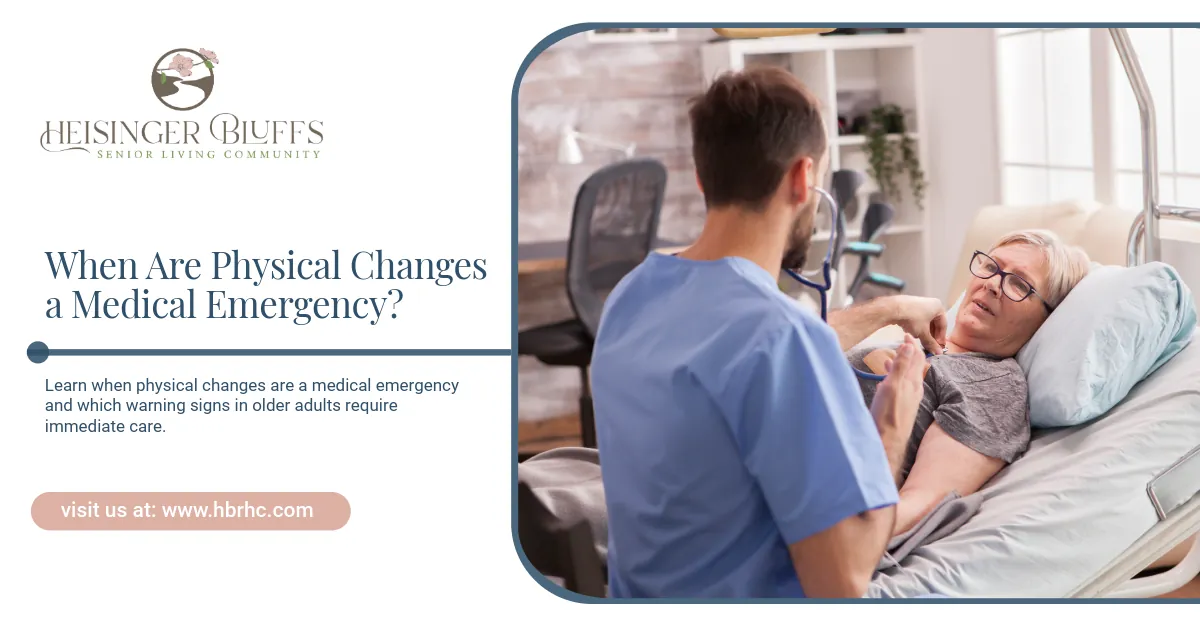
A nurse assisting an elderly woman in bed;

Families often ask, when are physical changes a medical emergency? Certain sudden or severe symptoms in older adults require immediate medical attention.


  • Sudden weakness, numbness, or trouble speaking may signal a stroke and should never be ignored.
  • Chest pain, shortness of breath, or rapid heartbeat can indicate a heart-related emergency.
  • Unexplained falls, severe dizziness, or loss of consciousness may point to serious injury or neurological issues.
  • Sudden confusion, agitation, or extreme behavior changes can be signs of infection, dehydration, or medication reactions.
  • Severe pain, uncontrolled bleeding, or high fever may also require urgent care.


Quick response is critical, as delays can worsen outcomes. When physical changes appear suddenly, progress rapidly, or interfere with basic functioning, it’s safest to seek emergency care right away.


Supportive senior living environments help monitor health changes and respond quickly when concerns arise. Communities like Heisinger Bluffs provide attentive care and structured support that can help families feel confident that their loved ones are safe.


Frequently Asked Questions

  • Are all physical changes an emergency?

    No, only sudden, severe, or worsening symptoms require urgent care.

  • What if symptoms seem mild at first?

    If they worsen or appear suddenly, seek medical advice immediately.

  • Who should be called in an emergency?

    Call emergency services or go to the nearest emergency room.


Sources:

  • https://medlineplus.gov/ency/article/004019.htm
  • https://www.merckmanuals.com/home/older-people-s-health-issues/the-aging-body/changes-in-the-body-with-aging

Heisinger Bluffs logo
A nurse sitting next to an elderly woman on a couch
SCHEDULE A TOUR
Google rating average 4.65 rating out of 60 reviews

Want to know more?

Share This Article

You May Also Like To Read

Older adult with hands on face, looking distressed.
By Heisinger Bluffs Editorial January 21, 2026
Learn what causes paranoia in older adults, including medical, cognitive, and emotional factors families should recognize.
An elderly woman with her hands covering her face, losing interest in her hobby
By Heisinger Bluffs Editorial January 21, 2026
Is it normal for seniors to lose interest in hobbies? Learn common reasons, when to be concerned, and how families can help.
A caregiver with her head in her hands, looking exhausted, sits near an elderly person in a wheelcha
By Heisinger Bluffs Editorial January 21, 2026
Learn what caregiver burnout is, its common symptoms, causes, and how families can recognize and prevent caregiver burnout.
An elderly man sitting on a desk, scratching his head, showing confusion
By Heisinger Bluffs Editorial January 21, 2026
Learn the most common challenges seniors face, from health changes to social isolation, and how families can better support aging adults.
Smiling senior couple holding mugs, sitting outdoors with fruits.
By Heisinger Bluffs Editorial January 21, 2026
Discover essential preventive healthcare tips for seniors, from screenings to lifestyle changes, to stay healthy and active.
An elderly person with dementia is seated with a cane, looking out a window.
By Heisinger Bluffs Editorial January 21, 2026
Learn how dementia affects daily life, from memory challenges to routine tasks, and discover practical tips for caregivers and families.
More Posts