

How to Secure Memory Care Units from Wandering?

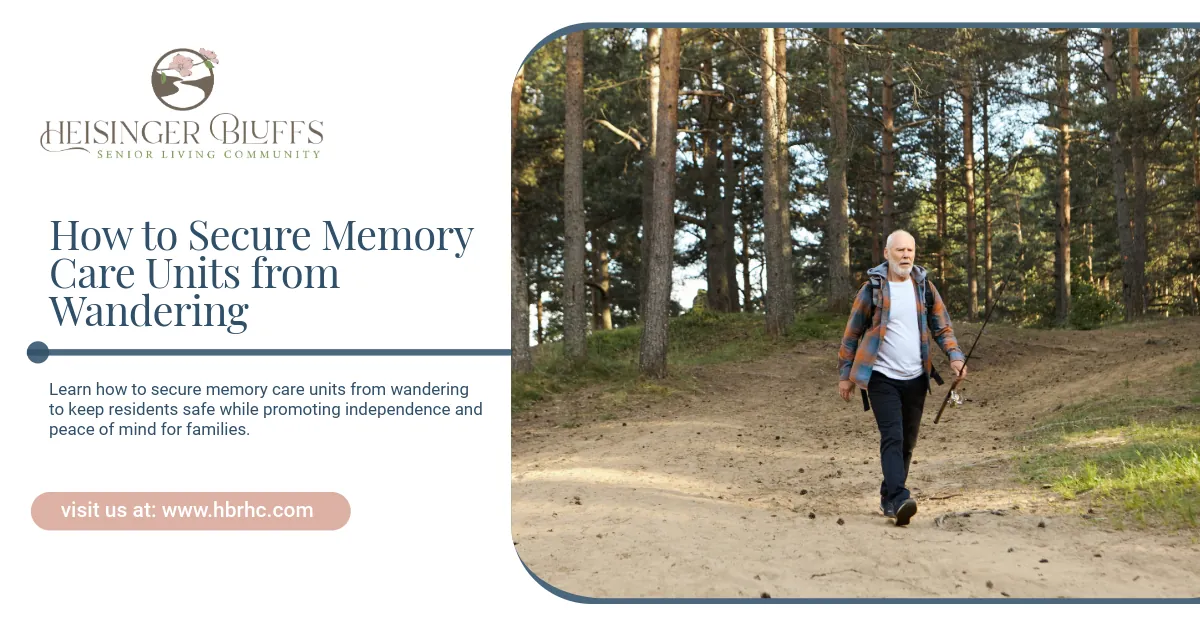
A memory care resident wandering alone outdoors

Wandering is a common safety concern for seniors with Alzheimer’s or dementia. Memory care units are specifically designed to prevent wandering while supporting independence and well-being.


Effective strategies to secure memory care units include:


  • Controlled access: Locked or alarmed doors with staff-monitored entry and exit points.
  • Wander management systems: Sensors, bracelets, or electronic monitoring alert staff if a resident attempts to leave a designated area.
  • Safe outdoor spaces: Enclosed gardens or walking paths allow residents to enjoy fresh air without risk.
  • Structured routines: Predictable daily schedules reduce confusion and the urge to wander.
  • Staff supervision and training: Caregivers are trained to recognize early signs of wandering and intervene safely.


These measures ensure residents remain safe while still enjoying mobility and engaging activities. Heisinger Bluffs combines secure environments with compassionate care to protect residents while fostering independence.


Frequently Asked Questions

  • Can wandering be completely prevented?

    While it can’t always be fully prevented, proper security and supervision greatly reduce risks.

  • Are residents monitored 24/7?

    Yes, memory care units typically provide round-the-clock supervision.

  • Can families access wandering alerts?

    Many communities offer updates or alerts to keep families informed.


Sources:

  • https://pmc.ncbi.nlm.nih.gov/articles/PMC4542835/
  • https://www.hfmmagazine.com/articles/2730-designing-for-memory-care

Heisinger Bluffs logo
A nurse sitting next to an elderly woman on a couch
SCHEDULE A TOUR
Google rating average 4.65 rating out of 60 reviews

Want to know more?

Share This Article

You May Also Like To Read

An elderly person looking out a window with a cane.
By Heisinger Bluffs Editorial January 6, 2026
Can social isolation shorten seniors’ lifespan? Learn how loneliness affects health and ways to stay connected for a longer, healthier life.
Older woman with hand on her neck, experiencing chronic pain.
By Heisinger Bluffs Editorial January 6, 2026
Is chronic pain common in seniors? Learn why older adults experience persistent pain and ways to manage it for better daily living.
Elderly man with head in hands, looking down.
By Heisinger Bluffs Editorial January 6, 2026
Is aging also associated with decline? Learn the physical, cognitive, and emotional changes seniors may face and how to support healthy aging.
An elderly woman eating.
By Heisinger Bluffs Editorial January 6, 2026
How does aging affect digestion? Learn common digestive changes in older adults and simple ways to support gut health as you age.
An elderly woman is lying in bed, having a hard time falling asleep.
By Heisinger Bluffs Editorial January 5, 2026
Why do seniors sleep less? Learn the common causes of reduced sleep in older adults and simple ways to improve rest and sleep quality.
An elderly man is stretching in a park, leaning on a wooden bench.
By Heisinger Bluffs Editorial January 5, 2026
Discover everyday habits that can improve balance in seniors, including exercises, nutrition, posture, and lifestyle strategies for fall prevention and stability.
More Posts