
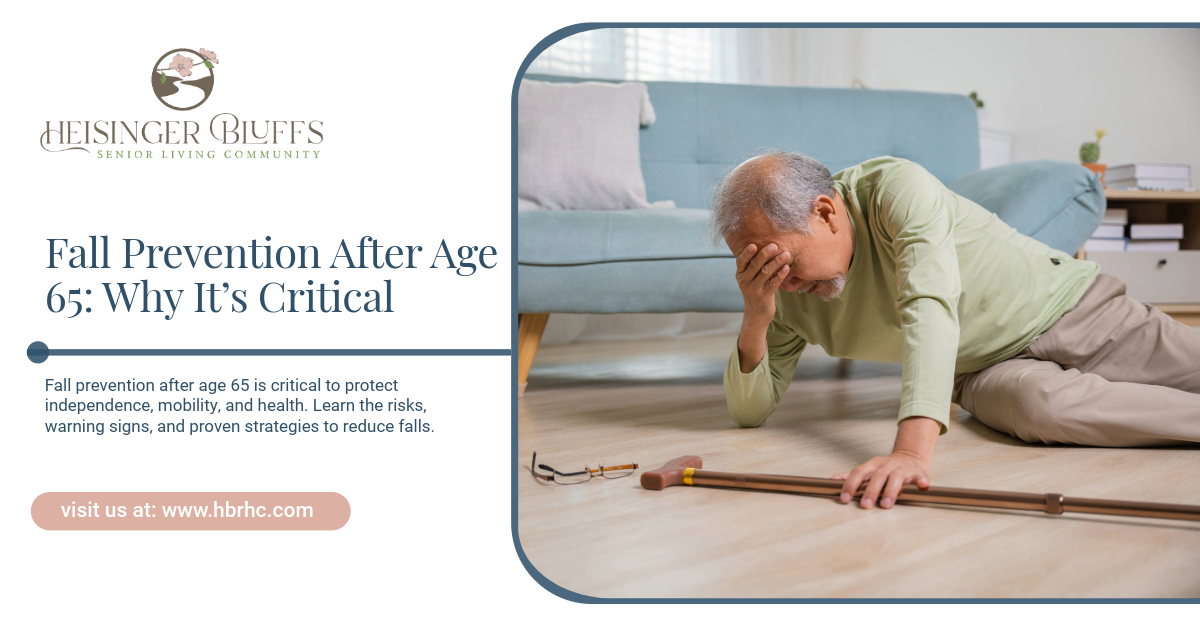
Fall Prevention After Age 65: Why It’s Critical
Key Highlights
- Fall prevention after age 65 reduces the risk of serious injury, hospitalization, and long-term disability.
- One in four adults over 65 falls each year, making prevention a top health priority.
- Even minor falls can lead to fractures, head injuries, and loss of independence.
- Proactive strategies—like home modifications, exercise, and medication review—dramatically reduce risk.
- Emotional impacts of falls, including fear and anxiety, can limit mobility and quality of life.
- Real-world examples show that early prevention protects independence and confidence.
Aging brings wisdom, experience, and perspective—but it also brings physical changes that increase fall risk. Fall prevention after age 65 is not simply a safety recommendation; it is a critical factor in preserving independence, mobility, and overall health.
According to the Centers for Disease Control and Prevention, one in four adults over age 65 experiences a fall each year. Falls are the leading cause of injury-related deaths among older adults and a major cause of hospitalizations.
However, falls are not an inevitable part of aging. With proactive measures, environmental awareness, and supportive living arrangements, most falls can be prevented.
This guide explains why fall prevention after age 65 is so important—and what seniors and families can do to reduce risk.
The Physical Changes That Increase Fall Risk
As the body ages, several natural changes occur:
- Decreased muscle strength
- Slower reflexes
- Reduced balance
- Vision changes
- Joint stiffness
- Chronic health conditions
These changes can subtly increase vulnerability.
We’ve seen seniors who felt confident walking independently but experienced a gradual balance decline that went unnoticed—until a fall occurred. Often, the warning signs were present but unrecognized.
Understanding these changes is the first step toward prevention.
The Consequences of Falls After Age 65
Falls are not minor incidents for older adults.
1. Fractures and Broken Bones
Hip fractures are among the most serious consequences of falls.
According to the National Institute of Health, hip fractures often lead to:
- Surgery
- Extended hospital stays
- Rehabilitation
- Reduced mobility
Some seniors never fully regain previous levels of independence.
2. Head Injuries
Head injuries from falls can result in:
- Concussions
- Brain bleeding
- Cognitive decline
Even falls without visible injury may cause internal damage.
3. Loss of Independence
After a fall, many seniors develop a fear of falling again.
This fear can lead to:
- Reduced activity
- Muscle weakening
- Increased isolation
- Higher risk of additional falls
In our experience working with seniors recovering from falls, fear—not injury—is often the greatest long-term barrier to independence.
4. Emotional and Psychological Impact
Falls often trigger:
- Anxiety
- Depression
- Loss of confidence
- Withdrawal from activities
The emotional impact can be just as significant as physical injury.
Why Fall Prevention After Age 65 Must Be Proactive
Many families only focus on fall prevention after an incident occurs.
However, proactive fall prevention after age 65 reduces:
- Emergency room visits
- Hospitalizations
- Long-term care needs
- Healthcare costs
Preventative strategies are significantly more effective than reactive solutions.
Major Risk Factors for Falls
Understanding risk factors helps identify vulnerabilities early.
1. Medication Side Effects
Certain medications cause:
- Dizziness
- Drowsiness
- Blood pressure fluctuations
Medication interactions can increase fall risk. We’ve seen cases where simple medication adjustments significantly reduced dizziness and improved balance.
2. Poor Lighting
Dim lighting makes it harder to see obstacles.
Common issues include:
- Dark hallways
- Inadequate bathroom lighting
- Lack of nightlights
Improving lighting is one of the simplest yet most effective prevention strategies.
3. Unsafe Flooring
Hazards include:
- Loose rugs
- Slippery tiles
- Uneven flooring
Environmental modifications reduce these risks significantly.
4. Muscle Weakness and Inactivity
Muscle strength directly impacts balance. Lack of activity accelerates muscle loss, increasing fall risk.
The World Health Organization emphasizes regular physical activity as a key strategy for fall prevention.
Common Fall Risks and Prevention Strategies
| Risk Factor | Why It’s Dangerous | Prevention Strategy |
|---|---|---|
| Poor lighting | Obscures hazards | Install bright lighting and nightlights |
| Slippery floors | Increases slip risk | Use non-slip flooring |
| Weak muscles | Reduces stability | Engage in strength exercises |
| Medication side effects | Causes dizziness | Review medications with doctor |
| Clutter | Creates tripping hazards | Keep pathways clear |
| Vision problems | Impairs depth perception | Schedule regular eye exams |
This table highlights how small changes can produce significant safety improvements.
Real-Life Case Study: Preventing a Second Fall
One senior experienced a minor fall in her kitchen due to a loose rug. Although the injury was minimal, she became fearful and avoided cooking.
After implementing fall prevention strategies—removing rugs, improving lighting, and starting balance exercises—she regained confidence. She reported feeling “steady and secure” again. This example demonstrates how early action prevents long-term decline.
Real-Life Case Study: Medication Review Prevented Dizziness
Another resident experienced frequent dizziness and near-falls. A medication review identified blood pressure medication as the cause. After adjusting the dosage under medical supervision, dizziness subsided.
This prevented a potentially serious fall. Proactive assessment saved both health and independence.
The Role of Exercise in Fall Prevention
Strength and balance training are among the most effective prevention strategies.
Effective activities include:
- Walking
- Tai chi
- Light strength training
- Balance exercises
We’ve seen seniors significantly improve stability after consistent balance-focused exercise programs. Even modest improvements in leg strength can dramatically reduce fall risk.
Home Modifications That Prevent Falls
Environmental adjustments are essential for fall prevention after age 65.
Recommended Modifications:
- Install grab bars in bathrooms
- Use non-slip mats
- Remove loose rugs
- Improve stair railings
- Keep frequently used items within reach
These modifications reduce daily hazards.
Why Safe Living Environments Matter
Traditional homes may contain hidden risks:
- Stairs
- Clutter
- Narrow hallways
- High shelves
In contrast, senior-focused environments prioritize:
- Accessible layouts
- Non-slip flooring
- Adequate lighting
- Emergency response systems
We’ve observed that seniors in safer living environments report feeling more confident moving independently. Confidence reduces hesitation and instability.
The Financial Impact of Falls
Falls lead to:
- Hospital bills
- Rehabilitation costs
- Long-term care expenses
Preventative strategies are far more cost-effective than emergency treatment. Fall prevention after age 65 protects both health and financial stability.
The Importance of Social Engagement
Isolation increases fall risk.
Inactive seniors may experience:
- Muscle weakening
- Poor balance
- Depression
Social environments encourage:
- Movement
- Activity participation
- Emotional engagement
This reduces both physical and emotional risk factors.
Warning Signs That Fall Risk Is Increasing
Pay attention to:
- Shuffling gait
- Holding onto furniture
- Hesitation while walking
- Frequent dizziness
- Difficulty rising from chairs
These signs indicate increasing vulnerability. We’ve seen that early intervention—before a fall occurs—produces significantly better outcomes.
The Role of Supportive Communities
Supportive senior living environments offer:
- Fall-safe apartment design
- On-site staff
- Emergency systems
- Structured activities
- Social opportunities
These features dramatically reduce risk.
Final Thoughts
Fall prevention after age 65 is critical because the consequences of even one fall can be life-altering. Physical injuries, emotional trauma, and loss of independence are common outcomes—but they are not inevitable.
Through proactive planning, environmental modifications, exercise, and supportive living environments, seniors can maintain confidence, mobility, and independence for years to come.
Preventing falls is not about limiting activity—it’s about empowering safe movement and preserving quality of life.
Communities such as Heisinger Bluffs in Jefferson City prioritize fall prevention after age 65 through safe environments, accessible layouts, and proactive support designed to protect independence and well-being. Contact us today!
Frequently Asked Questions
Why is fall prevention especially important after age 65?
Because aging increases fall risk, and injuries can lead to serious health complications and loss of independence.
What is the most common cause of falls in seniors?
Environmental hazards like poor lighting and loose rugs, combined with balance changes and muscle weakness.
Can exercise really reduce fall risk?
Yes. Strength and balance exercises significantly improve stability and reduce fall likelihood.
How can families reduce fall risk at home?
Improve lighting, remove tripping hazards, install grab bars, and schedule medication reviews.
When should seniors consider safer living environments?
If fall risk increases, mobility declines, or home hazards become difficult to manage, transitioning proactively improves safety and quality of life.
Sources:
- https://www.cdc.gov/falls/data-research/index.html
- https://pmc.ncbi.nlm.nih.gov/articles/PMC6459450/
- https://www.urmc.rochester.edu/news/story/for-elderly-even-short-falls-can-be-deadly
- https://www.who.int/news-room/fact-sheets/detail/physical-activity
- https://www.apha.org/policy-and-advocacy/public-health-policy-briefs/policy-database/2024/01/16/falls-prevention



Share This Article
You May Also Like To Read