
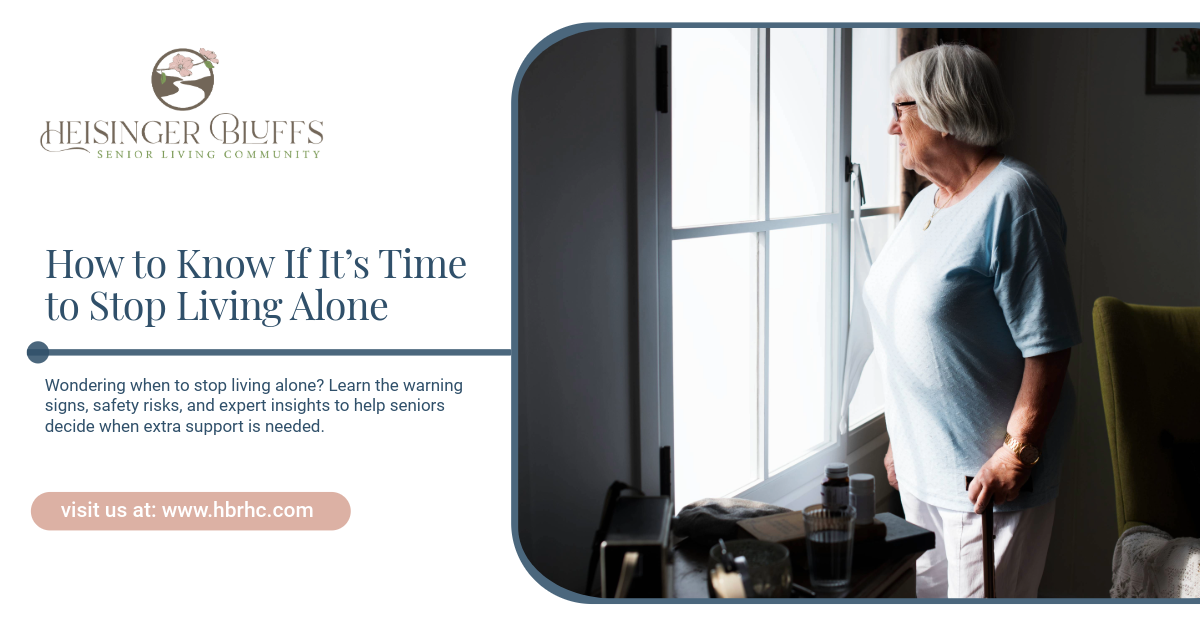
How to Know If It’s Time to Stop Living Alone
Key Highlights
- Living alone can become unsafe when physical, cognitive, or emotional challenges increase.
- Warning signs include frequent falls, forgetfulness, isolation, and difficulty managing daily tasks.
- Early planning helps seniors maintain independence while improving safety and quality of life.
- Social isolation and loneliness can negatively affect both mental and physical health.
- Professional support and senior living communities provide safety, structure, and social engagement.
- Real-life examples show that recognizing signs early leads to better outcomes and smoother transitions.
Living alone offers independence, privacy, and comfort—especially for seniors who have spent decades managing their own homes. However, aging brings changes that can make living alone more difficult and potentially unsafe. Knowing when to stop living alone is not about losing independence—it’s about protecting health, safety, and quality of life.
According to the National Institute on Aging, changes in mobility, memory, and health can increase risks for seniors who live alone. Recognizing these changes early allows families and seniors to make thoughtful, proactive decisions.
This guide will help you understand the signs, risks, and practical considerations when deciding whether it’s time to stop living alone.
Why Living Alone Becomes More Challenging With Age
Aging affects every individual differently, but common changes can impact the ability to live safely alone.
These include:
- Reduced mobility
- Slower reaction time
- Vision or hearing loss
- Cognitive decline
- Chronic health conditions
These changes increase vulnerability to accidents, health emergencies, and isolation.
In our experience working with seniors transitioning to supportive environments, many initially feel confident living alone but later recognize that daily tasks have become more exhausting and stressful.
Recognizing this shift is an important step toward maintaining long-term well-being.
Key Warning Signs: It May Be Time to Stop Living Alone
1. Frequent Falls or Balance Problems
Falls are one of the most serious risks for seniors living alone.
The Centers for Disease Control and Prevention reports that one in four adults over age 65 falls each year.
Living alone increases the danger because:
- Help may not be immediately available
- Injuries can worsen without prompt care
- Recovery becomes more difficult
We’ve seen cases where seniors experienced minor falls that went unreported but later developed into serious mobility issues.
Even one fall can be a major warning sign.
2. Difficulty Managing Daily Activities
Daily tasks may gradually become overwhelming.
These include:
- Cooking
- Cleaning
- Laundry
- Bathing
- Managing medications
Signs of difficulty may include:
- Unopened mail piling up
- Expired food in the refrigerator
- Missed medications
When these tasks become difficult, safety and health may be compromised.
3. Memory Problems and Forgetfulness
Memory loss can create serious safety risks.
Examples include:
- Forgetting to turn off the stove
- Missing medications
- Getting lost in familiar areas
- Forgetting appointments
According to the Alzheimer's Association, early memory problems can significantly impact daily safety.
We’ve seen seniors forget essential medications, which led to preventable health complications. Memory changes should never be ignored.
4. Increasing Isolation and Loneliness
Social isolation is a major health risk.
Research from the World Health Organization shows that loneliness increases risks of depression, cognitive decline, and physical health problems.
Signs of isolation include:
- Rarely leaving home
- Limited social interaction
- Withdrawal from activities
- Loss of interest in hobbies
Isolation can silently affect emotional and physical health.
5. Poor Personal Hygiene
Changes in hygiene can signal physical or cognitive difficulties.
Examples include:
- Wearing the same clothes repeatedly
- Skipping showers
- Neglecting grooming
These changes often indicate challenges with daily functioning.
6. Difficulty Managing Medications
Medication management is essential for health.
Warning signs include:
- Missed doses
- Taking incorrect doses
- Confusion about medication schedules
In our experience, medication errors are one of the most common and dangerous issues among seniors living alone.
Proper support significantly reduces this risk.
7. Changes in Nutrition and Weight
Poor nutrition may result from:
- Difficulty cooking
- Loss of appetite
- Forgetting to eat
Signs include:
- Weight loss
- Empty refrigerator
- Reliance on unhealthy convenience foods
Proper nutrition is essential for maintaining strength and health.
8. Increased Anxiety, Fear, or Confusion
Emotional changes can indicate safety concerns.
Seniors may feel:
- Fearful of falling
- Anxious about emergencies
- Confused or overwhelmed
We’ve seen seniors develop anxiety simply from managing household responsibilities alone.
Support can significantly reduce stress.
Safe Living Alone vs. Signs Support May Be Needed
| Area | Safe Living Alone | Warning Signs |
|---|---|---|
| Mobility | Moves safely and confidently | Frequent falls or unsteadiness |
| Memory | Remembers appointments and tasks | Forgetfulness affecting safety |
| Hygiene | Maintains personal care | Decline in hygiene |
| Nutrition | Eats regularly and healthily | Weight loss or poor diet |
| Medication | Takes medications correctly | Missed or incorrect doses |
| Social interaction | Active social life | Isolation and loneliness |
| Home maintenance | Keeps home clean | Clutter or neglected chores |
This comparison helps families and seniors evaluate safety realistically.
Real-Life Case Study: Recognizing Early Warning Signs
One senior lived alone comfortably for many years. Over time, family members noticed unopened mail and spoiled food in the refrigerator. Initially, these signs seemed minor. However, further observation revealed missed medications and increased confusion.
After transitioning to a supportive living environment, the senior regained stability and confidence. Family members reported reduced stress and improved health outcomes. Early intervention prevented serious complications.
Real-Life Case Study: Emotional Isolation and Its Impact
Another senior remained physically healthy but became increasingly isolated. She stopped attending social events and rarely left home. Over time, she developed symptoms of depression and anxiety.
After moving to a supportive community, she regained social connections and emotional well-being. This highlights the importance of social engagement.
Why Seniors Often Resist Leaving Independent Living
Resistance is normal and understandable.
Common reasons include:
- Fear of losing independence
- Emotional attachment to home
- Fear of change
- Pride and self-reliance
In our experience, many seniors discover that supportive environments actually increase independence by reducing stress and physical burdens.
Benefits of Transitioning From Living Alone
1. Improved Safety
Support reduces risks of:
- Falls
- Medication errors
- Emergencies
2. Better Physical Health
Access to regular meals, assistance, and health monitoring improves overall health.
3. Improved Emotional Well-Being
Social interaction reduces loneliness and depression.
4. Reduced Stress
Daily responsibilities become easier to manage.
How to Start the Conversation
Discussing the transition requires sensitivity and respect.
Tips include:
- Start early conversations
- Focus on safety, not limitations
- Listen to concerns
- Involve seniors in decision-making
We’ve seen families achieve better outcomes when seniors feel included and respected.
How Supportive Living Preserves Independence
Supportive living does not mean losing independence.
Instead, it provides:
- Safe environments
- Social opportunities
- Reduced physical burdens
- Access to assistance when needed
This balance improves quality of life.
When Is the Right Time to Stop Living Alone?
The best time is before a crisis occurs. Warning signs should prompt proactive planning. Early decisions provide more options and smoother transitions. Waiting too long often leads to emergency decisions.
How Senior Living Communities Improve Quality of Life
Senior living communities provide:
- Safe environments
- Social engagement
- Professional support
- Reduced isolation
Residents often experience:
- Improved emotional health
- Increased safety
- Greater peace of mind
Communities such as Heisinger Bluffs in Jefferson City offer supportive environments designed to help seniors maintain independence while ensuring safety, social engagement, and improved overall well-being.
Final Thoughts
Knowing when to stop living alone is a deeply personal decision, but recognizing warning signs early can prevent serious health and safety risks.
Living alone safely requires physical ability, cognitive stability, and emotional well-being. When these areas begin to decline, additional support can improve safety, reduce stress, and enhance quality of life. Communities like Heisinger Bluffs provide supportive environments that help seniors stay engaged, safe, and cared for.
Making proactive decisions allows seniors to maintain dignity, independence, and peace of mind while transitioning to the right level of support. Contact us today!
Frequently Asked Questions
What is the biggest sign a senior should stop living alone?
Frequent falls, memory problems, and difficulty managing daily tasks are major warning signs.
Is it normal for seniors to resist leaving their homes?
Yes. Emotional attachment and fear of change make resistance common. Supportive conversations help ease the transition.
Does moving to supportive living reduce independence?
No. It often increases independence by reducing physical burdens and improving safety.
When should families start discussing supportive living?
Conversations should begin when early warning signs appear, before emergencies occur.
How can families help seniors transition smoothly?
Include seniors in decisions, provide emotional support, and focus on improving safety and quality of life.
Sources:
- https://www.alz.org/alzheimers-dementia/stages
- https://www.who.int/news/item/30-06-2025-social-connection-linked-to-improved-heath-and-reduced-risk-of-early-death
- https://pmc.ncbi.nlm.nih.gov/articles/PMC2821944/



Share This Article
You May Also Like To Read