
What Is the Goal of Short-Term Rehab for Seniors?
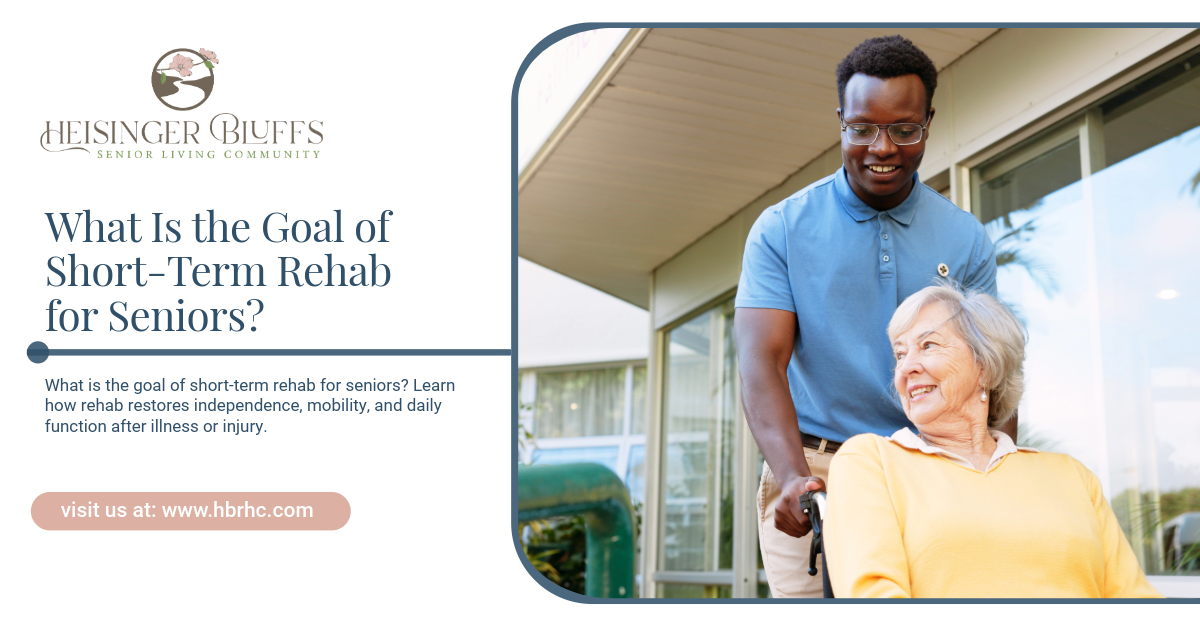
A caregiver pushing an elderly woman in a wheelchair outdoors.

The primary goal of short-term rehab for seniors is to help them regain independence and improve their quality of life after an illness, surgery, or injury. Rehabilitation focuses on restoring physical, occupational, and sometimes speech abilities so seniors can return safely to their daily routines.


Key goals of short-term rehab:


  1. Restore mobility and strength: Physical therapy helps seniors regain movement and reduce the risk of future falls.
  2. Improve daily functioning: Occupational therapy teaches skills for bathing, dressing, and other essential tasks.
  3. Promote independence: Rehab empowers seniors to live safely at home or in a senior living community.
  4. Support recovery from illness or surgery: Rehab helps prevent complications and speeds up healing.


Short-term rehab is usually structured, goal-oriented, and personalized. Seniors receive guidance from licensed therapists who track progress and adjust treatment to meet individual needs.


Communities like Heisinger Bluffs offer comprehensive short-term rehab programs that focus on safety, recovery, and independence.


Frequently Asked Questions

  • How long does short-term rehab last?

    It typically lasts a few weeks, depending on the condition and recovery goals.

  • Is rehab only for post-surgery recovery?

    No, it’s also for illness, injury, or mobility challenges.

  • Can seniors return home after short-term rehab?

    Yes, the goal is often to help seniors safely return home or to independent living.


Sources:


Heisinger Bluffs logo
A nurse sitting next to an elderly woman on a couch
SCHEDULE A TOUR
Google rating average 4.65 rating out of 60 reviews

Want to know more?

Share This Article

You May Also Like To Read
An assisted living resident is talking to a caregiver holding a clipboard
By Heisinger Bluffs Editorial February 27, 2026
Can assisted living prevent hospitalizations? Learn how daily support, monitoring, and preventive care help seniors avoid emergency hospital visits.
A couple living in senior living sitting together on a couch
By Heisinger Bluffs Editorial February 27, 2026
Can couples live together in senior living? Learn housing options, care flexibility, and how senior communities support couples with different needs.
Elderly person fallen on the floor near a cane.
By Heisinger Bluffs Editorial February 27, 2026
Fall prevention after age 65 is critical to protect independence, mobility, and health. Learn the risks, warning signs, and proven strategies to reduce falls.
Senior woman sitting at white desk, smiling;.
By Heisinger Bluffs Editorial February 26, 2026
Safe apartment design in senior living reduces fall risks, supports independence, and improves quality of life. Learn the key features that protect seniors.
An elderly person living alone looks out a window.
By Heisinger Bluffs Editorial February 26, 2026
Wondering when to stop living alone? Learn the warning signs, safety risks, and expert insights to help seniors decide when extra support is needed.
A medical professional gestures while talking to a dementia patient.
By Heisinger Bluffs Editorial February 26, 2026
Specialized staff in dementia care improve safety, emotional well-being, and quality of life. Learn how trained caregivers make a critical difference for seniors.
More Posts