
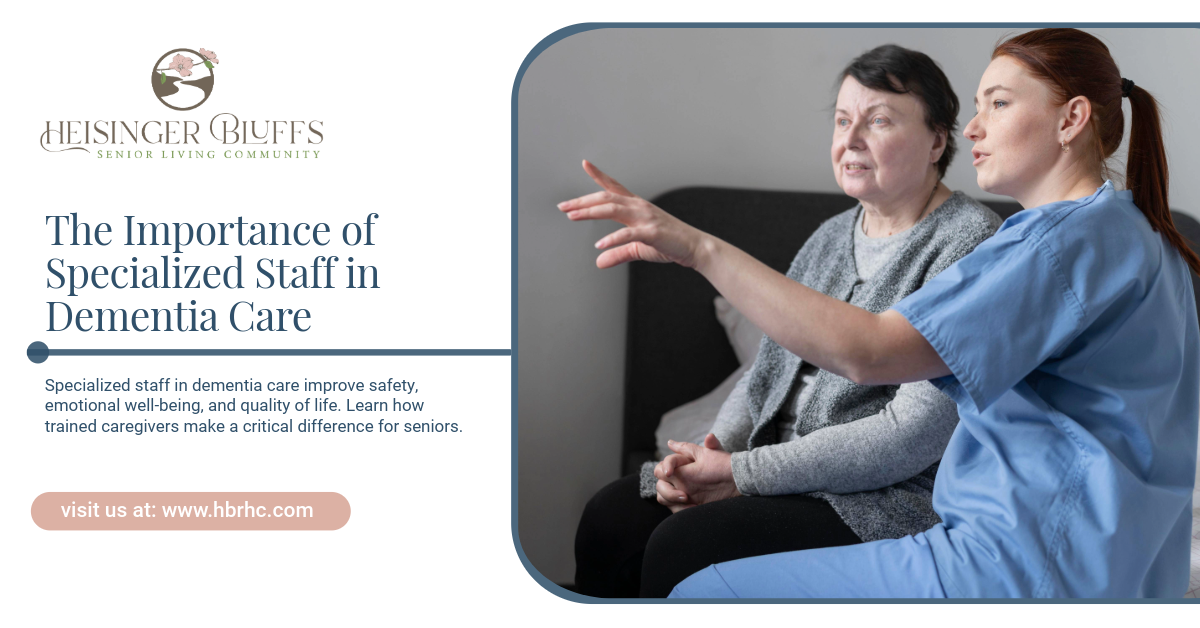
The Importance of Specialized Staff in Dementia Care
Key Highlights
- Specialized staff in dementia care are trained to understand memory loss, behavior changes, and emotional needs.
- Proper training reduces anxiety, confusion, and safety risks for seniors with dementia.
- Skilled caregivers use evidence-based communication and behavior techniques.
- Specialized care improves quality of life, emotional stability, and independence.
- Real-world experience demonstrates that trained staff can prevent crises and foster trust.
- Dementia-trained teams support both residents and families during difficult transitions.
Dementia affects millions of older adults and their families, bringing unique challenges that require specialized understanding, patience, and expertise. Unlike general caregiving, dementia care requires specific training to address cognitive decline, behavioral changes, emotional needs, and safety risks.
According to the Alzheimer's Association, more than 6 million Americans live with dementia, and that number continues to grow. This growing need underscores the importance of specialized staff in dementia care settings.
Properly trained caregivers do more than assist with daily tasks—they provide emotional reassurance, ensure safety, and preserve dignity. Their expertise can significantly improve a senior’s quality of life while reducing stress for families.
Understanding Dementia and Its Needs
Dementia is not a single disease but a general term describing cognitive decline severe enough to interfere with daily life. The most common form is Alzheimer's disease, but other types include vascular dementia, Lewy body dementia, and frontotemporal dementia.
Common symptoms include:
- Memory loss
- Confusion
- Difficulty communicating
- Personality changes
- Anxiety or agitation
- Difficulty with daily tasks
These symptoms create challenges that require specialized approaches beyond traditional caregiving.
Why Specialized Staff Are Essential in Dementia Care
1. Understanding Cognitive Changes
Specialized staff are trained to understand how dementia affects the brain.
This training helps caregivers:
- Recognize different stages of dementia
- Adjust communication methods
- Respond appropriately to confusion
- Provide consistent support
Without proper training, caregivers may unintentionally increase frustration or distress.
In our experience working alongside dementia care teams, we’ve seen how trained staff can quickly recognize early signs of agitation and intervene calmly—preventing escalation and helping residents regain emotional balance.
2. Improving Communication with Dementia Patients
Communication becomes more difficult as dementia progresses. Specialized caregivers use proven strategies such as:
- Speaking slowly and clearly
- Using simple instructions
- Maintaining eye contact
- Using a reassuring tone and body language
These techniques reduce confusion and build trust.
For example, instead of correcting a resident who is confused, trained caregivers redirect conversations gently. This preserves dignity and prevents emotional distress.
This approach is supported by research from the National Institute on Aging, which emphasizes that compassionate communication improves emotional well-being in dementia patients.
3. Preventing and Managing Behavioral Changes
Dementia often causes behavioral symptoms such as:
- Agitation
- Wandering
- Anxiety
- Aggression
- Depression
These behaviors are usually expressions of unmet needs or confusion—not intentional actions.
Specialized staff are trained to identify triggers such as:
- Fatigue
- Hunger
- Overstimulation
- Pain
- Fear
We’ve seen situations where a resident appeared aggressive, but trained staff recognized the behavior was caused by overstimulation. By moving the resident to a quieter environment, the situation was resolved quickly without distress.
This level of understanding prevents unnecessary escalation.
4. Enhancing Safety and Preventing Accidents
Safety is one of the most critical aspects of dementia care.
Dementia increases risks such as:
- Falls
- Wandering
- Medication errors
- Injury
Specialized staff implements safety strategies, including:
- Close supervision
- Environmental adjustments
- Routine monitoring
- Structured daily schedules
These preventive measures protect residents while preserving independence.
General Caregiving vs Specialized Dementia Care
| Aspect | General Caregiving | Specialized Dementia Care |
|---|---|---|
| Training | Basic caregiving skills | Advanced dementia-specific training |
| Communication | Standard conversation | Memory-sensitive communication techniques |
| Behavioral support | Reactive approach | Proactive, trigger-based intervention |
| Safety monitoring | General supervision | Dementia-specific safety protocols |
| Emotional care | Limited emotional training | Specialized emotional support techniques |
| Environment | Standard living environment | Dementia-friendly structured environment |
This comparison highlights the importance of specialized expertise.
5. Providing Emotional Stability and Comfort
Dementia can cause fear, confusion, and emotional distress. Specialized staff provide consistency and reassurance.
Routine is especially important. Predictable schedules reduce anxiety and help residents feel secure.
In dementia care settings where staff maintain consistent routines, we’ve seen residents become calmer, more cooperative, and more engaged in daily activities.
Emotional stability improves overall quality of life.
6. Preserving Independence and Dignity
One of the most important goals of specialized dementia care is preserving independence.
Trained caregivers encourage residents to:
- Participate in daily activities
- Make choices
- Maintain routines
- Stay socially engaged
This approach promotes confidence and self-worth.
Rather than doing everything for residents, specialized staff provide support while encouraging independence whenever possible.
Real-Life Case Study: Preventing Wandering Through Specialized Training
A resident with moderate dementia frequently wandered and became disoriented. Untrained caregivers might attempt to restrict movement, which can increase agitation.
However, specialized staff recognized wandering as a natural behavior linked to restlessness and anxiety. They implemented structured walking activities and gentle redirection techniques.
The result:
- Reduced wandering incidents
- Lower anxiety levels
- Improved emotional well-being
This example demonstrates how training leads to better outcomes.
Real-Life Case Study: Reducing Anxiety Through Communication Techniques
Another resident became distressed when unable to recognize family members. Instead of correcting the resident, trained staff responded with reassurance and validation. They used calm communication and redirected the conversation to familiar topics. The resident quickly became calm and comfortable.
This approach preserved dignity and emotional stability.
7. Supporting Cognitive Function Through Engagement
Specialized dementia care includes cognitive stimulation activities such as:
- Music therapy
- Memory exercises
- Art therapy
- Social activities
These activities help maintain cognitive function and improve emotional health.
Research from the World Health Organization shows that cognitive engagement supports brain health and emotional well-being in dementia patients.
8. Recognizing Medical and Emotional Changes Early
Specialized staff is trained to detect subtle changes in:
- Behavior
- Appetite
- Mood
- Mobility
- Sleep patterns
Early detection allows prompt intervention.
In our experience, trained caregivers often identify health concerns early, allowing medical professionals to intervene before conditions worsen.
This proactive care improves overall health outcomes.
9. Supporting Families and Reducing Caregiver Stress
Dementia affects not only seniors but also their families.
Specialized staff provide reassurance by:
- Ensuring safety
- Providing emotional support
- Maintaining consistent care
- Communicating regularly with families
Families gain peace of mind knowing their loved ones are in capable hands.
10. Creating a Structured, Dementia-Friendly Environment
Specialized dementia care environments are designed to reduce confusion.
Features often include:
- Clear signage
- Simple layouts
- Calm lighting
- Quiet spaces
These adjustments improve comfort and reduce anxiety. Staff training ensures these environments are used effectively.
How Specialized Training Improves Quality of Life
Seniors receiving specialized dementia care often experience:
- Reduced anxiety
- Improved emotional stability
- Greater safety
- Increased engagement
- Better overall well-being
In dementia care communities with specialized staff, we’ve consistently seen residents maintain higher levels of comfort and confidence.
Proper care transforms daily life.
The Long-Term Impact of Specialized Dementia Care
Specialized care provides benefits beyond immediate safety.
Long-term benefits include:
- Slower emotional decline
- Better mental health
- Fewer behavioral crises
- Improved physical safety
- Enhanced quality of life
Families also experience reduced stress and greater peace of mind.
Choosing the Right Dementia Care Community
When evaluating dementia care options, look for:
- Dementia-specific staff training
- Consistent staffing
- Structured routines
- Safety protocols
- Engaging activities
These factors ensure quality care.
Communities like Heisinger Bluffs in Jefferson City prioritize specialized dementia care through trained staff, structured support, and compassionate environments designed to protect safety, dignity, and quality of life.
Through proper training, communication, and structured support, specialized caregivers transform the dementia care experience. Our expertise makes a meaningful and lasting difference for seniors and their families, helping them navigate each stage with confidence, comfort, and respect. Reach out today!
Frequently Asked Questions
What makes specialized staff different from general caregivers?
Specialized staff receive dementia-specific training that helps them understand cognitive decline, communication techniques, and behavioral management strategies.
Why is specialized dementia care important?
It improves safety, emotional well-being, and quality of life while reducing confusion, anxiety, and behavioral issues.
How do specialized staff handle dementia-related behaviors?
They identify triggers, use calming techniques, and provide structured support to reduce distress and prevent escalation.
Does specialized dementia care improve quality of life?
Yes. Seniors receiving specialized care often experience reduced anxiety, improved emotional stability, and greater comfort.
When should families consider specialized dementia care?
Families should consider specialized care when dementia symptoms begin affecting safety, daily functioning, or emotional well-being.
Sources:
- https://www.alz.org/alzheimers-dementia/what-is-dementia
- https://www.alz.org/alzheimers-dementia/facts-figures
- https://www.alz.org/professionals/professional-providers/dementia-care-training-certification/recognized-dementia-care-training-programs
- https://lbda.org/understanding-behavioral-changes-in-dementia
- https://www.who.int/news-room/fact-sheets/detail/dementia


Share This Article
You May Also Like To Read