
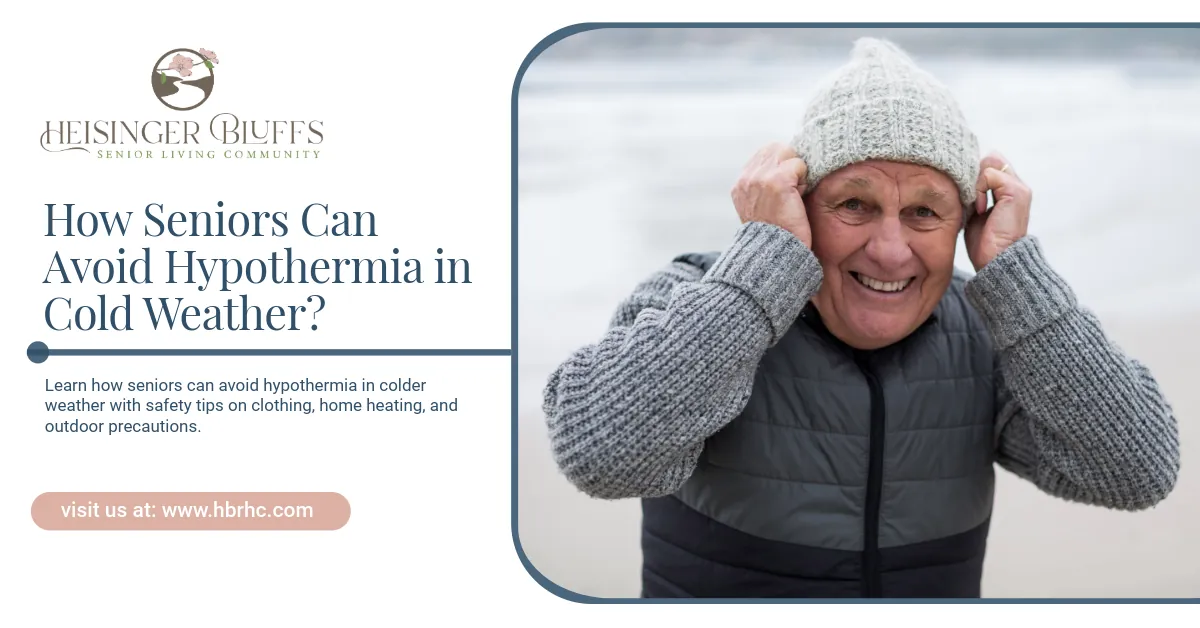
Hypothermia occurs when body temperature drops dangerously low, and seniors are especially at risk. Preventing it involves careful attention to both indoor and outdoor conditions:
- Dress in Layers: Wear thermal undergarments, sweaters, and insulated coats. Hats, gloves, and warm socks are essential.
- Stay Dry: Moisture increases heat loss, so avoid wet clothing or shoes.
- Keep Indoor Spaces Warm: Maintain home temperature above 68°F (20°C) and use safe heating methods.
- Limit Time Outdoors: Avoid prolonged exposure in extreme cold; schedule outings during warmer parts of the day.
- Eat and Hydrate Well: Nutritious meals and adequate fluids help maintain body warmth.
- Know the Warning Signs: Shivering, confusion, and slow movements may indicate early hypothermia.
Considering senior living options like Heisinger Bluffs can provide extra protection, as communities offer climate-controlled environments, supervised care, and emergency support to keep residents safe during colder months.
Frequently Asked Questions
Sources:
- https://www.uclahealth.org/news/article/older-adults-more-susceptible-to-hypothermia
- https://jamanetwork.com/journals/jama/fullarticle/2676112
What temperature is dangerous for seniors?
Prolonged exposure below 50°F (10°C) can increase the risk of hypothermia in seniors.
Can hypothermia happen indoors?
Yes, poorly heated homes or drafts can lead to indoor hypothermia
What should I do if a senior shows signs of hypothermia?
Move them to a warm area, remove wet clothing, provide blankets, and seek medical attention immediately.