
How Do Relationships Change as People Age?
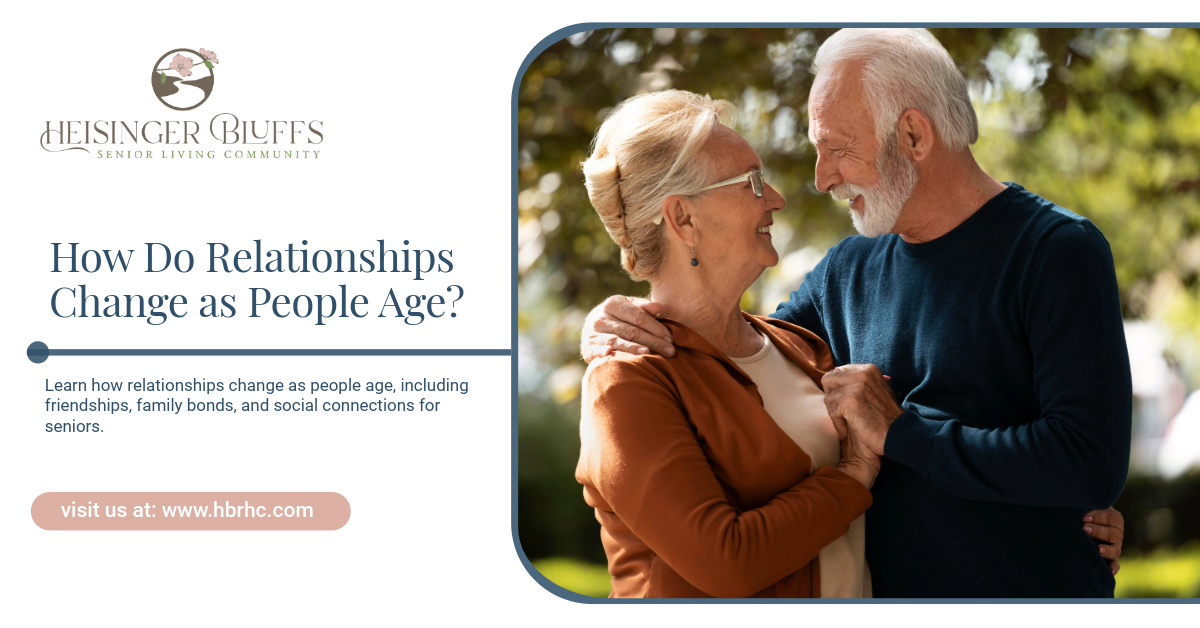
As people age, relationships often shift in ways that affect emotional well-being and social life. Understanding these changes helps seniors stay connected and maintain meaningful bonds.
Key ways relationships evolve include:
- Family dynamics: Adult children may become caregivers, and roles may shift. Seniors may rely more on family support while valuing independence.
- Friendships: Social circles may shrink due to relocation, health issues, or loss of peers. Quality often becomes more important than quantity.
- Romantic relationships: Long-term partnerships may deepen, while widows or widowers may experience changes in companionship.
- Community connections: Seniors often seek social engagement through clubs, volunteer work, or senior living communities to stay active and connected.
Adapting to these changes and prioritizing social interaction supports mental and emotional health. Staying proactive in forming and maintaining relationships can reduce loneliness and enhance overall quality of life.
At Heisinger Bluffs, seniors enjoy a community that fosters friendships, family connections, and meaningful social activities tailored to evolving needs.
Frequently Asked Questions
Do friendships decline with age?
Friendship circles may shrink, but deep, meaningful connections often become stronger.
How can seniors maintain social connections?
Through community activities, hobbies, volunteering, and regular communication with family and friends.
Why are relationships important for seniors?
Strong social ties support mental health, reduce loneliness, and improve overall well-being.
Sources:
- https://www.psychologytoday.com/us/blog/in-the-name-love/201910/what-love-means-when-youre-old
- https://www.research.colostate.edu/healthyagingcenter/knowledge-hub/aging-basics/social-relationships/



Share This Article
You May Also Like To Read