
Are Seniors Resistant to Change?
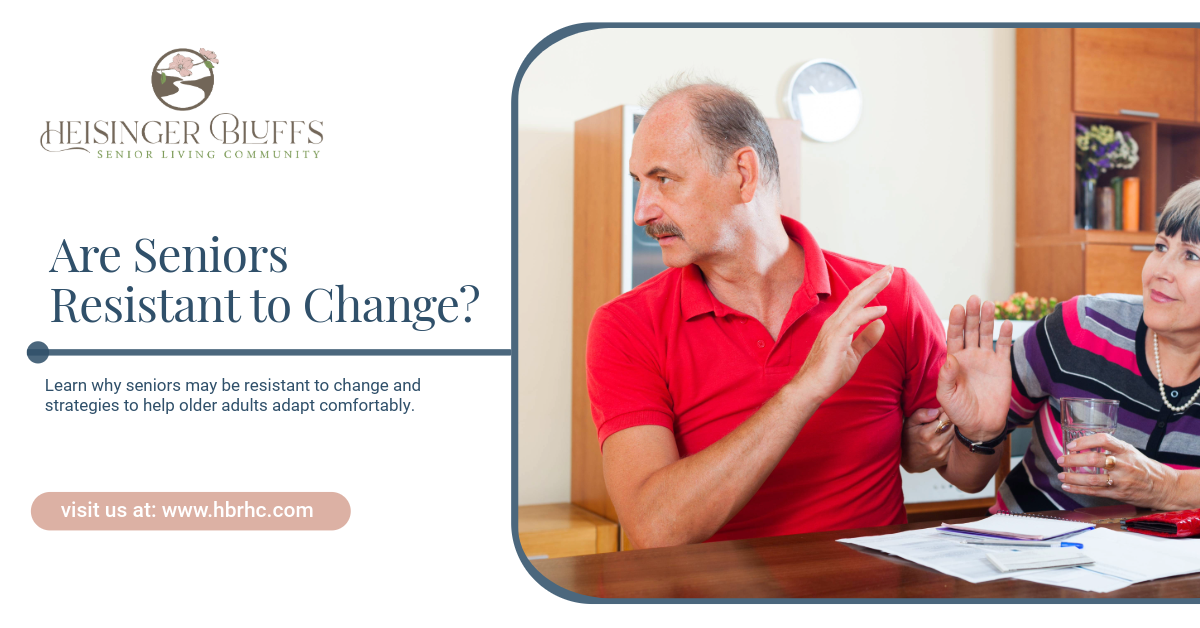
It’s common to hear that seniors are resistant to change, but the reality is more nuanced. Many older adults value stability, routines, and familiarity, which can make new experiences feel challenging or stressful.
Reasons seniors may resist change include:
- Comfort with routine: Daily habits provide predictability and security.
- Fear of the unknown: New technology, environments, or health routines can feel overwhelming.
- Health or cognitive challenges: Physical limitations or memory changes can adapt harder.
- Emotional attachment: Seniors may have strong connections to their homes, social circles, or familiar ways of doing things.
Helping seniors adapt:
- Introduce changes gradually and provide clear explanations.
- Offer choices to give a sense of control.
- Be patient and supportive while encouraging small steps toward adjustment.
With understanding and thoughtful support, seniors can successfully navigate changes and maintain independence and confidence.
At Heisinger Bluffs, residents receive compassionate guidance and resources to help them adapt comfortably to life’s transitions while staying engaged and secure.
Frequently Asked Questions
Are all seniors resistant to change?
No. Many seniors embrace new experiences when supported and given time.
How can caregivers help seniors adapt?
Introduce changes slowly, explain the benefits, and provide emotional support.
Does resistance to change affect health?
Yes, stress from sudden changes can impact mental and physical well-being if not managed carefully.
Sources:
- https://www.nm.org/healthbeat/healthy-tips/emotional-health/Why-Some-Older-Adults-Are-Reluctant-to-Ask-for-Help
- https://www.ncbi.nlm.nih.gov/books/NBK83771/



Share This Article
You May Also Like To Read