

How Can Seniors Safely Rebuild Stamina?

Senior man stretching outdoors.

As we age, stamina naturally declines, but seniors can safely rebuild it with the right approach. The key is gradual, consistent effort combined with proper care.

  1. Start Slow and Steady: Begin with low-impact exercises like walking, swimming, or stationary cycling. Even 5–10 minutes a day can make a difference, gradually increasing duration and intensity.
  2. Strengthen Muscles: Incorporate light resistance training using bands, light weights, or bodyweight exercises. Strong muscles support endurance and reduce fatigue.
  3. Focus on Cardiovascular Health: Gentle aerobic exercises improve heart and lung function, boosting overall energy levels.
  4. Prioritize Nutrition and Hydration: Balanced meals with lean proteins, whole grains, and fruits/vegetables support energy. Stay hydrated to prevent fatigue and dizziness.
  5. Rest and Recovery: Allow time for rest between activities. Adequate sleep and recovery days prevent overexertion and injury.

With careful planning and support, seniors can safely regain stamina and enjoy a more active lifestyle. Communities like Heisinger Bluffs offer programs designed to help seniors improve strength, endurance, and overall well-being.

Frequently Asked Questions

How often should seniors exercise to rebuild stamina?

Aim for 3–5 days per week with gradual increases in activity.

Can seniors rebuild stamina if they have chronic conditions?

Yes, but always consult a doctor before starting a new exercise routine.

What’s the best exercise for quick stamina improvement?

Low-impact aerobic exercises like walking or water aerobics are effective and safe.


Sources:

  • https://www.hopkinsmedicine.org/health/wellness-and-prevention/age-defying-energy-levels
  • https://www.webmd.com/healthy-aging/how-to-increase-energy-after-60

Share This Article

Facebook X / Twitter LinkedIn Email

More Posts

A senior wearing a hospital gown sitting on a hospital bed
Article October 29, 2026

What Families Should Know About Delirium After Hospitalization in Seniors

By Heisinger Bluffs Editorial

Delirium after hospitalization is common in older adults. Learn the signs, why it is missed, how long recovery takes, and how families can help at home.

Read article
A senior sitting at a room with her hand on her forehead
Article October 29, 2026

Aging, Cognitive Impairment, and Dementia: What's the Difference?

By Heisinger Bluffs Editorial

Aging, cognitive impairment, and dementia are not the same. Learn what changes are normal, what MCI means, and when memory changes need evaluation.

Read article
A caregiver helping a senior stand during recovery
Article October 28, 2026

What Can Delay Recovery After Surgery in Seniors?

By Heisinger Bluffs Editorial

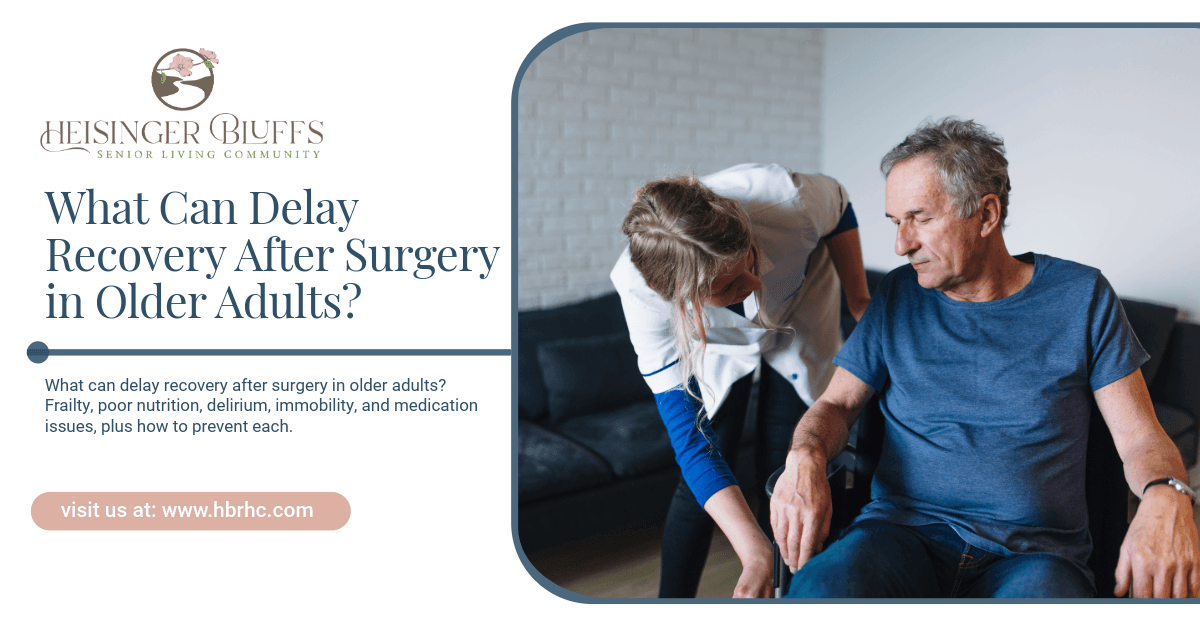
What can delay recovery after surgery in seniors? Frailty, poor nutrition, delirium, immobility, and medication issues, plus how to prevent each.

Read article
Nurse caring for elderly patient
Article October 27, 2026

How to Prepare an Older Adult for a Hospital Stay

By Heisinger Bluffs Editorial

Learn how to prepare an older adult for a hospital stay: medication lists, advance directives, what to pack, and discharge planning that protects recovery.

Read article
A caregiver talking to an elderly man sitting in a wheelchair
Article October 22, 2026

Why Continuity of Care Matters When Seniors Change Providers

By Heisinger Bluffs Editorial

Continuity of care matters when seniors change providers. Learn how to share records, keep routines, and protect health through every transition.

Read article
A woman talking to an elderly woman sitting in wheelchair
Article October 21, 2026

How Families Can Stay Involved in Care Without Overstepping

By Heisinger Bluffs Editorial

Learn how families can stay involved in care without overstepping, with practical tips on communication, boundaries, and supporting your loved one.

Read article

Join our newsletter

Sign up for our mailing list & get our monthly news and updates!

* indicates required