


Do Families Participate in Memory Care Planning? What You Need to Know

An elderly lady is talking to her son about memory care planning

Yes, families play an important role in memory care planning. When a loved one enters a memory care community, staff members work closely with family members to create a personalized care plan. Families provide valuable insight into the senior’s medical history, routines, preferences, and life story. This information helps caregivers tailor daily support and activities to meet the resident’s unique needs.

Ongoing family involvement is also encouraged. Regular check-ins, care plan reviews, and family meetings ensure that the plan continues to reflect the resident’s changing needs. Families may also join in community activities or therapy sessions to strengthen emotional connections and support overall well-being.

By partnering with families, memory care staff can deliver more compassionate, consistent, and effective care. At Heisinger Bluffs, we value family participation and welcome loved ones as an active part of the care team.

Frequently Asked Questions

Do families help create the initial memory care plan?

Yes, families share key details to shape a personalized plan.

Can families attend care plan meetings?

Absolutely. Regular meetings allow families to stay informed and involved.

Are families encouraged to visit often?

Yes, frequent visits strengthen connections and improve quality of life.


Sources:

  • https://pmc.ncbi.nlm.nih.gov/articles/PMC8811321/
  • https://www.nccdp.org/16-benefits-of-memory-care-facility-for-caregivers-amp-their-loved-ones/
Share This Article

Facebook X / Twitter LinkedIn Email

More Posts

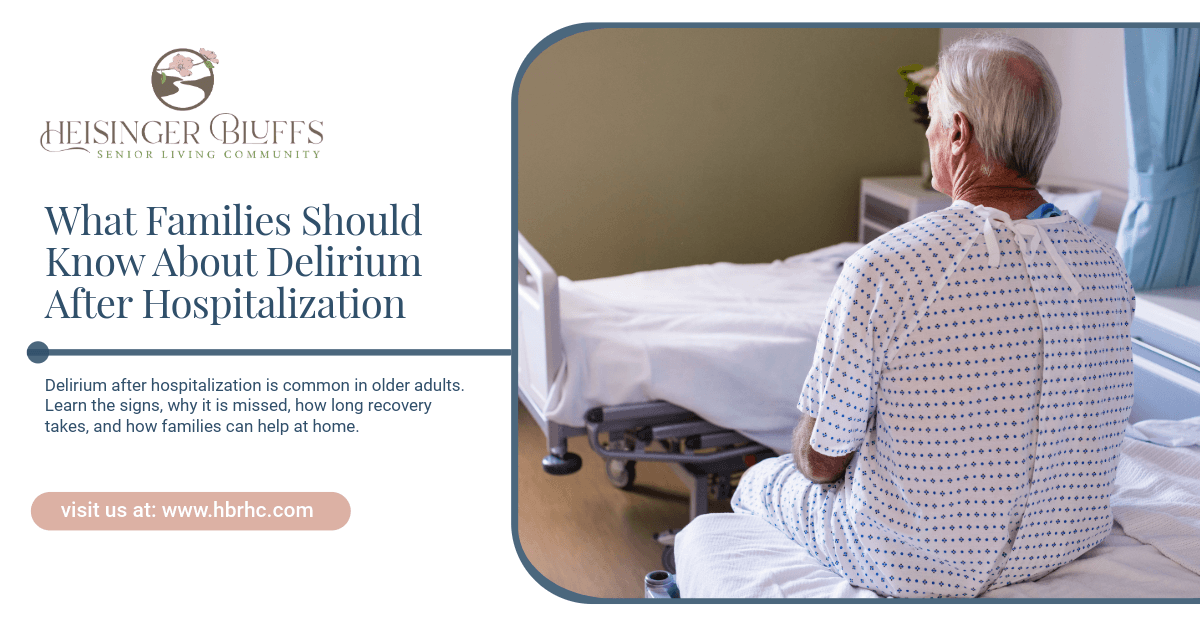
A senior wearing a hospital gown sitting on a hospital bed
Article October 29, 2026

What Families Should Know About Delirium After Hospitalization in Seniors

By Heisinger Bluffs Editorial

Delirium after hospitalization is common in older adults. Learn the signs, why it is missed, how long recovery takes, and how families can help at home.

Read article
A senior sitting at a room with her hand on her forehead
Article October 29, 2026

Aging, Cognitive Impairment, and Dementia: What's the Difference?

By Heisinger Bluffs Editorial

Aging, cognitive impairment, and dementia are not the same. Learn what changes are normal, what MCI means, and when memory changes need evaluation.

Read article
A caregiver helping a senior stand during recovery
Article October 28, 2026

What Can Delay Recovery After Surgery in Seniors?

By Heisinger Bluffs Editorial

What can delay recovery after surgery in seniors? Frailty, poor nutrition, delirium, immobility, and medication issues, plus how to prevent each.

Read article
Nurse caring for elderly patient
Article October 27, 2026

How to Prepare an Older Adult for a Hospital Stay

By Heisinger Bluffs Editorial

Learn how to prepare an older adult for a hospital stay: medication lists, advance directives, what to pack, and discharge planning that protects recovery.

Read article
A caregiver talking to an elderly man sitting in a wheelchair
Article October 22, 2026

Why Continuity of Care Matters When Seniors Change Providers

By Heisinger Bluffs Editorial

Continuity of care matters when seniors change providers. Learn how to share records, keep routines, and protect health through every transition.

Read article
A woman talking to an elderly woman sitting in wheelchair
Article October 21, 2026

How Families Can Stay Involved in Care Without Overstepping

By Heisinger Bluffs Editorial

Learn how families can stay involved in care without overstepping, with practical tips on communication, boundaries, and supporting your loved one.

Read article

Join our newsletter

Sign up for our mailing list & get our monthly news and updates!

* indicates required