
How Do Senior Living Residents Adjust Socially and Emotionally?

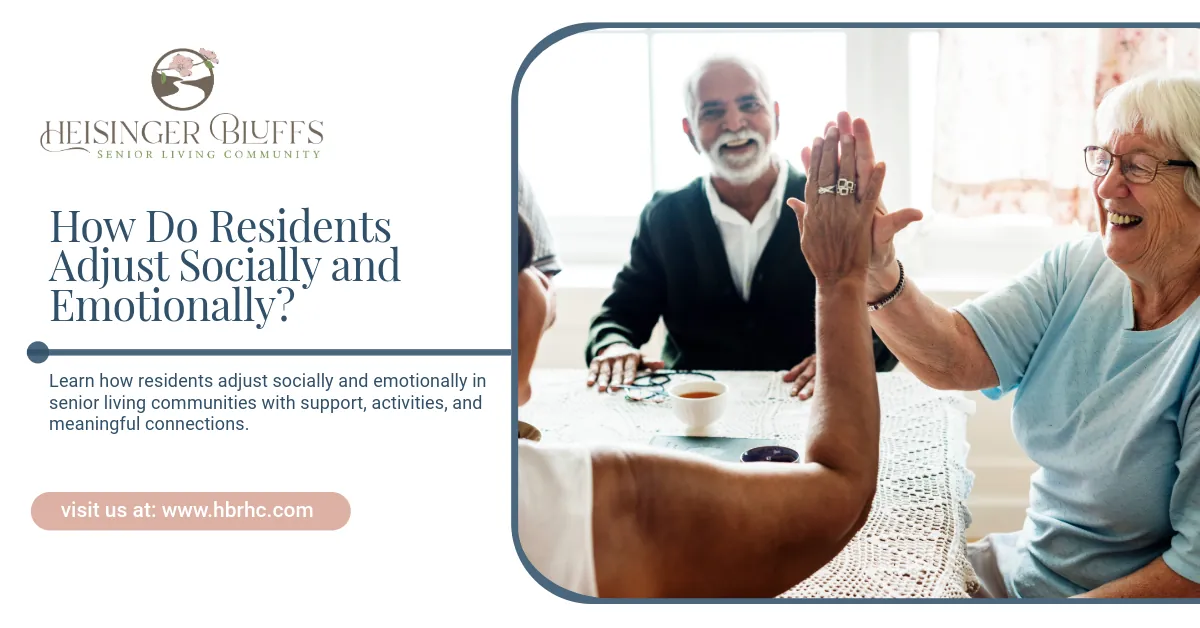
Senior living residents bonding together

Moving into senior living is a big transition, but most residents adjust socially and emotionally with the right support. Communities focus on creating welcoming environments where seniors can build friendships and feel at home.


Social adjustment often begins with structured activities, such as group outings, fitness classes, or hobby clubs. These opportunities encourage residents to meet others with shared interests and form new bonds. Emotional adjustment comes from feeling included, respected, and supported by both peers and staff.


Many residents also benefit from counseling services, support groups, and family visits, which provide reassurance during the transition. Over time, seniors usually discover a sense of belonging, improved mood, and renewed confidence in their new community.


At Heisinger Bluffs, we prioritize both social and emotional well-being, helping residents thrive in a warm, supportive environment.


Frequently Asked Questions

  • How long does it take residents to adjust emotionally?

    It varies, but most feel comfortable within a few weeks to months.

  • Do activities help with social adjustment?

    Yes, structured programs are designed to build friendships and reduce isolation.

  • Can families support the adjustment process?

    Absolutely—visits and involvement ease the transition and boost confidence.


Sources:

  • https://pmc.ncbi.nlm.nih.gov/articles/PMC5662155/
  • https://www.agingcare.com/questions/when-will-my-mother-adjust-to-assisted-living-449331.htm
Heisinger Bluffs logo
A nurse sitting next to an elderly woman on a couch
SCHEDULE A TOUR
Google rating average 4.65 rating out of 60 reviews

Want to know more?

Share This Article

You May Also Like To Read

A senior care staff member assisting an elderly man lying on a couch
By Heisinger Bluffs Editorial September 10, 2026
Activities of Daily Living are the six basic self care tasks that shape senior care needs. Learn what they are, how they are assessed, and why they matter.
An assisted living resident eating breakfast with a staff member
By Heisinger Bluffs Editorial September 9, 2026
Wondering when assisted living becomes safer than living alone? Learn the real warning signs, hidden risks, and how to know it is time to make a change.
Memory care staff talking with residents in a bright care facility
By Heisinger Bluffs Editorial September 8, 2026
Memory care supports families as much as residents. Learn how it eases caregiver strain, restores relationships, and shares the daily weight of dementia.
A senior sleeping in bed
By Heisinger Bluffs Editorial September 7, 2026
Sleep patterns change with age for real biological reasons. Learn what shifts, what is normal, what is not, and how older adults can sleep better.
A senior living community staff holding a clipboard, talking to an elderly woman.
By Heisinger Bluffs Editorial September 3, 2026
Discover how community living reduces everyday risks for older adults, from falls and isolation to delayed emergency response.
A senior and her daughter talking to a senior living community staff about future care options
By Heisinger Bluffs Editorial September 2, 2026
Explore the benefits of having future care options in one community, from smoother transitions to lasting peace of mind for families.
More Posts