
Creating a Senior Living Visiting Routine for Families

Key Highlights
- A good visiting routine balances consistency, quality, and sustainability. Frequency alone doesn't equal a good visit.
- Most families do best with a regular anchor day plus shorter, lower-pressure check-ins, rather than long unpredictable visits.
- The first few weeks after a move-in often call for a different rhythm than the months that follow.
- Time of day matters more than most families realize. Energy, mood, and cognition vary throughout the day, especially for residents with dementia.
- Short, meaningful visits almost always beat long, exhausting ones for both the visitor and the resident.
- Splitting visits across family members and using phone calls, video chats, and shared activities can keep the connection strong without burning anyone out.
When a parent or spouse moves into a senior living community, one of the quiet questions almost every family wrestles with is: how often should we visit? It sounds like a simple question, but it isn't. Visit too rarely, and you carry guilt around like a backpack. Visit too often, and you can run yourself ragged, leave your loved one unsettled, or start to feel like every weekend belongs to someone else. There's no universal answer, but there is a way to build a visiting routine that actually works for your family, supports your loved one, and doesn't quietly burn you out over the long haul.
This guide is for adult children, spouses, and grandchildren trying to figure out what a healthy, sustainable visiting rhythm looks like. Whether your loved one just moved in last month or has been settled for years, the goal is the same: visits that strengthen the relationship without consuming your life.
Why Visiting Routines Matter More Than People Think
When a loved one moves into senior living, the relationship doesn't pause—it changes shape. You're no longer the daily caregiver, scheduler, or chef. You're a visitor. And that shift, while often a relief, can also feel disorienting. Many adult children tell us they don't quite know what their role is anymore, or how much "presence" is the right amount.
A consistent visiting routine helps with that uncertainty in three concrete ways.
First, it gives your loved one something to look forward to. Older adults, especially those adjusting to a new environment, draw real comfort from predictability. Knowing that Tuesday is "Sarah's day" or that the grandkids come the second Sunday of every month settles the nervous system and anchors the week.
Second, it protects you from guilt. When you have a clear rhythm, you stop measuring every week against some imaginary standard of how often a "good son" or "good daughter" visits. You did Tuesday. You're doing Tuesday again next week. That's the deal.
Third, it makes visits better. When you're not running on the fumes of a too-frequent schedule, and you're not arriving once a quarter weighed down by guilt, your visits tend to be calmer, warmer, and more present. Quality follows from sustainability.
The First Few Weeks Are Different
The transition into a senior living community is its own season, and visiting during it follows different rules. For the first two to four weeks after a move-in, families often feel pulled to visit constantly, to check on the room, the food, the staff, the mood. That instinct is understandable, but it isn't always helpful.
In our experience working with new residents and their families in Missouri, the families who hover too much during the adjustment period sometimes accidentally slow it down. If you visit every day for the first two weeks, your loved one doesn't get the chance to settle into the community's rhythm, meet other residents at meals, or build relationships with the staff. Their world stays centered on your visit instead of expanding into their new home.
A more helpful approach, in most cases, is to visit moderately during the first few weeks, enough to show love and make sure things are going well, but not so much that you become the only thing your loved one is anchored to. Many of the most successful transitions we've watched involved families who visited two or three times the first week, then settled into a regular weekly rhythm by the end of the first month. There are exceptions, particularly for residents with significant memory loss or those who are anxious, but the principle holds: presence, not constant presence.
What a Sustainable Visiting Routine Looks Like
The best visiting routines tend to have a few features in common.
- An anchor day. Most families do well with one regular, predictable day per week. A Sunday after church, a Wednesday lunch, a Saturday morning. The anchor day becomes the foundation; everything else is optional. Even if a busy week means you can only manage the anchor visit, you still showed up.
- Shorter is usually better. A 45-minute visit where you're present, engaged, and warm beats a three-hour visit where you're checking your phone, watching the clock, and feeling drained. Many seniors, especially those with dementia, recent illness, or limited stamina, actually do better with shorter visits.
- A backup plan for the off-days. Phone calls, video chats, a quick voicemail, a text with a photo of the grandkids. Connection doesn't only happen in person. A family member checking in by phone on a Wednesday can be as meaningful as a Saturday visit, especially for residents whose loneliness peaks midweek.
- Distributed visits across the family. If one adult child carries the entire visiting load, resentment and burnout almost always follow. A rotating schedule, even an informal one, spreads the warmth around. It also gives your loved one different conversations, different energies, and different topics to think about.
- Built-in flexibility. Life happens. Kids get sick, work runs late, weather turns bad. A good visiting routine bends without breaking. Missing one week isn't a failure; it's a normal part of the rhythm.
Timing the Visit: When You Go Matters
Most families think about how often to visit before they think about when, but the "when" often makes the bigger difference in how the visit actually feels.
Most seniors have a window during the day when they're at their best, usually mid-morning to early afternoon. Cognition tends to be sharper, energy is higher, and mood is more stable. For residents with dementia, this is even more pronounced; many experience "sundowning" in the late afternoon and evening, when confusion, anxiety, and agitation peak.
Visiting during the best window benefits everyone. Your loved one is more engaged, conversation flows better, and you leave with the sense that the visit mattered. Visiting during a low window, late afternoon, around shift changes, right before bed, often produces shorter, more tired interactions that can leave both of you feeling oddly disconnected.
The community staff is one of the best resources for figuring out the right window. They see your loved one across all hours of the day and can tell you when they tend to be most alert and social.
Making the Visit Itself Meaningful
Showing up is the first half. What you do during the visit is the second.
The most common mistake we see is families treating every visit like a social call, sitting in the room making conversation, running out of topics 20 minutes in, and then watching the clock until it's polite to leave. That kind of visit is exhausting for everyone, and it isn't necessary.
Instead, try anchoring visits around an activity, even a simple one. A few approaches that tend to work well:
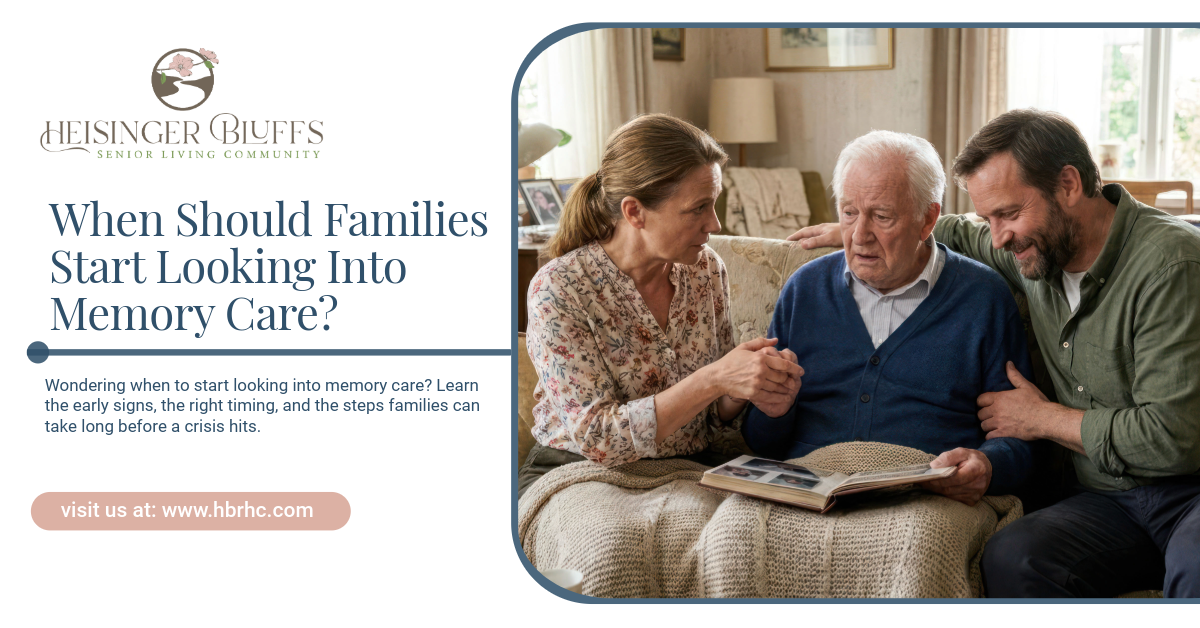
- Bring something specific to share. A photo album, a few pictures on your phone, a short video of the grandkids, a piece of mail to open together. Concrete things give the conversation somewhere to go.
- Eat together when you can. Many communities welcome family members at meals. Sharing a meal is a deeply normal human activity that doesn't require manufactured conversation.
- Take a walk. If your loved one is mobile, a slow walk around the community, the courtyard, or even the hallway is a change of scenery that often lifts the mood for both of you.
- Play something. Cards, a simple board game, a crossword, a puzzle. Even residents with cognitive decline often retain the muscle memory of familiar games and enjoy them.
- Listen to music from their era. Music is one of the most powerful triggers for memory and emotion, particularly for residents with dementia. A playlist of songs from their teens and twenties can transform a quiet afternoon.
- Bring the next generation. Grandchildren and great-grandchildren almost always brighten a visit, even short ones. Kids don't need to know what to talk about; their presence is enough.
- Help with something practical. Sorting mail, organizing photos, hanging a picture, watering a plant. Small tasks give visits purpose without requiring constant conversation.
You don't need to do all of these. Pick one or two that fit your loved one's personality and energy, and let them anchor the visit.
When Visits Feel Hard
Some visits will be hard. A bad day, a difficult conversation, a moment when your loved one doesn't recognize you, or a flash of irritation that hits before you've even taken your coat off. None of that means your routine is broken.
For families navigating memory loss in particular, we've watched adult children leave a visit in tears, convinced their mother is "gone" — only to come back the next week and find her warm, engaged, and asking about their job. Memory disorders fluctuate. So does mood. So does energy. One hard visit doesn't predict the next one.
What helps most in those moments:
- Don't take it personally. Confusion, irritability, and emotional distance are often symptoms, not statements about you.
- Shorten the visit if you need to. No rule says a visit has to last a certain length. If it isn't going well, a graceful, loving exit is fine.
- Talk to the community staff. They know your loved one's patterns and can often help you understand what you saw and what to expect next time.
- Give yourself something soft afterward. A walk, a call with a friend, a quiet drive home with the radio off. Hard visits deserve recovery time.
Building Something That Lasts
A visiting routine isn't a contract. It's a living rhythm—one that should bend with seasons, work schedules, your loved one's changing needs, and your own life. The families we see thrive over the long haul aren't the ones with the most visits on the calendar. They're the ones who built a sustainable rhythm, stuck to it through busy seasons, adjusted when something stopped working, and gave themselves room to be human along the way.
At Heisinger Bluffs in Jefferson City, Missouri, we help families build the kind of visiting rhythms that actually last. Our team is glad to share what we've learned about transition periods, the best times of day for visits, and the kinds of shared activities that make time together feel meaningful, whether your loved one is in independent living, assisted living, or memory care.
If you're considering senior living for someone you love and want to see what daily life looks like, reach out to us, and we'd be glad to walk you through it, no pressure and no obligation.
Frequently Asked Questions
How often should I visit a parent in assisted living?
There's no universal answer, but most families find that one regular weekly visit, supplemented by phone or video calls and occasional drop-ins, works well. What matters most is consistency and your loved one's individual needs — not hitting a specific number per week.
My parent gets upset when I leave. Should I visit less often?
Probably not, though you might want to adjust how visits end. Brief, calm goodbyes — without lingering or repeatedly saying "I have to go now" — usually transition more easily than long, emotional departures. The community staff can also help by gently redirecting your loved one to an activity right after you leave. If distress is intense or ongoing, talk to the staff and a healthcare provider; sometimes it signals something else worth addressing.
What if my loved one has dementia and doesn't remember my last visit?
The visit still mattered. Research and decades of clinical experience consistently show that emotional impressions linger long after the specific memory fades. Your loved one may not remember that you came on Tuesday, but the warmth, the calm, and the sense of being loved tend to carry forward even when the details don't.
How do I get my siblings to share the visiting load?
Start with a direct, calm conversation — ideally not at the holidays or in a moment of frustration. Propose a simple rotating schedule with clear days, and put it in writing (even a shared text thread or calendar works). Siblings often step up when the ask is specific rather than vague. If they don't, you may need to set limits on what you can carry alone and bring in additional support from the community.
Is it okay to skip a week if I'm exhausted or sick?
Yes. Genuinely. A sustainable visiting routine includes the occasional skipped week. Send a quick call, text, or note instead, let the community know you won't be coming, and pick the rhythm back up the following week. Burning yourself out doesn't serve your loved one.
Sources:
- https://www.agingcare.com/articles/visiting-elderly-nursing-homes-guilt-stress-emotions-139127.htm
- https://www.hopkinsmedicine.org/health/wellness-and-prevention/tough-but-important-conversations
- https://justiceinaging.org/25-common-nursing-home-problems/
- https://www.aplaceformom.com/caregiver-resources/articles/reasons-for-visiting-loved-ones



Share This Article
You May Also Like To Read