
Key Highlights
- Loneliness affects nearly 1 in 4 adults and carries health risks equivalent to smoking or obesity
- Social isolation in later life often stems from retirement, relocation, loss of loved ones, or reduced mobility—but these are addressable challenges
- Meaningful connections can be rebuilt through intentional strategies, including structured social activities, volunteer work, and community engagement.
- Technology and intergenerational relationships offer modern pathways to combat isolation that many adults haven't yet explored
- Proactive support from friends, family, and community resources dramatically improves emotional resilience and physical health outcomes
Understanding Loneliness in Older Adulthood
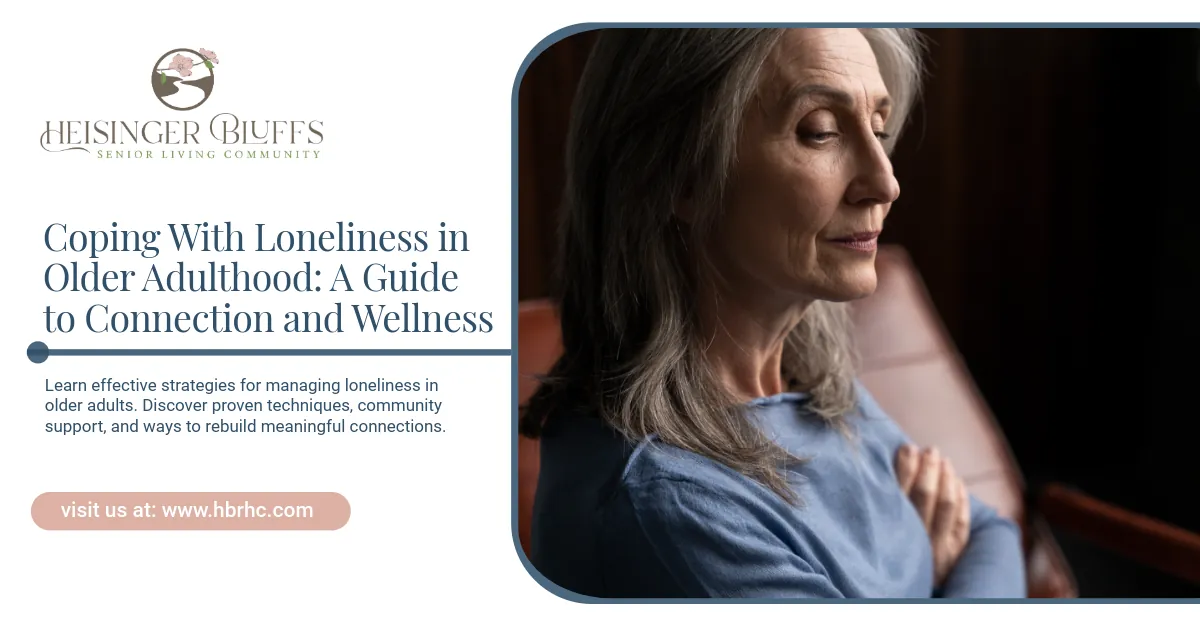
Loneliness in older adults is far more than a fleeting sadness or occasional boredom. It's a deeply felt experience of disconnection—a gap between the social connections someone has and the connections they desire. For many seniors, this gap widens unexpectedly as life circumstances shift.
The experience of loneliness in later life looks different from other life stages. A 35-year-old might feel lonely at work despite being surrounded by colleagues; an older adult often faces a genuine absence of regular social contact. Retirement removes the daily workplace relationships. Adult children move away. Long-term friends pass away. Mobility challenges make it harder to attend activities that once felt effortless. What begins as a circumstance can gradually crystallize into an emotional state that affects everything—appetite, sleep, motivation, and hope.
The distinction between loneliness and solitude matters enormously. Solitude, chosen time alone, can be restorative and peaceful. Loneliness, unwanted disconnection, erodes well-being. Understanding this difference is the first step toward addressing it.
Why Loneliness Hits Harder in Older Adulthood
Several factors converge to make older adults especially vulnerable to loneliness:
Life Transitions
Retirement, the loss of a spouse, relocation to a new community, or health challenges that limit mobility can strip away the social anchors that structure daily life.
Shrinking Social Circles
Friends relocate, move into care facilities, or pass away. Adult children live in different states. Extended family networks have dispersed across the country.
Physical Limitations
Arthritis, vision loss, hearing difficulties, or transportation challenges make it harder to attend activities or maintain spontaneous social contact.
Loss of Role and Identity
For many, work provided not just income but purpose, status, and daily social rhythm. Retirement, while longed for, can leave a profound void if new sources of meaning aren't intentionally cultivated.
Ageism and Invisibility
Older adults sometimes report feeling overlooked or excluded by younger people, as if society has moved on without them.
These circumstances aren't character flaws or personal failures—they're predictable life challenges. And they're addressable.
The Health Impact of Loneliness: Why This Matters
The research is unambiguous: loneliness carries serious health consequences.
Chronic loneliness is associated with increased risk of heart disease, stroke, diabetes, and weakened immune function. Studies from institutions like Brigham Young University have found that loneliness increases mortality risk to a degree comparable to smoking 15 cigarettes daily. For older adults, whose bodies are already managing multiple health conditions, the addition of chronic loneliness compounds medical fragility.
Beyond physical health, loneliness accelerates cognitive decline and increases the risk of depression and anxiety disorders. It weakens executive function, sleep quality, and the motivation to maintain healthy habits. An isolated older adult is more likely to skip meals, stop exercising, or neglect medication—not from carelessness, but because depression and disconnection drain the energy to care.
In our work supporting older adults transitioning to community living environments, we've seen firsthand how quickly isolation spirals. One gentleman, let's call him Robert, moved to a new community following a fall at home. For the first three months, he remained in his apartment, declining social invitations and telling his daughter he "wasn't a joiner." His blood pressure climbed, his sleep deteriorated, and his doctor noted early signs of cognitive slowing. Only when his daughter gently insisted and joined him for his first community dinner did the shift begin. By month six, Robert had become an active member of the community's weekly discussion group and volunteered in the library. His health markers improved noticeably.
Robert's story isn't unique, and it illustrates the malleability of loneliness—it's not inevitable or unchangeable, even when it feels that way.
Common Causes of Loneliness in Older Adulthood
To address loneliness effectively, it helps to understand its roots:
Loss and Grief
The death of a spouse, sibling, or long-time friend fundamentally reorganizes an older person's world. These aren't abstract losses—they're the removal of daily conversation partners, shared rituals, and collective memory. The grief is profound, and the social consequence is immediate isolation.
Geographic Displacement
Some older adults move to be closer to family or to access better healthcare. Others relocate to a retirement community to downsize or to be in a climate better suited to their health. While these moves often make practical sense, they sever existing community ties. Rebuilding a social network from scratch at 70 or 80 is far harder than it sounds.
Reduced Mobility
A stroke, arthritis, vision loss, or simply the cumulative slowdown of aging make it harder to drive, travel, or attend activities. When you can no longer host dinner, meet friends at a restaurant, or attend your book club, the easiest response is withdrawal.
Health Changes and Hospitalization
A serious illness, surgery, or hospitalization can trigger a cascade of isolation. During recovery, an older adult might withdraw temporarily—but if that temporary withdrawal stretches into months or years, loneliness calcifies.
Family Dynamics
Sometimes isolation is relational. Adult children live far away. A family conflict may have fractured relationships. A partner's passing may have removed the primary social intermediary. These relationship challenges are real, and they require real solutions.
Technology Anxiety
Older adults who lack confidence with phones, email, or video calls may feel excluded from how modern relationships are maintained. Adult children and grandchildren communicate through platforms their older relatives don't use. Ironically, the tools designed to connect people can intensify isolation for those who don't feel comfortable with them.
Proven Strategies for Coping With Loneliness
1. Structured Social Engagement
Loneliness feeds on unstructured time. The open weekend or empty afternoon becomes an opportunity for negative thought spirals. Structured activities, those with a set time, place, and purpose, interrupt isolation and create anticipation.
Effective structures include:
- Weekly discussion groups or book clubs
- Regular exercise classes or walking groups
- Volunteer positions with set schedules
- Classes in art, writing, music, or other interests
- Community meals or dining programs
- Religious or spiritual communities
- Interest-based clubs (gardening, crafts, games, etc.)
The specificity matters. "Get out more" is too vague. "Join the Thursday morning watercolor class at 9:30 AM" is actionable.
2. Intentional Relationship Building and Maintenance
Loneliness isn't solved by passive presence in a community. It requires active, intentional relationship-building.
This might mean:
- Reaching out to one person weekly—a phone call, email, or visit
- Joining a group and committing to attend consistently (research shows it takes 4-6 visits before someone feels integrated)
- Hosting or organizing a small gathering
- Following up after meetings or events ("I enjoyed our conversation about gardening last week—want to grab coffee?")
- Initiating lunch dates or activity partnerships
Older adults often worry about "bothering" others or being a burden. Gently reframing this—"People generally enjoy being wanted and included"—can lower barriers to reaching out.
3. Volunteer Work and Purpose
Volunteering serves a dual function: it creates structure and social contact while restoring a sense of purpose and contribution.
Research consistently shows that older adults who volunteer report higher life satisfaction, better mental health, and stronger social connections. Volunteering also combats the invisibility many seniors feel—it positions them as contributors, not just recipients of care.
Meaningful volunteer roles for older adults include:
- Mentoring younger people in a professional academic context
- Supporting nonprofit organizations (administrative work, fundraising, event coordination)
- Tutoring children or adults in literacy or academic subjects
- Serving in religious or community organizations
- Supporting peers in transition (hospice volunteering, support groups, etc.)
4. Intergenerational Connection
One of the most underutilized antidotes to loneliness in older adulthood is intentional connection with younger people.
Intergenerational programs—whether formal (community centers pairing seniors with student mentees) or informal (a grandparent and grandchild spending regular one-on-one time)—benefit both generations. Older adults gain energy, a fresh perspective, and a renewed sense of relevance. Younger people gain wisdom, stability, and roots.
5. Learning and Growth
Engaging the mind and learning something new combats both loneliness and cognitive decline.
Many older adults assume their learning years are behind them. In reality, older adults are excellent students—they're motivated, disciplined, and hungry for knowledge. Online courses, community college classes, workshops, and discussion groups all provide both intellectual stimulation and social contact.
6. Technology as a Bridge (Not a Substitute)
For older adults with mobility limitations or in rural areas, technology can meaningfully expand social connections.
Video calls with distant family members, online classes, virtual book clubs, and social media (used intentionally) all create real connections. This isn't a substitute for in-person relationships, but it's a powerful supplement.
The barrier is often confidence. Older adults who feel anxious about technology benefit enormously from patient, patient-paced instruction—whether from a family member, a community technology class, or a volunteer tech tutor.
7. Addressing Barriers to Connection
Sometimes loneliness persists because concrete barriers block access to social opportunities. Strategies include:
- Transportation: Arrange rides to activities, use community transportation services, or find activities within walking distance.
- Mobility assistance: Look for activities that accommodate physical limitations
- Hearing loss: Seek groups with good acoustics, use hearing loop systems, or facilitate one-on-one connections where hearing works better
- Social anxiety: Start small (one person, one activity) and build gradually
- Cost: Seek free or low-cost community programs, meal programs, or transportation services
Coping Strategies Comparison
| Strategy | Time Commitment | Social Benefit | Accessbility |
|---|---|---|---|
| Structured group activities | 1-3 hrs/week | High (regular contact) | Moderate (requires transportation/mobility) |
| One-on-one relationships | Variable | High (deep connection) | High (flexible) |
| Volunteer work | 4-8 hrs/week | High (purposeful connection) | Moderate (requires ability to contribute) |
| Intergenerational mentoring | 2-4 hrs/week | High (meaningful impact) | Moderate (requires active engagement) |
| Online/technology connection | Variable | Moderate (convenient but less embodied) | High (from home) |
| Learning/classes | 2-3 hrs/week | Moderate-High (social learning environment) | Moderate (requires cognitive engagement) |
Real Example: From Isolation to Connection
Margaret, age 78, moved to a new community after her husband passed away. Her daughter had encouraged the move—it was closer to doctors and offered social opportunities—but Margaret resisted fiercely. She felt she was abandoning her old neighborhood, her memories, and her identity as a wife.
For the first two months, Margaret ate alone in her apartment, declined invitations, and spent most of her time reading or watching television. Her daughter noticed her calls becoming shorter, her tone flatter. Margaret was sinking into depression, though she wouldn't call it that.
The turning point came through a combination of small steps. First, Margaret's daughter didn't force—she invited Margaret to join her for lunch at the community dining room, framing it as "spending time together" rather than "getting social." At the dining table, Margaret met two women who mentioned an informal book club meeting twice a month.
Margaret attended reluctantly. But the book the group was reading, a memoir about a woman navigating life transitions, resonated. She found herself offering thoughts she hadn't expected to express. Other women listened and responded thoughtfully. By the third meeting, Margaret was looking forward to it.
From that single connection, everything shifted. One of the book club members invited her to a volunteer position helping newer residents navigate community resources. Through that volunteer work, Margaret built relationships with staff and residents. Within six months, Margaret had become an informal ambassador, helping new residents feel welcome. She started a second book club for residents interested in poetry. She began taking a painting class because one of her new friends suggested it.
Eighteen months later, Margaret still missed her husband and her old home. But she had a new social life, renewed purpose, and regular laughter. Her doctor noted improved sleep and lower anxiety medication requirements.
Margaret's journey wasn't about "replacing" her old life. It was about intentionally building a new one, step by step, with patience and small supports.
Self-Assessment: Are You Experiencing Loneliness?
Consider these questions:
- Do you regularly feel disconnected or misunderstood by others?
- Have your social interactions declined in frequency or depth?
- Do you spend most days alone, without meaningful conversation?
- Do you feel that few people would notice if you weren't there?
- Have you withdrawn from activities or people you once enjoyed?
If you answered "yes" to more than two of these, loneliness may be affecting your well-being. This isn't a failure; it's information, and it is actionable.
A Path Forward
Loneliness in older adulthood is not inevitable, even when it feels overwhelming. It's a signal—telling us that human connection matters, that we need community, that isolation comes at a cost. That signal, though painful, is also an invitation to act.
Whether through structured activities, intentional relationship-building, volunteer work, or technology-enabled connection, older adults have powerful tools to move from isolation toward genuine belonging. Some steps are small: attending one community event, making one phone call, taking one class. Others are bigger: joining a volunteer role, moving to a community with a built-in social structure, or committing to regular dinners with a friend.
At Heisinger Bluffs, we understand that loneliness is one of the most serious health challenges facing older adults today. Our communities in Jefferson City, Missouri, are designed around a core insight: that belonging is not a luxury—it's essential to well-being.
We've watched residents like Margaret transform their lives by moving from isolation into intentional community. We've seen the health benefits, the renewed purpose, the laughter that returns when an older adult feels genuinely connected and valued. Our approach combines the social structure of community living with personalized support, volunteer opportunities, intergenerational programming, and activities designed to foster real friendship—not just busywork.
If loneliness is weighing on you or someone you care about, we invite you to reach out. Whether you're exploring options for yourself or seeking guidance for an aging loved one, our team is here to talk through how a supportive community environment can help rebuild connection, restore purpose, and open a new chapter of meaningful living.
If loneliness is weighing on you or someone you care about, we invite you to reach out to us. Whether you're exploring options for yourself or seeking guidance for an aging loved one, our team is here to talk through how a supportive community environment can help rebuild connection, restore purpose, and open a new chapter of meaningful living.
Contact us today to learn more about how Heisinger Bluffs can help you thrive. We serve the greater Jefferson City area and are ready to welcome you home.
Frequently Asked Questions
Is loneliness just about being alone? Can't older adults just enjoy solitude?
Loneliness and solitude are fundamentally different. Solitude is chosen, peaceful time alone—very healthy. Loneliness is unwanted disconnection. An older adult might be alone (solitude) or feel profoundly lonely in a room full of people. The key is whether the person has the social connection they desire, not whether they're physically alone.
I've been isolated for years. Is it too late to rebuild friendships?
No. Research on older adults shows that meaningful new friendships and social connections can develop at any age, even after years of isolation. The brain remains capable of forming new social bonds. It requires intentionality and sometimes small support, but it's absolutely possible. Start small—one activity, one connection—and build from there.
How can I help an older parent or relative who is lonely?
Avoid pushing ("Just get out more") or framing the problem as their fault ("You need to be more social"). Instead, take active steps: invite them to activities with you, help arrange transportation, look for opportunities aligned with their interests, or suggest professional support if depression is present. Sometimes the most powerful intervention is consistency—regular contact, regular invitations, steady presence.
Can loneliness be addressed through therapy or medication alone?
Professional support—including therapy and sometimes medication—is valuable for addressing depression or anxiety alongside loneliness. But loneliness itself is solved through genuine social connection. Therapy can help someone process grief, build confidence, or address barriers to connection, but it can't replace actual relationships and community. The most effective approach combines professional support with practical efforts to rebuild connection.
What if I have mobility limitations or live in a rural area where activities aren't accessible?
This is a real barrier, but there are workarounds. Online groups, one-on-one visiting, phone partnerships, virtual classes, and volunteer opportunities that can be done from home all create meaningful connection. Rural communities sometimes have less obvious social opportunities, but they often have strong church/religious communities, hobby groups, or volunteer opportunities. Technology has also opened entirely new possibilities for connection regardless of location.
Sources:
- https://www.nia.nih.gov/health/loneliness-and-social-isolation/loneliness-and-social-isolation-tips-staying-connected
- https://jamanetwork.com/journals/jama/fullarticle/2819153
- https://www.hhs.gov/sites/default/files/surgeon-general-social-connection-advisory.pdf
- https://www.nytimes.com/wirecutter/reviews/smart-home-for-seniors/
- https://distance.physiology.med.ufl.edu/about/articles/assistive-technology-devices-helping-seniors-age-in-place/