
Key Highlights
- Adults 65 and older account for the majority of flu hospitalizations and deaths each season, largely because the aging immune system responds more slowly to new viruses.
- Higher-dose, adjuvanted, and recombinant flu vaccines are preferentially recommended for people 65 and older, and late September through October is the ideal window to get one.
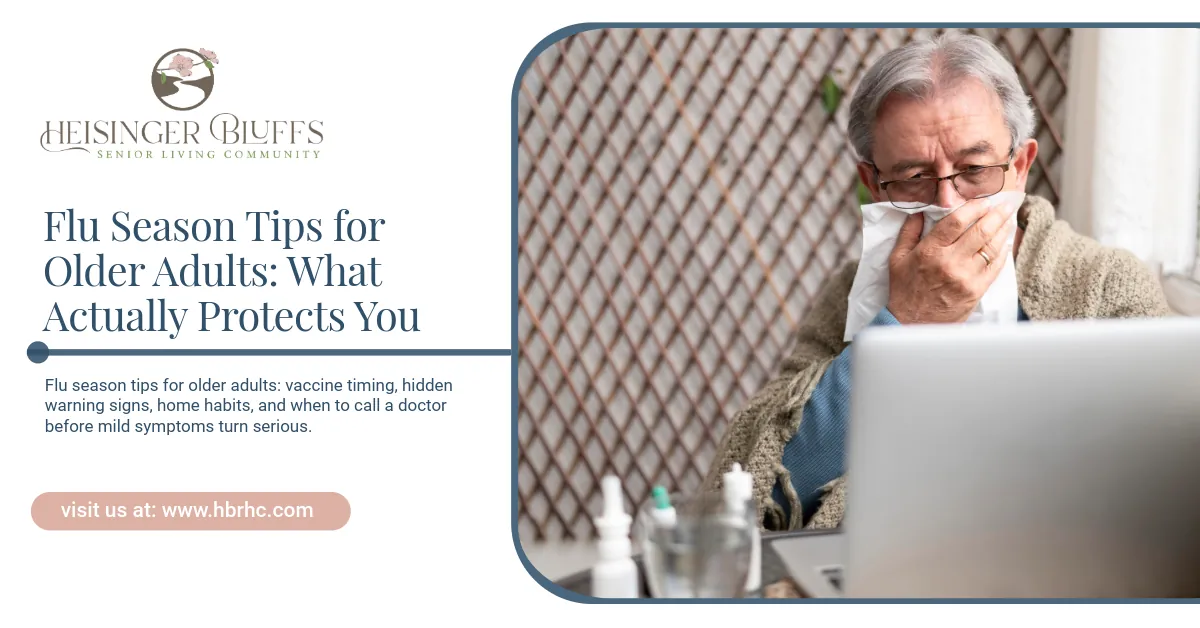
- Flu often looks different after 70. Confusion, a sudden fall, or loss of appetite can appear before, or instead of, a fever.
- Antiviral medication works best when it is started within 48 hours of the first symptom, which makes early recognition more valuable than any home remedy.
- Small daily habits, including hand hygiene, humidified air, protein intake, hydration, and steady sleep, measurably reduce how often older adults get sick and how hard they get hit.
- A written sick-day plan, kept on the refrigerator, prevents the most common failure point: nobody knows who to call at 2 a.m.
Why Flu Hits Differently After 65
Influenza is not simply a worse cold. For older adults, it is a systemic illness that can destabilize conditions that were previously well managed. A person with controlled heart failure can decompensate. A person with COPD can slide into respiratory distress within a day. Blood sugar control frequently unravels in people with diabetes during a flu infection, even when they are eating almost nothing.
The reason is a process called immunosenescence, the gradual, normal decline in immune responsiveness that comes with age. The body still fights the virus, but it recognizes it more slowly, produces fewer antibodies, and takes longer to clear the infection. During that extended window, inflammation stresses the heart and lungs. This is why research consistently shows an increase in heart attacks and strokes in the weeks following an influenza infection, not only during it.
The other factor is recovery time. A healthy 40-year-old bounces back in a week. Many adults over 75 spend two to four weeks regaining strength, and some never fully return to their previous level of mobility. Ten days in bed can cost meaningful muscle mass in an older adult. That deconditioning, not the virus itself, is often what changes someone's independence after a bad flu season.
Understanding this changes the goal. The aim is not just avoiding a miserable week. It is protecting the functional baseline you have worked to maintain.
Start With the Vaccine, and Get the Right One
Not all flu vaccines are equivalent for older adults. Because the immune response weakens with age, standard-dose vaccines produce less protection in people over 65. Public health guidance addresses this directly with a preferential recommendation: adults 65 and older should receive a high-dose, adjuvanted, or recombinant flu vaccine rather than a standard-dose shot.
Here is how the three preferred options differ.
| Vaccine Type | How It Works | Who Is It For | Practical Notes |
|---|---|---|---|
| High-dose | Contains roughly four times the antigen of a standard shot | Adults 65+ | Arm soreness and mild fatigue are somewhat more common, and both usually resolve within 48 hours |
| Adjuvanted | Standard antigen plus an added ingredient that amplifies immune response | Adults 65+ | A good option where high-dose supply is limited |
| Recombinant | Made without eggs, using a higher antigen dose | Adults 18+, preferred for 65+ | Suitable for people with egg allergy concerns |
| Standard-dose | Baseline formulation | Everyone 6 months+ | Better than no vaccine if the preferred types are unavailable |
Two practical points matter more than the brand.
Timing. Late September through October is the target. Protection takes about two weeks to develop, and antibody levels gradually decline over the season, so vaccinating in July often means weaker protection by February, when influenza frequently peaks. If October passes, get vaccinated anyway. A December or January vaccine still provides real benefit.
Annual repetition. Circulating strains shift each year, and vaccine composition is updated to match. Immunity from last year's shot does not carry forward, and it fades faster in older adults than in younger ones. This is a yearly commitment, not a one-time decision.
It is also worth naming the most common objection honestly. In some seasons the vaccine match is imperfect, and effectiveness against catching the virus can be modest. But the more important measure for older adults is protection against severe outcomes. Even in mismatched seasons, vaccination consistently reduces hospitalization and death. Milder illness is a meaningful win when the alternative is an ICU stay.
Flu Is Not the Only Respiratory Threat
Fall is the practical moment to review the full respiratory picture with a physician, because these viruses circulate together and the vaccines can generally be given at the same visit.
- RSV. A single-dose RSV vaccine is recommended for everyone 75 and older, and for adults 50 to 74 who are at increased risk due to chronic heart or lung disease, weakened immunity, or living in a long-term care setting. It is not currently an annual vaccine.
- Pneumococcal. Routine pneumococcal vaccination is now recommended starting at age 50. Because pneumonia is the most common serious complication of influenza, this vaccine addresses the downstream risk rather than the flu itself.
- COVID-19. Updated formulations are released annually and can typically be given alongside the flu vaccine.
Bring a written vaccination history to the appointment. Pneumococcal recommendations in particular depend heavily on which vaccines a person has already received, and pharmacy records are often incomplete when someone has moved or changed providers.
The Daily Habits That Genuinely Reduce Risk
Vaccination is the foundation. These habits are the layer that catches what gets through.
- Hand hygiene done properly. Influenza survives on hard surfaces for hours. Twenty seconds of soap and water, including thumbs and under fingernails, after handling mail, using shared equipment, or returning from an outing. Alcohol-based sanitizer works when a sink is not available.
- Manage indoor humidity. Dry winter air impairs the mucus layer in the nose and throat, which is the body's first mechanical defense against inhaled viruses. Keeping indoor humidity around 40 to 50 percent supports that barrier and reduces the nosebleeds and dry cough that make people miserable in January.
- Prioritize protein and fluids. Immune function depends on protein availability, and appetite naturally declines with age. Aim for a protein source at every meal, not just dinner. Thirst perception also weakens with age, so hydration needs to be scheduled rather than felt. A glass of water with each medication dose is an easy anchor.
- Protect sleep. Sleep is when much of immune consolidation happens. Consistent bed and wake times matter more than total hours.
- Keep moving. Regular moderate activity improves vaccine response and respiratory function. It does not need to be strenuous. A daily walk, chair exercises, or light resistance work all count.
- Set expectations with visitors. Grandchildren are frequently the entry point for household influenza. Asking family to postpone a visit when someone has been sick within 48 hours is reasonable, not rude, and it is far easier to say once in advance than in the moment.
Know What Flu Looks Like in an Older Adult
This is the most overlooked point in almost every flu article, and the one that changes outcomes most.
The classic textbook presentation is abrupt fever, body aches, headache, and dry cough. Many adults over 75 do not present that way. Because the temperature-regulating response blunts with age, a significant number never mount a meaningful fever at all. A reading of 99.5°F in someone whose baseline runs 97°F can be clinically important.
In our wellness rounds, one of the clearest patterns we have seen is that families call about behavior before they call about symptoms. One resident's daughter phoned because her mother, normally sharp and social, had skipped the morning current events group two days running and seemed "foggy" on the phone. There was no cough and no fever. Our nursing staff assessed her that afternoon, found a low-grade temperature above her personal baseline and mild oxygen desaturation, and she tested positive for influenza A. Because antivirals were started that same day, she recovered at home over the following week rather than in a hospital bed. Had the family waited for a cough to appear, the 48-hour treatment window would have closed.
Use this as a reference point.
| Sign | What It Often Means | What To Do |
|---|---|---|
| New confusion, unusual drowsiness, or "not acting like themselves" | A frequent first indicator of infection in adults over 75 | Contact a provider the same day |
| A fall with no clear cause | Weakness, dehydration, or blood pressure change from early infection | Same-day medical evaluation |
| Loss of appetite or refusing fluids | Early systemic illness, and a dehydration risk in its own right | Monitor closely, call if it persists past one day |
| Temperature above personal baseline, even under 100.4°F | Meaningful fever in someone with blunted response | Call, do not wait for a "real" fever |
| Breathing faster than usual, or breathless while talking | Possible pneumonia or respiratory compromise | Urgent evaluation |
| Chest pain, bluish lips, or inability to stay awake | Emergency-level warning signs | Call 911 |
The 48-Hour Window
Prescription antiviral medications shorten the duration of influenza, reduce the risk of complications, and lower hospitalization rates. Their effectiveness depends heavily on timing. They work best when started within 48 hours of the first symptom, and for high-risk patients, providers will often prescribe them based on clinical judgment without waiting for test results.
That window is the whole reason the previous section matters. Recognizing subtle changes early is not vigilance for its own sake. It is what makes effective treatment possible.
Practical steps that preserve the window:
- Know your provider's after-hours number before you need it.
- Keep a current, accurate medication list, including supplements. Antiviral dosing is adjusted for kidney function, and interactions matter.
- Do not wait for the weekend to pass. Urgent care and telehealth both prescribe antivirals.
- Have a working thermometer and know the person's normal baseline temperature.
Build the Plan Before You Need It
A sick-day kit assembled in October is worth far more than a pharmacy run in February. Keep on hand: a thermometer, acetaminophen (confirm with a physician if there is liver or kidney disease), electrolyte drinks, tissues, a two-week supply of routine prescriptions, and a printed sheet listing diagnoses, medications, allergies, and emergency contacts.
Then decide two things in advance. Who checks in daily if the person lives alone? And what specific change triggers a call to the doctor rather than another day of watching? Writing those answers down removes hesitation at the exact moment hesitation is most costly.
Finally, protect against isolation while protecting against infection. Loneliness carries real health consequences, and a winter spent entirely indoors and alone trades one risk for another. Phone calls, video visits, small gatherings with well people, and outdoor time when weather allows all keep the balance reasonable.
Final Thoughts
Flu season does not have to mean months of anxiety or lost independence. The strategy is straightforward: get the right vaccine at the right time, keep the daily habits that support your immune system, learn to recognize the quieter warning signs that show up in older adults, and act inside the 48-hour treatment window when something feels off.
At Heisinger Bluffs, our on-site wellness team supports residents through every part of that plan, from coordinating annual vaccination clinics and tracking individual health baselines to daily wellness checks that catch subtle changes early and quick communication with physicians and families when something needs attention.
Serving older adults and their families throughout Jefferson City, Missouri, and the surrounding Mid-Missouri communities, we offer independent living, assisted living, and skilled nursing in a setting built around attentive, personal care. If you are thinking about how to keep yourself or a parent safer, healthier, and better supported this winter, we would be glad to talk. Contact us today to schedule a visit and see what that support looks like in person.
Frequently Asked Questions
Can the flu shot give me the flu?
o. Injected flu vaccines contain inactivated virus or a single protein, neither of which can cause influenza. Soreness, mild fatigue, or a low-grade temperature for a day reflects the immune system responding, which is the intended effect.
I got vaccinated and still got sick. Was it pointless?
No. Vaccination reduces both the likelihood of infection and, importantly, the severity of illness if infection occurs. Vaccinated older adults who catch influenza are significantly less likely to require hospitalization. It is also common to mistake another respiratory virus for influenza.
Is it too late to vaccinate in December or January?
Not at all. Influenza activity commonly peaks between December and February and can extend into spring. A vaccine given in January still provides protection for the remainder of the season.
How do I tell influenza apart from a cold?
Colds usually begin gradually with congestion and a sore throat. Influenza typically arrives suddenly with body aches and profound fatigue. In older adults, though, the distinction is unreliable. When symptoms appear abruptly or behavior changes noticeably, testing is the sensible route.
Should family members get vaccinated too?
Yes. Vaccinating caregivers, adult children, and visiting grandchildren reduces the chance of introducing the virus into the household. This layered protection is especially valuable for anyone whose immune response is weaker.
Sources:
- https://www.nia.nih.gov/health/flu/flu-and-older-adults
- https://www.cdc.gov/flu/highrisk/65over.htm
- https://www.cdc.gov/respiratory-viruses/prevention/immunizations.html
- https://www.cdc.gov/flu/treatment/antiviral-drugs.html
- https://pmc.ncbi.nlm.nih.gov/articles/PMC6129661/