
What Is a Life Plan Community and How It Works
Key Highlights
- Life plan communities provide a continuum of care from independent living to skilled nursing.
- Residents benefit from a structured plan that anticipates future health and lifestyle needs.
- Monthly fees often include housing, services, and healthcare, providing financial predictability.
- Many seniors experience improved social engagement, wellness, and peace of mind.
- Real-life examples show that proactive planning in a life plan community reduces stress for both residents and families.
Understanding What a Life Plan Community Is
A life plan community—sometimes referred to as a continuing care retirement community (CCRC)—is a residential community designed specifically for older adults that combines independent living, assisted living, and skilled nursing care in one location.
Unlike typical senior housing, a life plan community offers a continuum of care, meaning residents can move seamlessly from one level of care to another as their needs change. This setup allows seniors to maintain independence while ensuring support is available when health needs evolve.
The Core Components
Most life plan communities include three main tiers of care:
| Level of Care | What It Includes | Example Scenario |
|---|---|---|
| Independent Living | Private apartments or cottages, dining options, recreational activities, and social programs. | A retired couple enjoying social clubs, fitness classes, and volunteer opportunities. |
| Assisted Living | Support with daily activities such as bathing, dressing, and medication management. | A resident needing help with morning routines while maintaining personal autonomy. |
| Skilled Nursing | 24/7 medical care for complex health needs or rehabilitation services. | A resident recovering from surgery or living with chronic health conditions. |
How a Life Plan Community Works
Membership and Entry Process
Most life plan communities require an initial entry fee, which can vary widely depending on location, size, and services offered. In addition to this, residents typically pay a monthly fee that covers housing, meals, healthcare services, and access to amenities.
- Entrance Fees: These fees can be partially refundable and act as a financial investment in long-term care.
- Monthly Fees: They cover services like dining, maintenance, housekeeping, social programs, and sometimes healthcare costs.
Personalized Care Plans
When a new resident moves in, the community conducts a comprehensive assessment to understand health status, lifestyle preferences, and
long-term goals. Based on this, a personalized care plan
is created to ensure the resident receives the appropriate level of support.
For example, in our sessions with seniors transitioning from independent living, we've seen residents thrive when care plans include both wellness activities and access to assisted living support before a major health event occurs.
Flexibility as Needs Change
A key benefit of life plan communities is the flexibility to move between care levels without leaving the community. This reduces stress for seniors and families because residents don’t have to relocate multiple times as needs change.
- Transitioning from independent living to assisted living often involves moving into a larger apartment designed for accessibility.
- If additional medical support is needed, residents can move to skilled nursing units without leaving the familiar environment.
Benefits of Life Plan Communities
1. Peace of Mind
Knowing that future healthcare and lifestyle needs are addressed provides seniors and their families with emotional and financial peace of mind.
2. Social Engagement
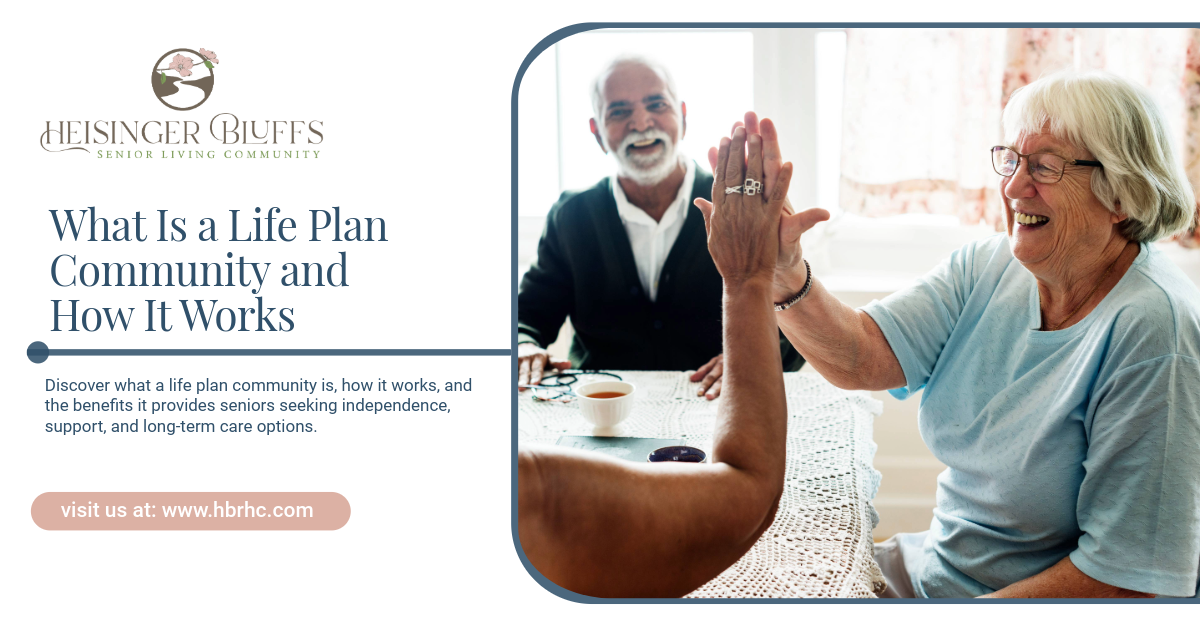
Life plan communities emphasize community and connection, offering activities, clubs, and events that foster friendships and reduce feelings of isolation.
In our practice, seniors who actively participate in community wellness programs report higher satisfaction and improved mental health.
3. Predictable Costs
By including housing, care, and amenities in one monthly fee, life plan communities allow seniors to budget with confidence, avoiding unexpected costs related to health or housing transitions.
4. Health and Wellness Focus
Many communities provide on-site healthcare, fitness programs, and wellness initiatives, helping residents maintain independence and vitality longer.
Real-Life Case Study
Case Study: Mrs. Thompson
Mrs. Thompson, age 78, moved into a life plan community after her husband passed away. Initially, she enjoyed independent living but later developed mobility challenges.
- Independent Living: Social events and exercise programs kept her active and connected.
- Assisted Living Transition: When she needed help with daily tasks, the community moved her to an assisted living apartment without leaving her familiar surroundings.
- Outcome: Mrs. Thompson maintained independence while receiving necessary care, reducing stress for her adult children and improving her quality of life.
This scenario illustrates how life plan communities adapt to changing needs, ensuring continuity of care and emotional stability.
Common Misconceptions About Life Plan Communities
- Too Expensive: While upfront fees can be high, the cost often covers years of care and services, making it cost-effective in the long run.
- Only for Sick or Frail Seniors: Many residents join while healthy to plan, not because they require immediate care.
- Loss of Independence: Residents choose their level of involvement, retaining autonomy while having access to support as needed.
Choosing the Right Life Plan Community
When considering a life plan community, families should evaluate:
- Care Continuum: Are independent living, assisted living, and skilled nursing available on-site?
- Financial Structure: Understand entry fees, monthly fees, and what is included in each.
- Lifestyle Offerings: Look for amenities, clubs, wellness programs, and social opportunities.
- Reputation and Reviews: Visit the community, speak to current residents, and review testimonials.
We've observed that seniors who actively participate in social programs often experience better mental and physical health outcomes than those who isolate themselves, highlighting the importance of lifestyle fit when choosing a community.
Final Thoughts
A life plan community provides seniors with security, community, and continuity of care, making it an ideal choice for proactive aging. With flexible care options, predictable costs, and a focus on wellness, residents can enjoy an active and fulfilling life.
For those considering this type of community, exploring local options and speaking with residents can provide insight and confidence in making a decision.
At Heisinger Bluffs, we’ve seen firsthand how a life plan community can transform the lives of seniors and their families, offering peace of mind and a vibrant, supportive environment for every stage of aging. Contact us today!
Frequently Asked Questions
Who can join a life plan community?
Typically, adults aged 55+ or 62+ can join, depending on community guidelines. Residents may enter healthy or with minor care needs.
What happens if I need skilled nursing care later?
Residents can transition to skilled nursing within the same community, maintaining continuity and familiar surroundings.
Are monthly fees all-inclusive?
Many communities bundle housing, meals, and some healthcare services, but it's important to clarify what is included and what may incur additional costs.
Can I leave if I change my mind?
Policies vary; some communities offer partial refunds for entry fees or allow transfer to another facility. Always review contracts carefully.
How does a life plan community benefit families?
Families gain peace of mind knowing their loved ones have a supportive environment with access to healthcare, social activities, and personalized care plans.
Sources:
- https://pmc.ncbi.nlm.nih.gov/articles/PMC8792093/
- https://www.medicaid.gov/medicaid/long-term-services-supports/program-of-all-inclusive-care-for-elderly
- https://www.who.int/activities/reducing-social-isolation-and-loneliness-among-older-people



Share This Article
You May Also Like To Read