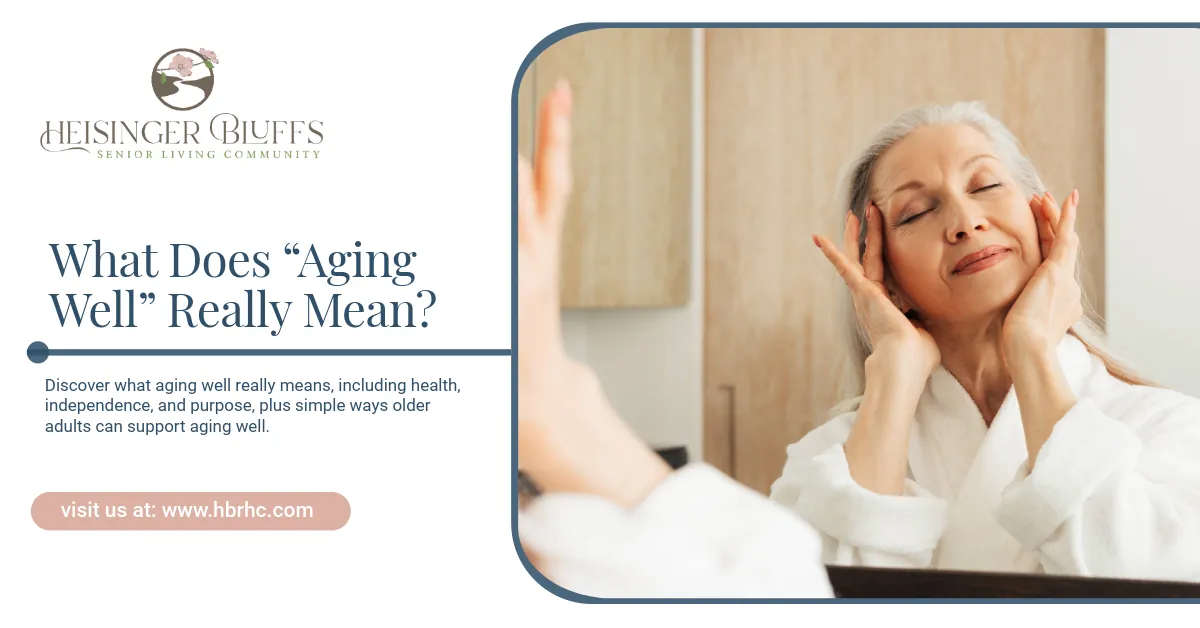
Aging well means maintaining the best possible quality of life as you grow older. It’s not about avoiding aging—it’s about adapting to changes while staying healthy, engaged, and independent for as long as possible.
Aging well typically includes three key areas:
- Physical well-being: Staying active, managing chronic conditions, eating well, and preventing falls all support long-term health.
- Mental and emotional health: Aging well involves staying mentally sharp, managing stress, and maintaining a positive outlook through meaningful routines and hobbies.
- Social connection and purpose: Strong relationships, community involvement, and feeling useful contribute to emotional resilience and life satisfaction.
Aging well looks different for everyone. For some, it means living independently with minimal support. For others, it means having access to care, safety, and social opportunities that make daily life easier and more enjoyable.
The goal isn’t perfection—it’s balance, dignity, and support that adapts as needs change.
At Heisinger Bluffs, aging well is supported through a community-focused environment that promotes wellness, connection, and personalized care.
Frequently Asked Questions
What is the definition of aging well?
Aging well means maintaining physical health, emotional balance, and social connection as you age.
Can you age well with health conditions?
Yes. Managing conditions with proper care and support is a key part of aging well.
Is aging well the same as aging in place?
Not always. Aging well focuses on quality of life, whether at home or in a supportive community.
Sources:
- https://www.cdc.gov/healthy-aging/about/index.html
- https://stdavidsfoundation.org/get-involved/aging-well/