
Key Highlights
- Spring offers unique opportunities for seniors to stay active outdoors.
- Social, physical, and creative activities improve mental and emotional health.
- Gardening, walking, and group classes boost mobility and cognitive function.
- Seasonal arts, crafts, and volunteer opportunities enhance purpose and engagement.
- Structured activities reduce isolation and support overall well-being.
Spring is a season of renewal, warmth, and longer days. For seniors, it’s an ideal time to embrace activities that enhance physical health, mental well-being, and social engagement. Engaging in seasonal activities isn’t just enjoyable—it has measurable benefits for longevity, cognitive function, and emotional health.
In this blog, we’ll explore spring activities for seniors, including outdoor adventures, creative projects, social opportunities, and wellness-focused routines. Research, clinical observations, and real-life examples from senior living communities support insights.
Benefits of Spring Activities for Seniors
Participating in seasonal activities during spring provides multiple benefits:
- Physical Health: Outdoor walks, light gardening, and gentle exercise maintain mobility, balance, and cardiovascular health.
- Cognitive Stimulation: Engaging in hobbies and learning new skills keeps the brain active and may slow cognitive decline.
- Social Connection: Group activities, clubs, and volunteering reduce isolation and improve emotional resilience.
- Emotional Well-being: Exposure to sunlight boosts Vitamin D and mood, helping prevent seasonal depression.
Research from the National Institute on Aging indicates that seniors who engage in regular physical and social activities demonstrate better cognitive performance and fewer depressive symptoms than those who remain inactive.
Outdoor Activities: Embrace the Season
1. Walking and Nature Trails
Walking is a low-impact, highly beneficial activity for seniors. Spring is perfect for enjoying local parks, nature trails, or community gardens.
Benefits: Improves circulation, strengthens muscles, reduces risk of falls, enhances mood.
Case Example: In our sessions at senior communities, residents who joined a weekly 30-minute walking group reported better sleep, increased energy, and enhanced social connections. One 82-year-old participant shared that morning walks became the highlight of her week, boosting both mobility and social life.
2. Gardening
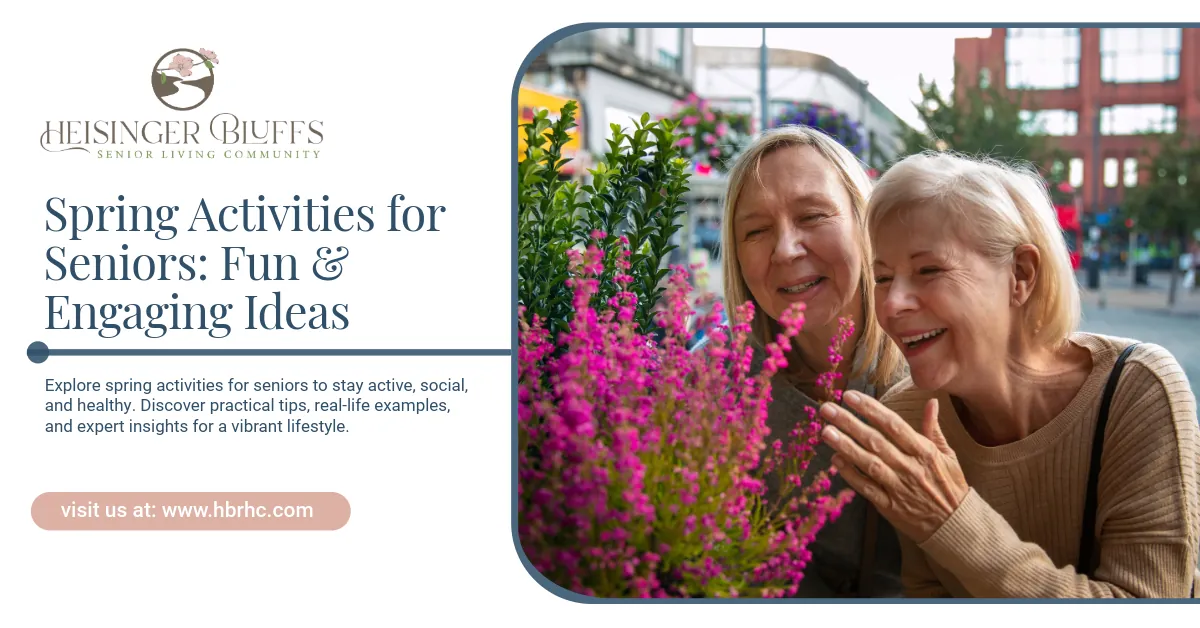
Gardening offers physical, cognitive, and emotional benefits. Planting flowers, vegetables, or herbs engages multiple senses and promotes fine motor skills.
Insight: Studies show that gardening reduces stress, encourages physical activity, and supports cognitive engagement.
Practical Tip: Use raised garden beds for easy access and consider container gardening for seniors with limited mobility.
3. Outdoor Exercise Classes
Gentle yoga, tai chi, or stretching sessions in a park provide movement and social interaction simultaneously.
Observation: In our practice, seniors participating in small group tai chi classes experienced improved balance, reduced joint stiffness, and heightened mood over three months.
4. Birdwatching & Nature Photography
Spring migratory birds and blooming flora make birdwatching and photography rewarding hobbies. Seniors can learn new skills, engage their memory, and enjoy quiet reflection.
Real Example: A resident who joined a local birdwatching club learned to identify species and documented their sightings, which stimulated conversation, memory recall, and mental alertness.
Social & Community Activities
1. Seasonal Festivals & Fairs
Community events like farmers’ markets, craft fairs, and spring festivals encourage seniors to engage socially and enjoy cultural experiences.
Benefits: Exposure to new experiences reduces social isolation and provides mental stimulation.
Case Example: Our community organized a spring arts-and-crafts fair. Residents who participated not only enjoyed creative engagement but also built new friendships—highlighting the role of community in senior well-being.
2. Volunteer Opportunities
Volunteering offers purpose and social interaction. Activities like mentoring, helping in community gardens, or assisting at local events can be tailored to seniors’ abilities.
Practical Insight: Research shows seniors who volunteer regularly experience lower rates of depression and enhanced life satisfaction.
Creative & Cognitive Activities
1. Arts and Crafts
Painting, pottery, knitting, or scrapbooking engages fine motor skills and creativity.
Observation: We’ve seen seniors who participate in weekly painting classes report reduced stress levels, increased concentration, and a strong sense of accomplishment.
2. Music & Dance
Spring-themed music sessions, sing-alongs, or gentle dance classes stimulate memory, coordination, and social bonds.
Case Study: During a spring music series, residents who joined dance sessions demonstrated improved balance, mood, and cognitive alertness over 12 weeks.
3. Brain Games & Learning
Crossword puzzles, memory games, and educational workshops keep cognitive faculties sharp.
Insight: Cognitive engagement supports neuroplasticity, which is critical for maintaining mental function as we age.
Recommended Spring Activities for Seniors
| Activity | Benefits | Accessibility Tips |
|---|---|---|
| Walking / Nature Trails | Cardiovascular health, balance, mood | Choose level paths, bring a walking stick |
| Gardening | Physical activity, sensory stimulation | Use raised beds or container gardens |
| Outdoor Exercise Classes | Flexibility, social engagement | Start with gentle routines, seated options |
| Birdwatching | Cognitive engagement, relaxation | Use binoculars, local guided tours |
| Arts & Crafts | Fine motor skills, creativity | Adaptive tools for dexterity challenges |
| Music & Dance | Mood enhancement, coordination | Chair dancing or small group sessions |
| Volunteering | Purpose, social connection | Partner with senior-friendly organizations |
Wellness-Focused Spring Routines
- Morning Sunlight Exposure: Boosts Vitamin D for bone health and immune support.
- Hydration Awareness: Warmer weather increases fluid needs; drinking water supports cognitive and physical function.
- Balanced Nutrition: Incorporate seasonal fruits and vegetables rich in antioxidants for overall health.
- Regular Sleep Patterns: Longer daylight hours can disrupt sleep; maintain consistent routines.
Example from Practice: Seniors who followed these seasonal routines showed increased energy levels, fewer complaints of fatigue, and improved social participation in spring programs.
Tips for Encouraging Participation
- Personalize activities based on interests and mobility levels.
- Combine physical, social, and cognitive elements for well-rounded engagement.
- Celebrate achievements, such as completed projects or milestones in exercise routines.
- Encourage peer mentorship and buddy systems to increase motivation.
Observation: Seniors are more likely to maintain participation when activities are enjoyable, accessible, and socially rewarding.
Final Thoughts
Spring offers a unique opportunity for seniors to engage in activities that enhance their physical, mental, and social well-being. From walking and gardening to arts, music, and volunteering, there are countless ways to stay active, engaged, and joyful.
A vibrant senior lifestyle incorporates movement, creativity, socialization, and purpose—all of which contribute to healthier, happier aging. For seniors seeking structured, supportive programs that combine wellness, social engagement, and seasonal activities, Heisinger Bluffs offers a community designed to make spring—and every season—fulfilling and enriching. Reach out today!
Frequently Asked Questions
What are safe spring activities for seniors?
Walking, gardening, gentle yoga or tai chi, arts and crafts, and social events are all safe, low-impact activities. Seniors should consult healthcare providers before starting new exercise routines.
How do outdoor activities benefit seniors?
Outdoor activities improve cardiovascular health, strengthen muscles, reduce stress, boost Vitamin D, and support social connections.
Can seniors with limited mobility enjoy spring activities?
Yes. Activities can be adapted with raised garden beds, seated exercise, chair dancing, or indoor arts and crafts.
How do social activities improve senior health?
Social engagement reduces loneliness, enhances mood, supports cognitive function, and provides a sense of purpose.
What’s the best way to encourage seniors to participate in seasonal programs?
Personalize activities, ensure accessibility, create a supportive group environment, and celebrate achievements to motivate participation.
Sources:
- https://www.cottagelitchfield.com/blog/benefits-of-walking-for-seniors
- https://www.cambridge.org/core/journals/ageing-and-society/article/exploring-the-health-and-wellbeing-benefits-of-gardening-for-older-adults/D146A47DC630AC0CA73BEB8264384A8A
- https://www.sciencedirect.com/org/science/article/pii/S1462373023000627
- https://carewayhc.com/blog/healthy-sleep-schedule-for-seniors/