
Key Highlights
- Independence is closely tied to an older adult's dignity, confidence, and physical and mental health, which is why protecting it matters as much as protecting their safety.
- Well-meaning families often help too much, and over-helping can quietly erode the very abilities it is meant to protect.
- Small shifts, like asking before acting and offering choices, let you support an aging parent without taking over.
- The goal is to support rather than do, adapting the environment and the task instead of stepping in and completing it for them.
- Allowing reasonable, thoughtful risk is part of respecting an adult's right to live on their own terms.
- Bringing in outside support relieves families from being the only source of help and helps a parent stay independent longer.
When Helping Starts to Hurt
If you love an aging parent, the instinct is powerful and immediate: you see them struggling with a jar lid, fumbling with a medication bottle, or moving slowly up the stairs, and you want to step in and make it easier. That instinct comes from a good place. But one of the hardest truths of caring for an older loved one is that too much help can do real harm.
Every time we take over a task an older adult can still manage, even a little, we send a quiet message: you can't do this anymore. Over time, those messages add up. Abilities that are not used begin to fade, confidence erodes, and a capable person can slide into depending on others for things they were perfectly able to handle. The very help meant to protect them ends up shrinking their world.
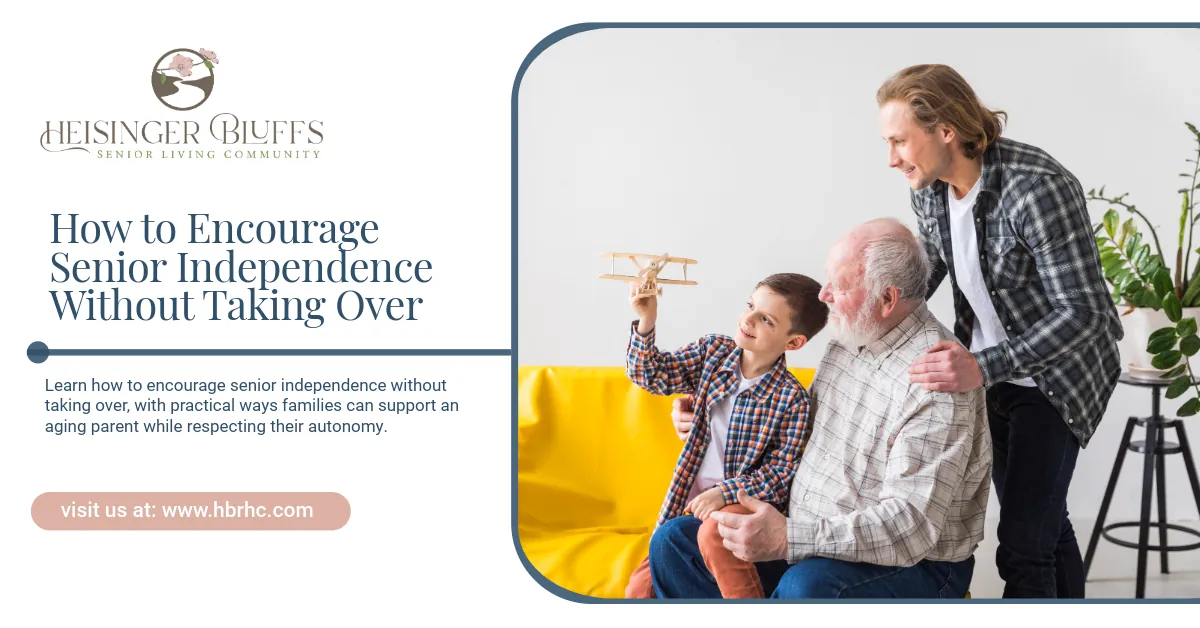
Encouraging independence without taking over is one of the most loving and skillful things a family can do. It means resisting the urge to do everything, learning to support instead of rescue, and respecting your parent as the adult they still are. This guide explains why independence matters so much, how over-helping backfires, and the practical strategies that let you help in ways that build your loved one up rather than diminish them.
Why Independence Matters So Much in Later Life
Independence is not a small thing to an older adult. It is closely bound to their sense of identity, dignity, and self-worth. Being able to make your own choices, manage your own routine, and contribute to your own life is central to feeling like a whole person rather than a passenger in your own days.
There is a physical dimension, too. The principle of "use it or lose it" is very real in aging. Muscles, balance, and cognitive skills stay stronger when they are regularly used, and they weaken faster when they are not. An older adult who continues to dress themselves, prepare simple meals, and move around their space is actively maintaining the abilities that keep them functioning.
There is also a psychological risk when independence is taken away, sometimes called learned helplessness. When a person is repeatedly helped with things they could do themselves, they can gradually stop trying, come to believe they are incapable, and become passive and dependent. This is not stubbornness or laziness; it is a predictable response to having one's autonomy chipped away. Protecting independence, then, is not only about respect. It is about preserving health, confidence, and quality of life.
The Over-Helping Trap
Most families do not take over out of any desire to control. They do it out of love, worry, and often simple efficiency. It is faster to make the sandwich yourself than to wait while your father slowly makes it. It feels safer to handle the pills than to trust him with them. It seems kinder to do the driving, the cooking, and the decision-making so he does not have to strain.
But convenience and safety, pursued too far, come at a cost. Each task quietly handed off is a small loss of practice, purpose, and confidence. The parent who is no longer allowed to try begins to expect less of themselves, and the family, seeing them do less, steps in even more. It becomes a self-reinforcing cycle in which help creates dependence, and dependence seems to justify more help.
Recognizing this trap is the first step out of it. The question worth asking before stepping in is simple but powerful: Is this something they truly cannot do, or something they simply do slowly, differently, or imperfectly? The answer changes everything.
Signs You Might Be Taking Over
It is easy to slip into over-helping without noticing. A few honest questions can reveal it. Do you routinely finish tasks your parent started because it is quicker? Do you answer questions directed at them, such as at the doctor's office? Do you make decisions about their day, their meals, or their schedule without asking their preference? Do you correct or redo things they have done, rather than letting a reasonable result stand? Do you find yourself saying "let me just do that for you" many times a day?
None of these makes you a bad family member. They are natural. But noticing them is what allows you to shift from taking over to genuinely supporting.
Two Ways to Respond to the Same Moment
The difference between taking over and encouraging independence often comes down to how you respond in ordinary moments. The table below shows the contrast across common situations.
| Everyday situation | Taking over | Encouraging independence |
|---|---|---|
| Preparing a meal | Cooking it for them every time | Cooking together, or setting out ingredients they can assemble |
| Managing medications | Handing them each pill yourself | Setting up a labeled organizer they fill and use themselves |
| Getting dressed | Dressing them to save time | Laying out clothes and offering help only where needed |
| Doctor's appointments | Answering the doctor's questions for them | Letting them speak first, then adding information if asked |
| Daily decisions | Deciding meals, plans, and schedule | Offering two or three choices and honoring their pick |
| Getting around the home | Doing everything so they stay seated | Adapting the space so they can move about safely |
| Household tasks | Taking over all the chores | Sharing tasks and keeping ones they can still manage |
Notice the pattern. In every case, encouraging independence still involves help, just help that supports the person's own effort rather than replacing it.
Strategies to Support Without Taking Over
Here are the approaches that make the biggest difference in daily life.
Ask before you act.
The simplest and most respectful habit is to ask, "Would you like some help with that?" rather than jumping in. This one question restores your parents' control and often reveals they would rather manage it themselves.
Offer choices, not directives.
Autonomy lives in choice. Instead of announcing the plan, offer options: "Would you prefer soup or a sandwich?" "Do you want to go for the walk now or after lunch?" Even small choices reinforce that they are still steering their own life.
Support the task, do not complete it.
Think of your role as scaffolding. If buttoning a shirt is hard, start with the top button and let them finish. If cooking is tiring, do the chopping and let them do the stirring. The aim is to give just enough help to keep them succeeding, and no more.
Adapt the environment, not the person.
Often, the real problem is the setup, not the ability. Grab bars, better lighting, easy-open containers, a shower chair, and items stored within reach can restore independence that seemed lost. Changing the surroundings lets your parent keep doing things themselves.
Allow reasonable risk.
Living fully involves some risk, and adults have the right to take reasonable ones. This idea, sometimes called the dignity of risk, means not wrapping a loved one in so much protection that their life shrinks. A small, thoughtfully accepted risk is often worth the independence and dignity it preserves.
Be patient with their pace.
Much of over-helping is really impatience in disguise. Letting your parent take the extra time to do something themselves, without hovering or hurrying them, is one of the most respectful gifts you can offer.
Build on strengths.
Focus on what your loved one can do and give them meaningful roles that use those abilities. A person who feels useful and capable is far more motivated to stay engaged and active.
Bring in outside support.
When families are the only source of help, over-helping is almost inevitable, because love and worry are constantly in the room. Thoughtful outside support, from respite care to a supportive senior living community, can actually protect independence by providing help that is calibrated to preserve ability rather than replace it.
What We've Seen in Our Community
In our senior living community, we regularly work with families wrestling with exactly this balance, and we have seen how transformative the right approach can be.
One son came to us deeply anxious about his mother. In his effort to keep her safe, he had gradually taken over nearly everything: her cooking, her finances, her scheduling, even choosing her clothes. He meant only to protect her, but she had grown withdrawn and irritable, and he could not understand why. When she joined our community, our team took a different approach. Rather than doing things for her, we looked for what she could still do and built her days around it. She began setting her own table, choosing her own activities, and helping in the community garden. Within weeks, her son told us she seemed like a different person, more talkative, more confident, more herself. Nothing about her abilities had changed. What changed was that she was allowed to use them again.
We see this again and again. The most meaningful improvements often come not from doing more for someone, but from stepping back and letting them do what they still can, with support standing ready rather than stepping in.
Balancing Safety and Autonomy
None of this means abandoning caution. There are moments when stepping in is not only appropriate but necessary, particularly when genuine safety is at stake, such as unsafe driving, serious medication errors, or a real risk of falling. The goal is never to trade all safety for independence, but to avoid trading all independence for safety.
The healthiest approach is collaborative. Rather than making decisions for your parent, involve them in conversations about how to stay both safe and independent. Ask what matters most to them and where they would welcome help. When older adults are partners in these choices rather than subjects of them, they are far more receptive, and the solutions tend to honor both their safety and their dignity.
Helping Without Taking Over
Encouraging your parents' independence without taking over is a delicate, deeply loving balance. It means resisting the urge to do everything, offering support that builds ability rather than replacing it, allowing reasonable risk, and honoring the adult your loved one still is. When families make these small but powerful shifts, they often find that their parent becomes more confident, more capable, and more themselves, while the relationship grows warmer for it.
At Heisinger Bluffs, this philosophy is at the heart of how we care. We provide help that is thoughtfully calibrated to preserve independence, adapting to each resident so they can keep doing what they love with dignity and confidence, supported but never taken over.
Proudly serving Jefferson City, Missouri, and the surrounding areas, we would welcome the chance to show you how the right balance of support and freedom can help your loved one truly thrive. Contact us today to learn more and to schedule a visit.
Frequently Asked Questions
How do I know when to help and when to step back?
A useful test is to ask whether your parent truly cannot do a task, or simply does it slowly, differently, or imperfectly. If they can still manage it, even with extra time or minor help, let them. Step in more fully only when genuine safety is at stake or when the task is clearly beyond their current ability, and even then, look for a way to keep them involved.
Isn't it safer to just do things for my aging parent?
It can feel safer in the moment, but doing too much carries its own risks. Abilities that go unused fade faster, confidence erodes, and a capable person can become unnecessarily dependent. The healthiest path balances safety with independence, protecting your parent from real dangers while allowing the reasonable everyday challenges that keep them strong and engaged.
What if my parent refuses help they clearly need?
Lead with respect and collaboration rather than control. Ask what matters most to them and where they might welcome support, and offer help as a set of choices rather than a directive. Adapting the environment, such as adding grab bars or better lighting, can also solve safety concerns without a confrontation. When a real safety issue persists, involving their doctor can add a trusted voice.
Can encouraging independence actually improve my parent's health?
Yes. Regularly using physical and mental abilities helps preserve them, following the principle of "use it or lose it," while a sense of control and purpose supports emotional wellbeing. Older adults who stay engaged and autonomous often maintain their strength, confidence, and quality of life longer than those whose independence is taken away.
How can a senior living community support independence rather than reduce it?
A good community provides help that is calibrated to preserve ability rather than replace it, stepping in only where needed and encouraging residents to do what they still can. With adapted environments, meaningful activities, and support standing ready rather than taking over, residents often become more active and confident, not less, than when family was trying to manage everything alone.
Sources:
- https://www.waldenu.edu/online-doctoral-programs/phd-in-human-services/resource/helping-the-elderly-maintain-independence
- https://nationaltoday.com/national-senior-independence-month/
- https://udservices.org/how-caregivers-promote-senior-independence/
- https://pmc.ncbi.nlm.nih.gov/articles/PMC7917261/