
Key Highlights
- Retirement often creates a "purpose gap" when the routine, role, and identity tied to work suddenly disappear, and naming that gap is the first step to filling it.
- A strong sense of purpose is linked to better mental health, sharper thinking, and a more active, connected daily life in older adults.
- Purpose can be rediscovered through many paths, including hobbies, lifelong learning, volunteering, mentoring, creative work, faith, and deeper relationships.
- The most reliable way to find purpose is to start small, experiment, and build a gentle routine rather than waiting for one perfect calling to appear.
- Common obstacles such as health changes, lost confidence, and the belief that it is "too late" can be worked around with the right support and mindset.
- Community and connection are among the strongest sources of purpose, which is why the environment around a retiree matters as much as their individual choices.
The "Now What?" of Retirement
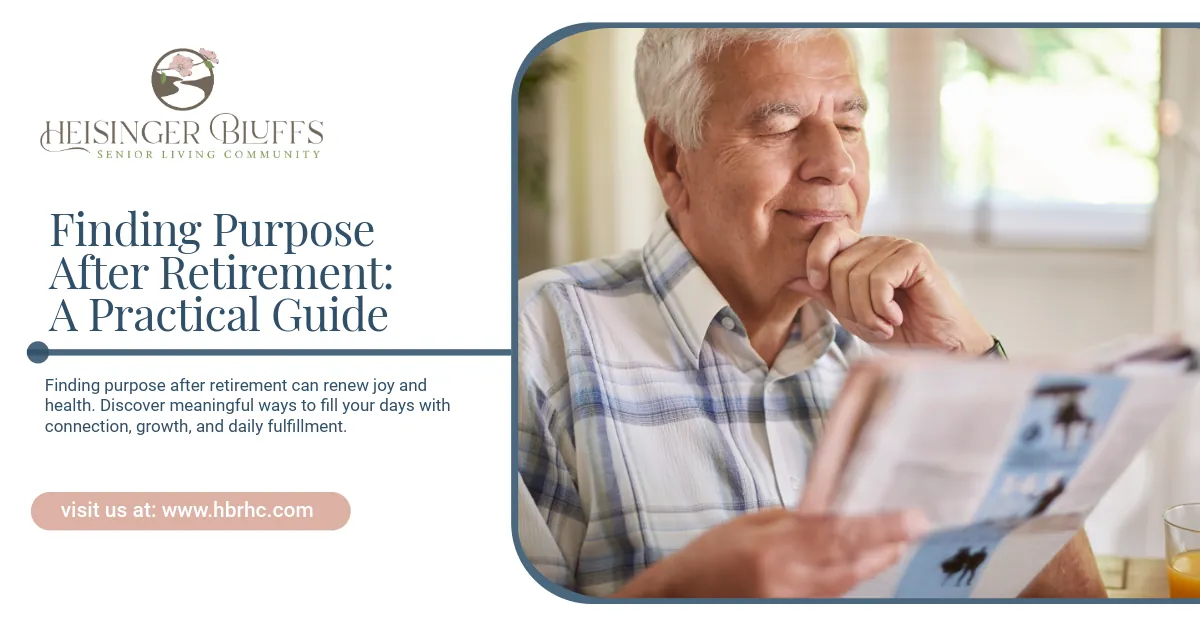
For decades, the alarm went off, the day had a shape, and the work mattered to someone. Then retirement arrives, and after the first stretch of rest and freedom, many people feel something unexpected settle in: a quiet, restless question. Now what?
This feeling is far more common than most new retirees realize, and it has nothing to do with laziness or ingratitude. Work gives us more than a paycheck. It gives us structure, a reason to get up, a place among other people, and a sense that our days add up to something. When that framework disappears overnight, even a well-earned retirement can feel strangely empty. Understanding that this is a normal transition, not a personal failing, is the foundation for building a retirement that feels rich rather than aimless.
The good news is that a purpose after retirement is not something you either have or do not have. It is something you can build, and the years after work can become some of the most meaningful of a person's life. The guide walks through why purpose matters so much, why retirement can leave a gap, and the practical, proven ways to fill it.
Why Purpose Matters More Than Ever in Later Life
Purpose is not a soft or optional part of aging well. A person who wakes up with a reason to engage with the day tends to stay more mentally sharp, more physically active, and more socially connected than someone drifting without direction.
The reasons are intertwined. A sense of purpose gives structure, and structure encourages movement, healthy routines, and regular contact with other people, all of which protect the body and mind. It also buffers against the loneliness and low mood that can follow the loss of a work identity. When someone feels needed and engaged, they are more likely to take care of themselves, more resilient in the face of setbacks, and more likely to describe their life as satisfying.
In short, purpose is a kind of quiet engine. It drives the daily choices that keep an older adult healthy and happy, which is exactly why the "now what?" question deserves real attention rather than a shrug.
Why Retirement Can Create a Purpose Gap
To rebuild purpose, it helps to understand what retirement actually takes away. Work quietly provides several things at once, and losing them all together is what makes the transition so disorienting.
There is a loss of role and identity. Many people spend their careers introducing themselves by what they do. When that title falls away, it can feel like a piece of who they are went with it.
There is the loss of routine. The scaffolding of a workday, the deadlines, the meetings, the commute, gave shape to time. Without it, days can blur together in a way that feels unmooring rather than freeing.
There is the loss of social connection. Colleagues often provide daily interaction and a sense of belonging. Retirement can shrink a social world dramatically and almost overnight.
And there is the loss of contribution, the feeling of being useful and making a difference. This is often the deepest loss of all, because the desire to matter does not retire.
Recognizing these four losses is powerful because each one points directly to a path back. Purpose after retirement is largely a matter of rebuilding role, routine, connection, and contribution in new forms.
Proven Paths to Rediscovering Purpose
There is no single right answer, and the best path is deeply personal. Here are the most reliable avenues, each of which rebuilds one or more of the things work used to provide.
Reconnecting With Old Passions
Many people set aside hobbies during their working years because there is never enough time. Retirement is the chance to return to them. A garden, a woodworking bench, a musical instrument, a fishing rod, or a stack of long-postponed books can all become anchors for the week.
Lifelong Learning
Curiosity does not expire. Taking a class, learning a language, exploring history, or finally understanding a subject you always wondered about keeps the mind engaged and gives each week a satisfying sense of progress.
Volunteering and Giving Back
Few things restore a sense of contribution as directly as helping others. Food banks, hospitals, schools, libraries, and community organizations all rely on volunteers, and giving time is consistently one of the most fulfilling ways retirees spend their days.
Mentoring and Sharing Skills
A lifetime of experience is valuable. Mentoring younger workers, tutoring students, coaching, or advising a local organization lets a retiree pass on hard-won knowledge, which turns decades of work into a lasting legacy rather than a closed chapter.
Encore Work or Part-Time Roles
Purpose does not require leaving work behind entirely. Many people find deep satisfaction in a part-time job, consulting, or a small passion-driven venture that offers structure and income without the pressure of a full career.
Creative Expression
Painting, writing, photography, crafting, cooking, and music give people a way to make something new and to express themselves. Creativity is especially powerful because it provides both a routine and a growing sense of mastery.
Faith and Spiritual Life
For many older adults, deepening their faith, participating in a congregation, or engaging in reflection and service provides profound meaning and a built-in community.
Movement and Nature
Walking groups, gentle exercise classes, gardening, and time outdoors combine physical health with connection and a reassuring rhythm to the day.
Deepening Relationships
Sometimes, purpose is closest to home. Investing in grandchildren, reconnecting with old friends, strengthening a marriage, or building new friendships gives the days meaning through the people in them.
Matching Paths to People
Not every path fits every person. This quick guide can help you or your loved one narrow the options.
| Path to purpose | What it looks like | Who it often suits best |
|---|---|---|
| Reconnecting with hobbies | Returning to gardening, music, crafts, or reading | People who set passions aside during their careers |
| Lifelong learning | Classes, languages, lectures, new subjects | Naturally curious minds who love a sense of progress |
| Volunteering | Helping at food banks, hospitals, schools, libraries | Those who feel most alive when they are helping others |
| Mentoring and advising | Coaching, tutoring, sharing professional wisdom | People with expertise they want to pass on |
| Encore or part-time work | Consulting, part-time rolse, a small venture | Those who thrive on structure and staying in the mix |
| Creative expressiom | Painting, writing, photography, cooking, music | People who want to make something and grow a skill |
| Faith and community | Congregation life, reflection, service | Those drawn to spiritual meaning and belonging |
| Relationships | Time with grandchildren, friends, and spouse | Anyone whose deepest satisfaction is personal connection |
What We've Seen in Our Community
In our senior living community, we have watched countless residents move through the "now what?" stage into a genuinely energized new chapter, and the pattern is remarkably consistent: purpose is rarely found by sitting and waiting for it. It is found by trying things.
One resident, a retired accountant, arrived quietly and a little withdrawn. He had defined himself by his career for forty years and confided that he no longer felt useful. We invited him to help a few neighbors who were struggling to manage their monthly bills and paperwork. Word spread, and before long, he was running an informal weekly session, sitting with residents to sort out statements and answer questions. His whole demeanor changed. He told us he felt like himself again, because the very skills he thought he had retired turned out to be exactly what his neighbors needed.
We have seen versions of this story again and again. A former teacher starts a book club. A lifelong gardener transforms a neglected courtyard. A grandmother teaches younger residents to knit. In every case, the turning point was not a grand plan but a small, low-pressure invitation to contribute. Purpose, we have learned, tends to arrive through action rather than before it.
How to Actually Get Started
If the paths above feel inspiring but a little overwhelming, the secret is to keep the first steps small and forgiving.
Start with reflection. Ask what activities used to make you lose track of time, what you always meant to do "someday," and what kinds of problems you enjoy solving. Your past enjoyment is a reliable map to future purpose.
Then experiment without commitment. Treat the first month as a trial. Attend one class, one meeting, one volunteer shift. You are gathering information about what energizes you, not signing a lifelong contract, and it is completely fine to try something and decide it is not for you.
Next, build a gentle routine. Purpose thrives on rhythm. Anchoring one or two activities to specific days rebuilds the structure that retirement removed and gives each week something to look forward to.
Finally, lean on the community. It is far easier to sustain new pursuits alongside other people than alone. Shared activities provide accountability, encouragement, and the social connection that makes any pursuit more meaningful.
Working Through the Common Obstacles
A few obstacles show up often, and each has a workaround.
"It's too late for me." It is not. Purpose is available at every age, and many people discover their most meaningful pursuits well into their later years. The only wrong move is deciding not to try.
"My health or mobility has changed." Purpose adapts. A person who can no longer garden a large plot might tend containers on a patio, mentor over the phone, write, or lead a discussion group. The activity can change while the meaning stays the same.
"I've lost my confidence." This is where a supportive environment matters most. Starting among encouraging people, with low-stakes invitations rather than daunting commitments, rebuilds confidence one small success at a time.
"I don't know where to begin." Begin anywhere. Momentum, not the perfect starting point, is what carries a new retiree from restlessness into a full and satisfying life.
Embracing a Meaningful Next Chapter
Retirement is not an ending but a new beginning, and the restless "now what?" that so many people feel is simply an invitation to rebuild purpose in fresh and rewarding ways. Whether through hobbies, learning, volunteering, mentoring, creativity, faith, or the people you love, a fulfilling life after work is well within reach when you start small and stay open.
At Heisinger Bluffs, we have the privilege of helping residents rediscover exactly this kind of purpose every day, through a vibrant calendar of activities, learning, and volunteering, and a warm community that turns "now what?" into "what's next?"
Proudly serving Jefferson City, Missouri, and the surrounding areas, we would love to show you or your loved one how the right environment can make a meaningful retirement feel effortless. Contact us today to learn more and to schedule a visit.
Frequently Asked Questions
Is it normal to feel lost or aimless after retiring?
Yes, and it is far more common than most people admit. Work provides routine, identity, social contact, and a sense of contribution all at once, so losing it can feel disorienting even when retirement was welcome. Feeling this way is a normal transition, not a sign that something is wrong, and it usually eases as you rebuild those elements in new forms.
How do I find purpose if my health limits what I can do?
Purpose is flexible and rarely depends on any single activity. If mobility or health has changed, the meaning behind an activity can often be preserved in a gentler form, such as mentoring instead of coaching, container gardening instead of a large plot, or leading a discussion rather than a physical project. Focus on the contribution or connection you want, then find a version that fits your abilities.
How long does it take to feel purposeful again after retirement?
There is no fixed timeline, and it varies from person to person. Many people begin to feel more grounded within a few weeks of trying new activities, because purpose tends to grow through action rather than appear all at once. The key is to start small, stay consistent, and be patient with yourself as new routines take hold.
Can retirees really find purpose without going back to work?
Absolutely. While some people do find meaning in part-time or encore work, many discover it entirely outside of employment through volunteering, hobbies, learning, creativity, faith, and relationships. What matters is rebuilding a sense of role, routine, connection, and contribution, and there are many paths to each.
Does the community I live in affect my sense of purpose?
Very much so. A supportive environment full of activities, encouragement, and like-minded people makes it far easier to try new things, build routines, and stay socially connected. Because so much of purpose comes from contribution and belonging, the community around a retiree can be one of the strongest influences on how fulfilling their later years feel.
Sources:
- https://pmc.ncbi.nlm.nih.gov/articles/PMC9141815/
- https://connect.mayoclinic.org/blog/living-with-mild-cognitive-impairment-mci/newsfeed-post/now-what-the-importance-of-having-purpose-as-we-age/
- https://www.aarp.org/pri/topics/social-leisure/activities-interests/older-adults-purpose-personal-growth/
- https://www.psychologytoday.com/us/blog/changepower/202002/9-ways-to-find-your-purpose-as-you-age