
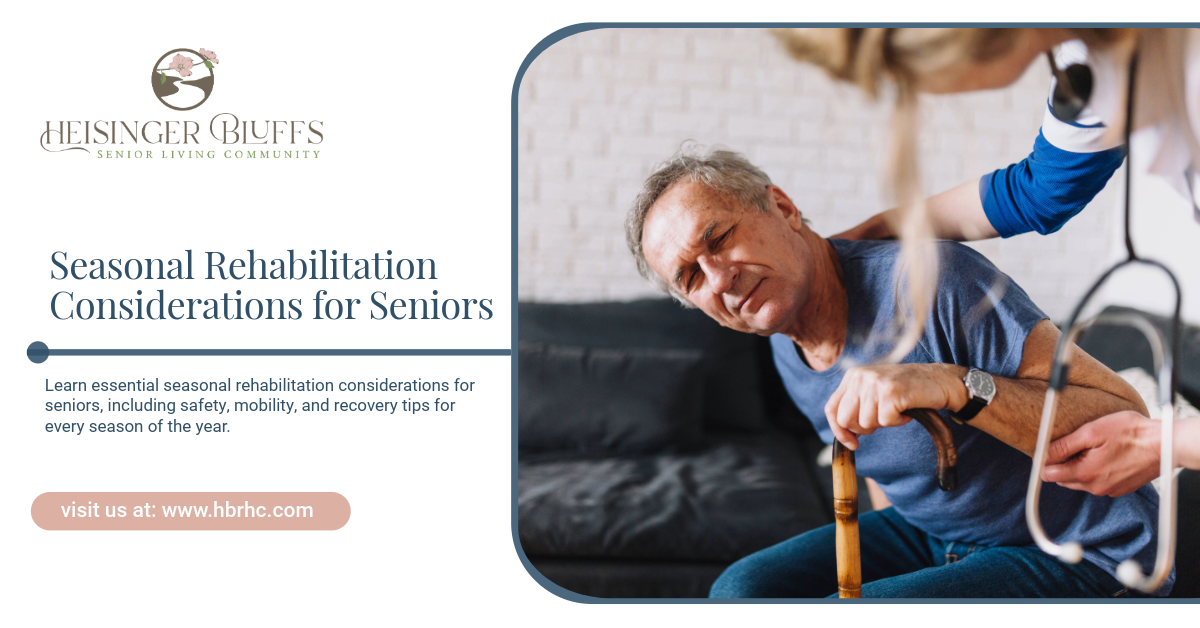
Seasonal Senior Rehabilitation Considerations
Key Highlights
- Weather changes can affect pain, mobility, and recovery speed
- Seasonal risks like heat, cold, and falls impact rehabilitation plans
- Exercise routines often need adjustment throughout the year
- Nutrition and hydration needs shift by season
- Mental health and motivation can fluctuate seasonally
- Safe environments improve rehabilitation success year-round
Recovery and rehabilitation don’t happen in a vacuum. For older adults, the time of year can significantly influence healing, mobility, motivation, and overall well-being. Doctors, therapists, and caregivers often emphasize seasonal rehabilitation considerations for seniors because temperature changes, weather conditions, and daily routines all affect recovery outcomes.
Understanding how each season impacts rehabilitation helps seniors stay safe, consistent, and confident while working toward better health. This guide explains what seniors and families should know about seasonal rehabilitation — and how to adapt recovery plans throughout the year.
Why Seasons Matter in Senior Rehabilitation
As people age, their bodies become more sensitive to environmental changes. Temperature extremes, reduced daylight, and seasonal illnesses can all interfere with recovery. Rehabilitation plans that work well in one season may need adjustments in another.
Healthcare providers stress that recognizing seasonal rehabilitation considerations for seniors helps prevent setbacks and supports steady progress.
Seasonal factors that influence rehabilitation include:
- Temperature and humidity
- Ice, snow, or rain
- Changes in daily routines
- Seasonal illnesses
- Variations in activity levels
Spring Rehabilitation Considerations for Seniors
Spring often brings renewed energy, but it also presents unique rehabilitation challenges.
Benefits of Spring Rehabilitation
- Milder temperatures encourage movement
- Longer daylight hours boost motivation
- Improved mood supports recovery
Potential Challenges
- Allergies may affect breathing and energy
- Increased outdoor activity can raise fall risk
- Overexertion after winter inactivity
Doctors and therapists often advise seniors to gradually increase activity levels in spring rather than jumping back into full routines too quickly.
Summer Rehabilitation Considerations for Seniors
Summer can support rehabilitation — but heat-related risks must be carefully managed.
Common Summer Rehabilitation Risks
- Dehydration
- Heat exhaustion
- Fatigue
- Swelling in joints and legs
Older adults are more vulnerable to heat-related complications, which can interfere with therapy progress.
Tips for Safe Summer Rehabilitation
- Schedule therapy during cooler hours
- Drink fluids regularly, even without thirst
- Wear lightweight, breathable clothing
- Monitor signs of overheating
Seasonal rehabilitation considerations for seniors in summer focus heavily on hydration, pacing, and temperature control.
Fall Rehabilitation Considerations for Seniors
Fall is often ideal for rehabilitation but comes with transition-related risks.
Benefits of Fall Rehabilitation
- Comfortable temperatures
- Fewer heat-related concerns
- Improved endurance
Fall-Specific Challenges
- Wet leaves increase fall risk
- Shorter daylight hours reduce activity time
- Seasonal illnesses begin to circulate
Healthcare professionals recommend reviewing safety measures during fall, especially for outdoor mobility exercises.
Winter Rehabilitation Considerations for Seniors
Winter poses the greatest rehabilitation challenges for many seniors. Cold temperatures and limited mobility opportunities can slow progress if not properly managed.
Common Winter Rehabilitation Risks
- Slips and falls on ice
- Increased joint stiffness
- Reduced activity levels
- Social isolation
Doctors emphasize that winter rehabilitation should focus on consistency, indoor safety, and maintaining strength despite limited outdoor activity.
Comparing Seasonal Rehabilitation Risks and Solutions
| Season | Common Challenges | Rehabilitation Focus |
|---|---|---|
| Spring | Allergies, overexertion | Gradual activity increase |
| Summer | Heat, dehydration | Hydration and pacing |
| Fall | Slippery surfaces | Balance and safety |
| Winter | Cold, inactivity | Strength and consistency |
Understanding these seasonal patterns helps seniors and caregivers plan.
How Weather Affects Pain and Mobility
Many seniors report increased joint pain or stiffness with weather changes. While research varies, temperature and barometric pressure changes can affect circulation and inflammation.
Seasonal rehabilitation considerations for seniors often include:
- Longer warm-up periods in cold weather
- Gentle stretching before activity
- Adjusted therapy intensity
Listening to the body and communicating changes to healthcare providers is essential.
Seasonal Nutrition and Hydration for Rehabilitation
Nutrition plays a critical role in recovery, and seasonal habits can influence intake.
Seasonal Nutrition Challenges
- Reduced appetite in the summer heat
- Comfort-food reliance in winter
- Lower vitamin D levels during darker months
Nutritional Focus by Season
- Spring: Fresh produce for energy
- Summer: Hydration and electrolytes
- Fall: Immune-supporting nutrients
- Winter: Protein and vitamin D
Doctors stress that proper nutrition supports muscle repair, immune function, and overall rehabilitation success.
Mental Health and Seasonal Rehabilitation
Seasonal changes can affect mood and motivation, particularly for seniors recovering from illness or injury.
Mental Health Considerations
- Winter isolation may reduce motivation
- Summer fatigue can increase irritability
- Seasonal affective symptoms may appear
Staying socially engaged and maintaining routines are key components of effective seasonal rehabilitation for seniors.
Adjusting Exercise and Therapy by Season
Rehabilitation exercises should evolve throughout the year.
Seasonal Exercise Adjustments
- Indoor routines during extreme weather
- Balance-focused exercises during fall and winter
- Endurance-building activities in spring and fall
Physical therapists often modify programs to align with seasonal safety and energy levels.
Preventing Seasonal Setbacks During Rehabilitation
Doctors emphasize prevention as one of the most important seasonal rehabilitation considerations for seniors.
Common Seasonal Setbacks
- Falls during icy or wet conditions
- Missed therapy sessions due to the weather
- Illness disrupting progress
Prevention Strategies
- Safe, clutter-free environments
- Backup indoor exercise plans
- Routine health monitoring
Planning reduces disruptions and maintains momentum.
The Role of Supportive Environments in Year-Round Rehabilitation
Recovery is easier in environments designed with seniors in mind. Consistent routines, accessible spaces, and on-site support help minimize seasonal disruptions.
Supportive settings often provide:
- Climate-controlled spaces
- Safe walking areas
- Structured wellness programs
- Social opportunities year-round
These features help seniors maintain rehabilitation progress regardless of the season.
Seasonal Rehabilitation and Long-Term Independence
Seasonal rehabilitation considerations for seniors aren’t just about short-term recovery — they directly impact long-term independence.
Consistent, season-aware rehabilitation supports:
- Strength maintenance
- Fall prevention
- Confidence in mobility
- Reduced hospital readmissions
By adapting to seasonal challenges, seniors can continue making progress year after year.
Final Thoughts
Rehabilitation is not a one-size-fits-all process, and it shouldn’t be a one-season approach either. Understanding seasonal rehabilitation considerations for seniors helps older adults stay safe, adaptable, and successful throughout the year.
For seniors who benefit from consistent support, accessible spaces, and wellness-focused living in every season, Heisinger Bluffs provides an environment designed to promote recovery, comfort, and confidence all year long. Reach out today!
Frequently Asked Questions
Why does rehabilitation feel harder in winter?
Cold temperatures, reduced movement, and joint stiffness can make rehabilitation feel more challenging during winter months.
Should seniors stop rehabilitation during extreme weather?
No. Rehabilitation can be modified for indoor or low-impact activity rather than stopped entirely.
How can seniors stay motivated year-round?
Setting small goals, maintaining routines, and staying socially connected help sustain motivation through all seasons.
Does heat affect recovery in seniors?
Yes. Heat can cause dehydration and fatigue, which may slow rehabilitation progress.
Are seasonal adjustments normal in rehabilitation plans?
Absolutely. Seasonal modifications are common and often recommended by healthcare professionals.
Sources:
- https://www.aarp.org/health/conditions-treatments/relief-from-seasonal-allergies/
- https://www.mayoclinic.org/medical-professionals/trauma/news/geriatric-winter-falls-when-a-simple-bump-on-the-ice-can-be-serious/mac-20451017
- https://medlineplus.gov/nutritionforolderadults.html
- https://www.cdc.gov/physicalactivity/downloads/growing_stronger.pdf



Share This Article
You May Also Like To Read