
Key Highlights
- Social wellness is not just a nice-to-have; it is tied to measurable changes in brain chemistry, stress hormones, and immune function.
- Regular social interaction is consistently linked by researchers to stronger cognitive resilience and a lower risk of cognitive decline.
- Chronic loneliness places real physiological strain on the body, affecting cardiovascular health, sleep, and inflammation levels.
- Conversation, laughter, and shared activity trigger brain chemistry that supports mood regulation and emotional stability.
- A sense of purpose and belonging, often built through community involvement, is one of the most protective factors for healthy aging.
- Environments designed around regular social opportunities give seniors a meaningful, science-backed advantage for long-term well-being.
For years, social connection was treated as a pleasant extra in conversations about healthy aging, something nice to have but secondary to diet, exercise, and medical care. That view has shifted considerably. Researchers who study aging now describe social wellness as a core pillar of health, one that interacts directly with the brain, the cardiovascular system, the immune system, and mental health in ways that are measurable and significant.
For seniors in particular, understanding this science matters. Life transitions such as retirement, the loss of a spouse, adult children moving away, or reduced mobility can quietly shrink a person's social world. When that happens gradually, it is easy to underestimate the impact. This article breaks down what research actually shows about the connection between social wellness and healthy aging, and why it deserves the same attention as physical health.
What Social Wellness Actually Means
Social wellness refers to the quality and consistency of a person's relationships and sense of connection to others, not simply the number of people around them. Someone can be surrounded by people and still feel isolated if those interactions lack depth or warmth. Conversely, someone with a smaller circle of close, meaningful relationships can experience strong social wellness.
Researchers generally look at a few components when assessing social wellness:
- Frequency of meaningful interaction, not just casual contact
- Quality and depth of relationships
- A sense of belonging to a group or community
- Opportunities to contribute, help others, or feel needed
- Emotional support available during difficult times
Understanding social wellness this way helps explain why structured community life, built around regular, varied opportunities for connection, tends to support better outcomes than isolated living, even when other factors like healthcare access are similar.
The Brain Chemistry of Connection
Social interaction triggers real, measurable activity in the brain. Positive social contact, such as a warm conversation, shared laughter, or physical touch like a hug or handshake, is associated with the release of oxytocin, a hormone linked to feelings of trust, calm, and bonding. At the same time, engaging social activity tends to support dopamine activity, which plays a role in motivation and pleasure.
On the other side of this equation, chronic loneliness is associated with elevated levels of cortisol, the body's primary stress hormone. Sustained elevated cortisol has been linked by researchers to a range of negative effects, including disrupted sleep, weakened immune response, and increased inflammation throughout the body. In other words, the brain does not treat loneliness as a purely emotional experience. It registers as a physical stressor, with consequences that extend well beyond mood.
This is part of why social wellness cannot be separated from physical health conversations. The two are biologically intertwined.
Social Engagement and Cognitive Health
One of the most consistent findings in aging research is the link between social engagement and cognitive function. Conversation itself is cognitively demanding. Following a discussion, recalling shared memories, reading social cues, and formulating responses all require active use of memory, attention, and language processing.
Researchers who study cognitive aging often point to the concept of cognitive reserve, the brain's ability to maintain function despite age-related changes. Regular social and intellectual engagement is considered one of the factors that helps build and preserve this reserve. Seniors who maintain active social lives, particularly ones that involve varied conversation and group problem-solving, tend to show stronger cognitive resilience compared to those experiencing prolonged isolation.
This does not mean social interaction alone prevents cognitive decline. Genetics, overall health, and other lifestyle factors all play a role. But the research is clear that social engagement is one of the more modifiable factors within a person's control, and one that can be intentionally supported through daily life and community design.
The Physical Health Consequences of Isolation
Isolation does not just affect mood. Public health researchers have increasingly treated chronic loneliness as a genuine health risk factor, comparable in seriousness to other well-established risks. Prolonged social isolation has been associated with:
- Elevated blood pressure and increased cardiovascular strain
- Weakened immune response, making illness recovery slower
- Disrupted sleep patterns, which further affect mood and cognition
- Higher rates of reported depression and anxiety
- Reduced motivation to maintain healthy habits like regular movement and balanced eating
These effects tend to compound over time. A senior who becomes isolated may sleep poorly, which affects energy and mood, which in turn reduces motivation to engage socially, deepening the isolation further. Breaking that cycle is much easier with consistent, low-pressure opportunities for connection built into daily life, rather than relying on a person to independently seek out social contact while already feeling withdrawn.
Mood, Laughter, and Emotional Regulation
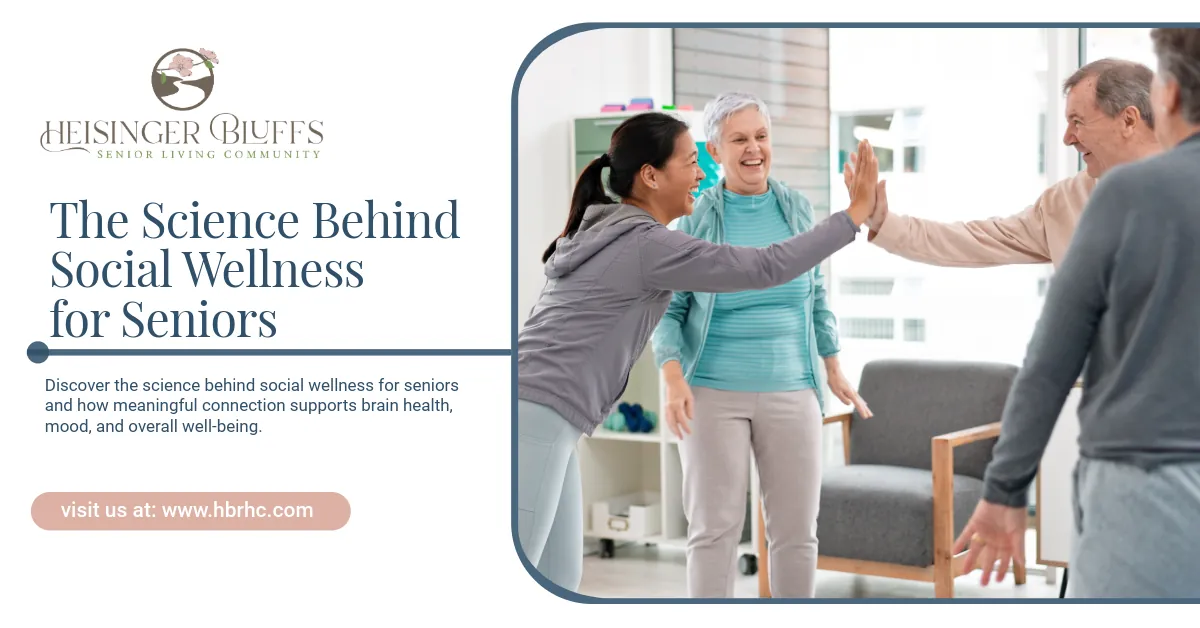
Beyond the more clinical measures, social interaction plays a significant role in day-to-day emotional regulation. Laughter, storytelling, and shared humor activate reward pathways in the brain and have been associated with reduced perception of stress. Even brief, informal social moments, a shared joke over coffee or a passing conversation in a hallway, contribute to a person's overall emotional baseline throughout the day.
This is one reason why variety matters in social opportunities. Deep, meaningful conversation supports emotional closeness, while lighter, playful interaction supports mood in a different but equally important way. A well-rounded social environment offers both.
A Sense of Purpose and Belonging
Feeling needed and valued is one of the more powerful, and sometimes overlooked, components of social wellness. Psychologists studying healthy aging often reference the importance of continued purpose, having reasons to get up in the morning, roles to fill, and contributions to make.
For many seniors, retirement or reduced independence can quietly erode this sense of purpose, even when physical health remains strong. Community involvement helps restore it. Mentoring a newer resident, leading a small group activity, or simply being the person who reliably shows up and contributes to a shared conversation all reinforce a sense of being valued.
In our experience working with residents across senior living communities, we've seen this shift firsthand. One resident, a retired schoolteacher, seemed withdrawn and disengaged during her first month after moving in. Once staff learned about her background, she was invited to help lead a small weekly discussion group. Within weeks, her mood and overall engagement noticeably improved. She later described the invitation as the moment she started to feel like herself again, not because the activity itself was elaborate, but because it gave her a role and a reason to connect with others regularly. That kind of purpose-driven engagement is difficult to manufacture artificially, but it is exactly the kind of opportunity that thoughtful community programming can create.
Social Wellness at a Glance
| Health Domain | How Social Wellness Helps | What Isolation Tends to Worsen |
|---|---|---|
| Cognitive health | Builds cognitive reserve through conversation and mental engagement | Faster perceived cognitive decline |
| Cardiovascular health | Supports lower stress hormone levels over time | Elevated blood pressure and cardiovascular strain |
| Immune function | Associated with more stable immune response | Weakened immune response, slower recovery |
| Emotional health | Supports mood regulation through connection and laughter | Higher rates of reported depression and anxiety |
| Sleep quality | Reduces stress-related sleep disruption | Poor sleep patterns tied to chronic loneliness |
| Sense of purpose | Reinforced through contribution and belonging | Diminished motivation and daily engagement |
How Communities Can Support Social Wellness Intentionally
Given how strongly research supports the link between social connection and healthy aging, community design matters. A few evidence-informed approaches tend to make the biggest difference:
- Offering a mix of small, intimate gatherings and larger group events, since different residents thrive in different social settings.
- Creating recurring, predictable opportunities for connection, which lowers the barrier to participation over time.
- Building in roles and responsibilities for residents who want to contribute, not just attend.
- Training staff to recognize early signs of withdrawal and gently reconnect residents before isolation deepens.
- Encouraging family involvement, since strong outside relationships also contribute meaningfully to overall social wellness.
None of these approaches require elaborate programming. What matters most is consistency and genuine attentiveness to each resident's needs and comfort level.
Final Thoughts
The science is clear that social wellness is not a soft or secondary part of healthy aging. It shapes brain chemistry, supports cardiovascular and immune health, protects cognitive function, and reinforces the sense of purpose that makes daily life feel meaningful.
At Heisinger Bluffs, we build our community around this understanding, offering residents consistent, varied opportunities for genuine connection alongside the roles and relationships that help them thrive.
If you are exploring senior living options for yourself or a loved one in Jefferson City, Missouri, we would love to show you how our community supports social wellness every day. Contact us today to schedule a visit and experience it firsthand.
Frequently Asked Questions
Is social wellness really as important as physical health for seniors?
Research increasingly treats the two as deeply connected rather than separate concerns. Chronic loneliness affects the body physically, while strong social connection supports better physical outcomes, so social wellness should be viewed as a genuine component of overall health rather than a secondary concern.
How much social interaction is considered healthy for a senior?
There is no single universal number, since quality tends to matter more than quantity. Regular, meaningful interaction, even a few close relationships and consistent small-group activities, tends to provide stronger benefits than frequent but shallow social contact.
Can social wellness actually help slow cognitive decline?
Social engagement is considered one of several modifiable factors that support cognitive reserve. It is not a guaranteed prevention method, but researchers consistently find that seniors who stay socially and mentally active tend to show stronger cognitive resilience over time.
What are early signs that a senior may be struggling with isolation?
Common signs include withdrawing from previously enjoyed activities, reduced interest in conversation, changes in sleep or appetite, and a general low mood that persists over time. Family members and community staff who notice these signs early can often help reconnect a resident before isolation deepens.
Can social wellness be improved even later in life?
Yes. The brain and body remain responsive to social connection at any age. Many seniors who experience isolation see meaningful improvement in mood, engagement, and even cognitive function once they become consistently involved in social activities again.
Sources:
- https://mcpress.mayoclinic.org/healthy-aging/a-surprising-key-to-healthy-aging-strong-social-connections/
- https://pmc.ncbi.nlm.nih.gov/articles/PMC10002207/
- https://www.sciencealert.com/your-brain-might-predict-social-interactions-before-they-happen
- https://www.nature.com/articles/s41598-021-95438-0
- https://www.simplypsychology.com/articles/chronic-loneliness-health-effects