
Key Highlights
- Nearly two-thirds of adults over 70 experience some degree of hearing loss, and untreated hearing loss significantly raises the risk of social withdrawal.
- Social isolation in older adults has been linked to a 50% increased risk of dementia, higher rates of depression, and even increased mortality.
- Hearing loss often develops gradually, which means many seniors and their families miss the early signs until withdrawal has already begun.
- Hearing aids, assistive listening devices, communication strategies, and supportive environments can reverse much of the social damage hearing loss causes.
- Senior living communities play a powerful role in keeping residents with hearing loss engaged through hearing-friendly design, programming, and peer support.
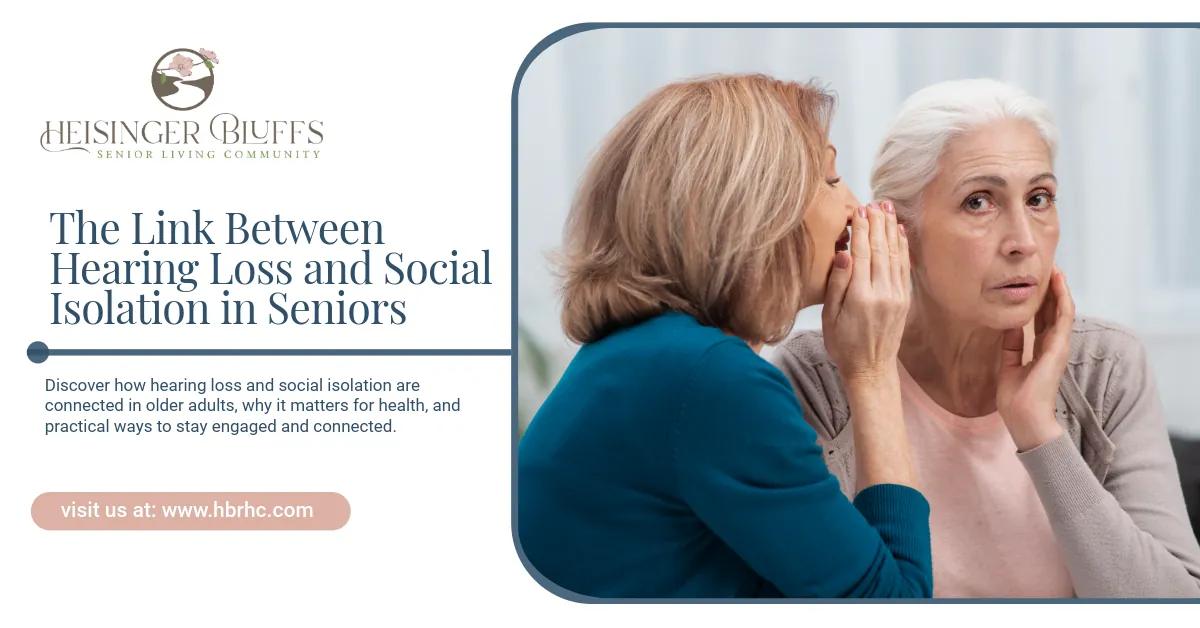
Hearing loss is often dismissed as a normal, even inevitable, part of aging. A little louder television, a few more "what was that?" moments at dinner, a quieter presence at family gatherings. For many older adults and their loved ones, these changes go unaddressed for years. But beneath the surface of mild hearing difficulty lies a far more serious issue: the slow, steady erosion of social connection.
Research over the past two decades has made one thing increasingly clear. Hearing loss and social isolation are deeply intertwined, and the consequences of that connection reach into nearly every aspect of an older adult's health, including cognitive function, emotional well-being, physical safety, and longevity. Understanding this link is the first step toward protecting it.
How Common Is Hearing Loss in Older Adults?
Hearing loss is one of the most prevalent chronic conditions facing the aging population. According to the National Institute on Deafness and Other Communication Disorders, approximately one in three adults between the ages of 65 and 74 has hearing loss, and nearly half of those over 75 are affected. By the age of 80, the figure climbs even higher.
Despite these numbers, hearing loss remains dramatically undertreated. Studies suggest that only about one in four adults who could benefit from hearing aids actually use them. The reasons are varied: cost, stigma, denial, lack of access to audiology services, or simply the slow, almost imperceptible way the condition develops. A person rarely wakes up one morning unable to hear. Instead, conversations grow muddier over months and years, and the brain quietly adapts by avoiding situations where listening feels like work.
That avoidance is where isolation begins.
The Pathway From Hearing Loss to Social Isolation
Social isolation does not happen all at once. It builds in small, often unnoticed steps, each one a reasonable response to the discomfort of struggling to hear.
It might start with skipping a noisy restaurant outing because the background noise makes conversation impossible. Then a weekly card game becomes too tiring because following multiple speakers requires intense concentration. Phone calls grow shorter. Church services feel less meaningful when sermons are hard to follow. Family dinners turn into events where the person with hearing loss smiles, nods, and stops contributing.
Over time, these small withdrawals add up. The world grows quieter, and so does the person living in it.
In our experience working with residents and their families, we have repeatedly seen this pattern unfold in reverse once hearing is addressed. One resident in particular comes to mind: a retired teacher who had grown noticeably quiet at meals and stopped attending the community sing-alongs she once loved. Her daughter assumed it was depression. After a hearing evaluation and properly fitted hearing aids, along with some adjustments to where she sat at meals so she could see speakers' faces, she was back at the piano within two months, leading songs she had not played in over a year. The depression, it turned out, had been a symptom of disconnection, not the cause of it.
Why Social Isolation Is So Dangerous for Older Adults
To understand why the hearing-isolation link matters so much, it helps to understand what social isolation does to the aging body and brain. The data is sobering.
The U.S. Surgeon General's 2023 advisory on social connection compared the health impact of chronic isolation to smoking up to 15 cigarettes a day. Isolated older adults face significantly higher risks of cardiovascular disease, stroke, depression, anxiety, and cognitive decline. The link between social isolation and dementia is particularly striking, with multiple large studies finding that isolated seniors have roughly a 50% increased risk of developing dementia compared to their socially connected peers.
When hearing loss is the driver of that isolation, the cognitive risk compounds. Researchers at Johns Hopkins have found that hearing loss itself, independent of isolation, accelerates brain atrophy and is associated with faster cognitive decline. The leasing theory is that when the brain has to work overtime to decode garbled sound, it pulls resources away from memory and other cognitive functions. Add in the loss of stimulating conversation and engagement, and the brain is essentially being starved on two fronts.
Health Risks Associated With Untreated Hearing Loss and Isolation
| Health Concern | Increased Risk With Untreated Hearing Loss and Isolation |
|---|---|
| Dementia | Up to 50% higher risk |
| Depression | 2 to 5 times more likely |
| Falls and injuries | Nearly 3 times higher risk |
| Hospitalization | Approximately 30% more frequent |
| Mortality (all causes) | Significantly elevated |
These are not abstract statistics. They translate into longer hospital stays, faster transitions to higher levels of care, strained family relationships, and a measurable loss of healthy, active years of life.
The Emotional Toll Few People Talk About
Beyond the medical risks, there is the simple, human reality of what it feels like to live with hearing loss in a hearing world. Many older adults describe a deep loneliness even when surrounded by family. They hear voices but cannot make out words. They are physically present but conversationally absent. They sense, often correctly, that loved ones have stopped including them in side conversations because it takes too much effort.
This dynamic can foster feelings of shame, embarrassment, and frustration. Some seniors begin to believe they are becoming a burden. Others worry that asking people to repeat themselves makes them seem confused or cognitively impaired, fears that can prompt them to hide their hearing difficulty rather than address it. The result is often a quiet grief, a sense of being left behind by the people they love most.
Spouses and adult children feel the strain too. Conversations become exhausting. Misunderstandings turn into arguments. Visits grow shorter. The whole family system contracts around the unaddressed issue.
Why Addressing Hearing Loss Reverses the Isolation Spiral
The encouraging news is that this spiral is highly reversible. When hearing loss is treated, social engagement tends to follow. A landmark 2023 study published in The Lancet, known as the ACHIEVE trial, found that hearing intervention significantly reduced cognitive decline in older adults at higher risk for dementia. Participants who received hearing aids and counseling showed about 45% less cognitive decline over three years compared to a control group.
Hearing aids alone, however, are not always enough. Real reconnection usually requires a combination of approaches.
Modern hearing aids have improved dramatically. They are smaller, more discreet, and far more sophisticated than the bulky devices many older adults remember from their parents or grandparents. Many now offer Bluetooth connectivity, automatic adjustment to different environments, and direct streaming from phones and televisions. For someone who has been avoiding group dinners or worship services, the difference can be life-changing.
Assistive listening devices also play an important role. Pocket talkers, captioned telephones, TV listening systems, and looped venues can fill gaps for situations where hearing aids alone struggle, such as large rooms or noisy gatherings.
Communication strategies matter just as much. Facing the person, speaking clearly rather than loudly, reducing background noise, and giving conversational context all help tremendously. Family members and caregivers often need coaching here, because well-meaning habits like shouting from another room or talking while looking away can make the hearing aid far less effective.
Finally, the environment shapes everything. A dining room with carpet, soft furnishings, and good lighting is dramatically easier to hear in than one with hard floors, glass walls, and dim corners. A community that thinks about acoustics is a community that protects connection.
Spotting the Early Signs in a Loved One
Because hearing loss develops slowly, families are often the first to notice. Some of the most common early signs include frequently asking others to repeat themselves, turning the television or radio up louder than others find comfortable, difficulty following conversations in groups or in restaurants, complaining that people are mumbling, withdrawing from previously enjoyed social activities, and seeming tired or irritable after social events.
Mood changes such as new irritability, sadness, or apparent confusion can also signal hearing loss rather than the cognitive or emotional issues they are often mistaken for. When in doubt, a hearing evaluation is one of the most cost-effective and high-impact steps a family can take for an aging loved one.
What Families and Communities Can Do
Supporting older adults with hearing loss is not just about hearing aids. It is about creating a daily life where connection remains possible and enjoyable. A few practical steps make an outsized difference.
Encourage a baseline hearing evaluation, even if hearing seems only mildly affected. Early intervention preserves both auditory function and cognitive reserve. Choose social environments thoughtfully, favoring smaller groups, well-lit rooms, and quieter settings when possible. Build communication habits that include eye contact, clear speech, and a willingness to rephrase rather than simply repeat. Stay alert for emotional changes, recognizing that depression and withdrawal may have a treatable underlying root. And advocate for hearing-friendly design in any care setting being considered, from acoustic treatment to assistive technology to staff training.
For older adults living alone, the stakes are especially high. Without daily companions to notice changes, hearing loss can progress unchecked, and isolation can deepen quickly. Regular check-ins, social programming, and access to audiology services are not luxuries in later life. They are essential infrastructure for well-being.
The Role of a Senior Living Community
A thoughtfully designed senior living community can be one of the most effective antidotes to hearing-related isolation. The right environment surrounds an older adult with built-in social opportunities, hearing-friendly spaces, trained staff who understand how to communicate with residents who have hearing loss, and on-site or coordinated access to hearing health services.
In our community, we have watched residents who arrived withdrawn and quiet bloom into active participants in dining, music, exercise, worship, and friendships. Often, the change begins with a simple hearing evaluation and a willingness to address what years of "I'm fine" had hidden. Sometimes it begins with a staff member who has learned to get the resident's attention before speaking and to face them squarely so lip reading can support comprehension.
These are small things. Together, they rebuild a world.
A Place Where Connection Is Built In
Hearing loss does not have to mean a quieter life. With the right awareness, the right tools, and the right environment, older adults can stay connected to the people, conversations, and activities that give life meaning. The connection between hearing loss and social isolation is real, but so is the path back to engagement.
At Heisinger Bluffs, we work every day to make that path easier for the older adults in our care in Jefferson City, Missouri. From hearing-aware staff training and thoughtfully designed common spaces to rich social programming and coordinated access to hearing health resources, our community is built around the belief that no resident should fade into the background simply because hearing has changed.
If you or a loved one is noticing the early signs of withdrawal, or if you are simply exploring what a more connected next chapter could look like, we would love to talk. Contact us today to schedule a visit and see how connection is built into everything we do.
Frequently Asked Questions
Does hearing loss really cause dementia, or are they just correlated?
Current research suggests the relationship is more than correlation. Hearing loss appears to contribute to cognitive decline through several mechanisms, including increased cognitive load, reduced brain stimulation, and the social isolation it produces. The ACHIEVE trial in 2023 showed that treating hearing loss reduced cognitive decline in higher-risk older adults, which strongly supports a causal link.
At what age should an older adult get a baseline hearing test?
Most audiologists recommend a baseline hearing evaluation by age 60, with follow-up testing every two to three years if hearing is normal, and annually if any loss is detected. Anyone experiencing symptoms should be evaluated promptly, regardless of age.
Are hearing aids really worth the cost?
For most older adults with hearing loss, yes. Hearing aids are associated with better cognitive outcomes, reduced fall risk, improved mood, and stronger social engagement. Over-the-counter hearing aids approved by the FDA in 2022 have also made treatment more accessible for mild to moderate hearing loss.
What if my loved one refuses to acknowledge their hearing loss?
Denial is extremely common. Approaching the conversation from a place of concern about specific situations they are missing, such as time with grandchildren or favorite activities, tends to land better than focusing on the hearing loss itself. Offering to attend an evaluation together can also reduce resistance.
Can social engagement protect against hearing-related cognitive decline even without hearing aids?
Social engagement helps, but it is much harder to maintain meaningful engagement when hearing is significantly impaired. The most protective combination is treating the hearing loss and actively staying socially connected. One supports the other.
Sources:
- https://www.nidcd.nih.gov/health/age-related-hearing-loss
- https://hearinghealthfoundation.org/hearing-loss-tinnitus-statistics
- https://www.nia.nih.gov/health/loneliness-and-social-isolation/loneliness-and-social-isolation-tips-staying-connected
- https://www.who.int/activities/reducing-social-isolation-and-loneliness-among-older-people
- https://jamanetwork.com/journals/jama/fullarticle/2819153