
What Is the Difference Between Home Care and Skilled Nursing Facilities?

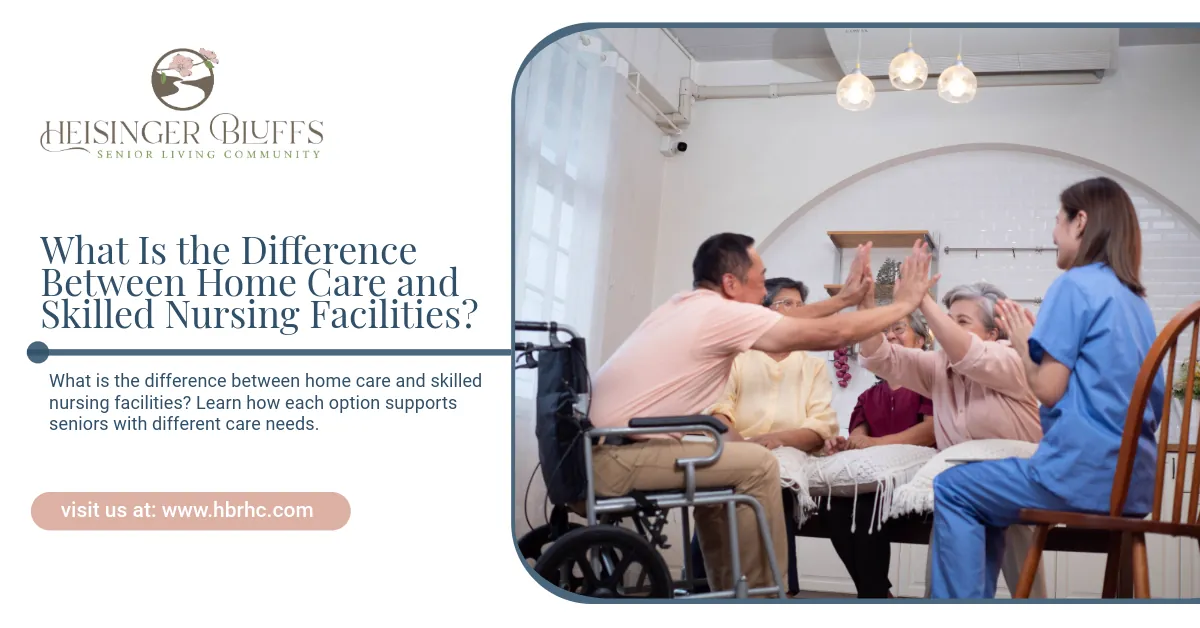
A group of elderly people and a nurse are sitting around a table, giving each other a high five.

The main difference between home care and skilled nursing facilities is the level of medical care provided and the setting.


Home care is typically non-medical support delivered in a senior’s own home. Caregivers help with daily tasks like bathing, dressing, cooking, and companionship. Some home care providers offer limited medical services like medication reminders or basic health monitoring.


Skilled nursing facilities, on the other hand, offer 24/7 medical care provided by licensed nurses. These facilities are ideal for seniors recovering from surgery, managing chronic conditions, or needing therapies such as physical, occupational, or speech therapy.


Home care works best for relatively independent seniors who need light support, while skilled nursing is suited for those with complex medical needs.


At Heisinger Bluffs, we offer multiple levels of care, including skilled nursing, to meet each resident’s unique needs in a safe and caring environment.


Frequently Asked Questions

  • Can a senior start with home care and move to skilled nursing later?

    Yes, care can shift based on changing health needs.

  • Is skilled nursing the same as a nursing home?

    Yes, though “skilled nursing facility” is the more formal term.

  • Who pays for home care or skilled nursing?

    Medicare may cover skilled nursing; home care is often private pay unless medically necessary.


Sources:

  1. https://bethesdahealth.org/blog/health-monitoring-devices-and-apps-for-seniors/
  2. https://mulberryhealth.com/2024/12/17/speech-therapy-what-it-is-and-how-it-helps-seniors/
Heisinger Bluffs logo
A nurse sitting next to an elderly woman on a couch
SCHEDULE A TOUR
Google rating average 4.65 rating out of 60 reviews

Want to know more?

Share This Article

You May Also Like To Read

A nurse assisting an elderly woman in bed;
By Heisinger Bluffs Editorial January 21, 2026
Learn when physical changes are a medical emergency and which warning signs in older adults require immediate care.
Older adult with hands on face, looking distressed.
By Heisinger Bluffs Editorial January 21, 2026
Learn what causes paranoia in older adults, including medical, cognitive, and emotional factors families should recognize.
An elderly woman with her hands covering her face, losing interest in her hobby
By Heisinger Bluffs Editorial January 21, 2026
Is it normal for seniors to lose interest in hobbies? Learn common reasons, when to be concerned, and how families can help.
A caregiver with her head in her hands, looking exhausted, sits near an elderly person in a wheelcha
By Heisinger Bluffs Editorial January 21, 2026
Learn what caregiver burnout is, its common symptoms, causes, and how families can recognize and prevent caregiver burnout.
An elderly man sitting on a desk, scratching his head, showing confusion
By Heisinger Bluffs Editorial January 21, 2026
Learn the most common challenges seniors face, from health changes to social isolation, and how families can better support aging adults.
Smiling senior couple holding mugs, sitting outdoors with fruits.
By Heisinger Bluffs Editorial January 21, 2026
Discover essential preventive healthcare tips for seniors, from screenings to lifestyle changes, to stay healthy and active.
More Posts