
Key Highlights
- Personalizing your space with photos, decor, and favorite items makes your apartment feel like home.
- Thoughtful furniture choices and layouts enhance comfort and functionality.
- Proper lighting and cozy ambiance improve mood and create a welcoming atmosphere.
- Incorporating hobbies, interests, and routines adds personality and familiarity.
- Engaging in community spaces and activities fosters connection while maintaining independence.
- Safety measures, like non-slip rugs and accessible furniture, ensure comfort without compromising security.
- Outdoor areas and greenery can enhance the home-like feel of your living space.
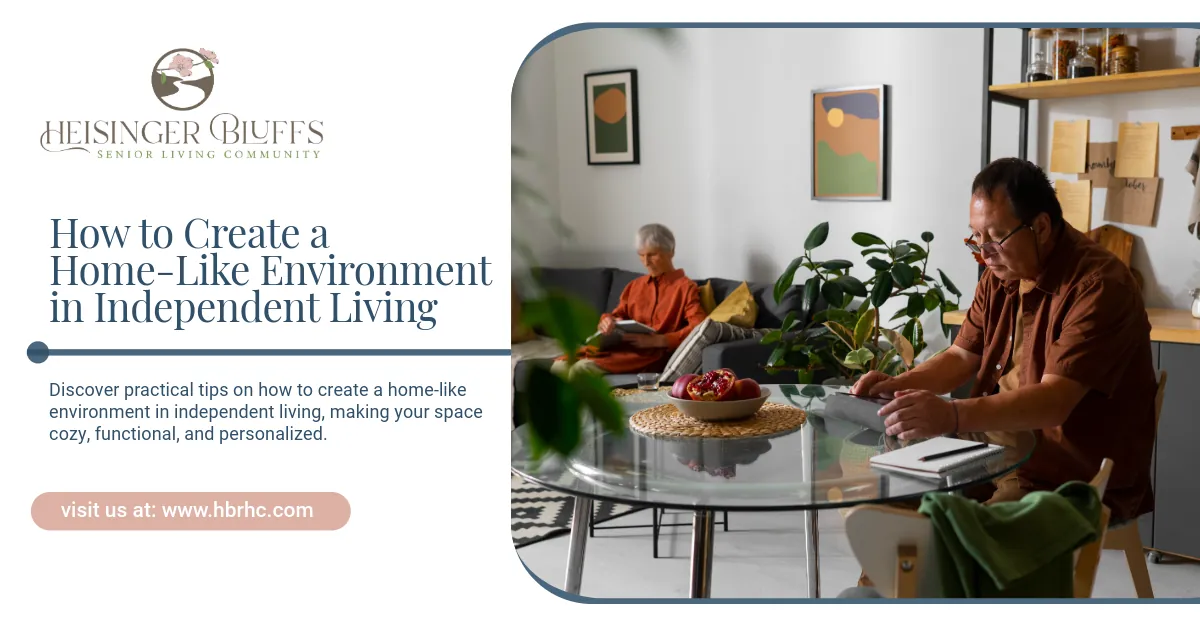
Moving into an independent living community can be an exciting and rewarding step, but it can also feel like a major adjustment. One of the best ways to ease the transition and make your new space feel familiar and welcoming is to focus on creating a home-like environment. A comfortable, personalized space can help maintain independence, foster a sense of belonging, and improve overall well-being.
Creating a Home-Like Indpendent Living Environment
1. Personalize Your Space
Personal touches are key to transforming an independent living apartment into a home.
- Decorate with meaningful items: Bring family photos, artwork, or souvenirs from your travels.
- Use familiar colors and textures: Soft blankets, curtains, and cushions in favorite colors can make a space feel cozy.
- Display cherished collections: Whether it’s books, figurines, or artwork, displaying personal items adds warmth.
Examples of Personal Touches
| Space | Ideas for Personalization | Tips for a Home-Like Feel |
|---|---|---|
| Living Room | Family photos, cozy throw blankets | Add a small plant or soft rug |
| Bedroom | Favorite bedding, personal artwork | Use bedside lamps for warm lighting |
| Kitchenette | Favorite mugs, small decorative items | Keep a few frequently used utensils handy |
| Bathroom | Scented soaps, decorative towels | Add a shower caddy with personal items |
2. Furniture and Layout
Furniture plays a major role in making your space functional and comfortable.
- Choose multi-functional pieces: Ottomans with storage, foldable tables, or chairs with built-in shelves maximize space.
- Arrange for comfort and flow: Keep walkways clear and place seating near windows or common areas for natural light.
- Bring a favorite chair or recliner: A familiar piece of furniture can offer comfort and a sense of continuity.
3. Lighting and Ambiance
Lighting significantly impacts mood and comfort.
- Layered lighting: Combine overhead lights, floor lamps, and table lamps to create a warm, inviting atmosphere.
- Natural light: Make the most of windows and consider light-colored curtains to enhance brightness.
- Soft lighting in the evening: Helps create a cozy, relaxing environment.
4. Incorporate Hobbies and Interests
Your living space should reflect your personality and passions.
- Crafts and hobbies: Set up a small area for knitting, painting, or puzzles.
- Reading nook: A comfortable chair with good lighting can become your personal sanctuary.
- Music and entertainment: A small stereo or smart speaker allows you to enjoy favorite tunes and audiobooks.
5. Social Spaces and Community Interaction
Independent living communities often provide common areas designed to encourage socialization. Making these spaces feel inviting is part of creating a home-like environment.
- Participate in community activities: Join events, classes, or clubs to build connections.
- Invite friends to common areas: Sharing meals or coffee in communal lounges fosters a sense of belonging.
- Add personal touches to shared spaces: Small items like a decorative throw or plant in a communal room can make it feel warm.
6. Safety Meets Comfort
Creating a home-like environment should not compromise safety.
- Non-slip rugs and flooring: Reduce the risk of falls without sacrificing style.
- Accessible furniture: Ensure chairs and tables are at comfortable heights.
- Proper storage: Keep frequently used items within easy reach.
7. Outdoor Spaces
Balconies, patios, and gardens can significantly enhance the feeling of home.
- Add plants or flowers: Greenery brings life and warmth.
- Comfortable seating: A small table and chairs for reading, tea, or conversation.
- Outdoor lighting: Soft string lights or solar lamps create a cozy ambiance.
8. Maintain Familiar Routines
A home-like environment is also about daily habits.
- Morning rituals: Enjoy coffee in a favorite mug or read the newspaper in a favorite chair.
- Meal routines: Cook familiar recipes or enjoy a favorite snack at the same time each day.
- Daily organization: Keep belongings in familiar places to reduce stress and create comfort.
9. Incorporate Technology Thoughtfully
Technology can enhance independence while keeping the home cozy.
- Smart lighting and thermostats: Adjust settings for comfort with ease.
- Digital photo frames: Display rotating family photos without clutter.
- Tablets or computers: Connect with friends and family or pursue hobbies like online classes.
Combining Personal Comfort with Community Living
Ultimately, creating a home-like environment in independent living is a balance between personal comfort and active engagement with the community. Personal touches, familiar routines, and thoughtful furniture choices make your apartment feel like home, while participating in social activities and utilizing community amenities ensures a fulfilling and connected lifestyle.
By focusing on personalization, comfort, safety, and meaningful engagement, residents can enjoy the best of both worlds: a cozy, home-like space and the convenience and social opportunities that independent living provides. Communities that provide well-designed common areas such as lounges, dining rooms, and wellness centers make this balance easier to achieve.
Whether it’s adding cherished family photos, creating a cozy reading nook, or participating in group activities, your independent living space can truly feel like home. At Heisinger Bluffs, residents enjoy thoughtfully designed apartments and common areas that support both independence and connection, making every day feel familiar, comfortable, and full of opportunities. Contact us today!
Frequently Asked Questions
How can I personalize my apartment without cluttering it?
Focus on meaningful items like photos, small decorative pieces, or a favorite blanket. Use multi-functional furniture to save space.
Are pets allowed in independent living communities?
Many communities allow small pets, but it’s best to check specific policies regarding type, size, and care requirements.
How can I make communal areas feel home-like?
Personal touches like plants or decorative items, participating in social activities, and inviting friends can make common spaces cozy and welcoming.
What are safe ways to add rugs or carpets?
Use non-slip pads under rugs, choose low-pile options, and keep walkways clear to reduce fall risks.
How can I integrate hobbies into my living space?
Dedicate a small corner or table for crafts, reading, or puzzles, and store supplies neatly to maintain both functionality and comfort.
Sources:
- https://foyr.com/learn/role-of-furniture-in-interior-design
- https://www.sciencedirect.com/science/article/pii/S0360132322005509
- https://pmc.ncbi.nlm.nih.gov/articles/PMC7500534/
- https://www.nytimes.com/wirecutter/reviews/smart-home-for-seniors/
- https://www.agingcare.com/questions/decorating-suggestions-for-small-studio-room-177358.htm