
Can Social Isolation Shorten Seniors’ Lifespan?
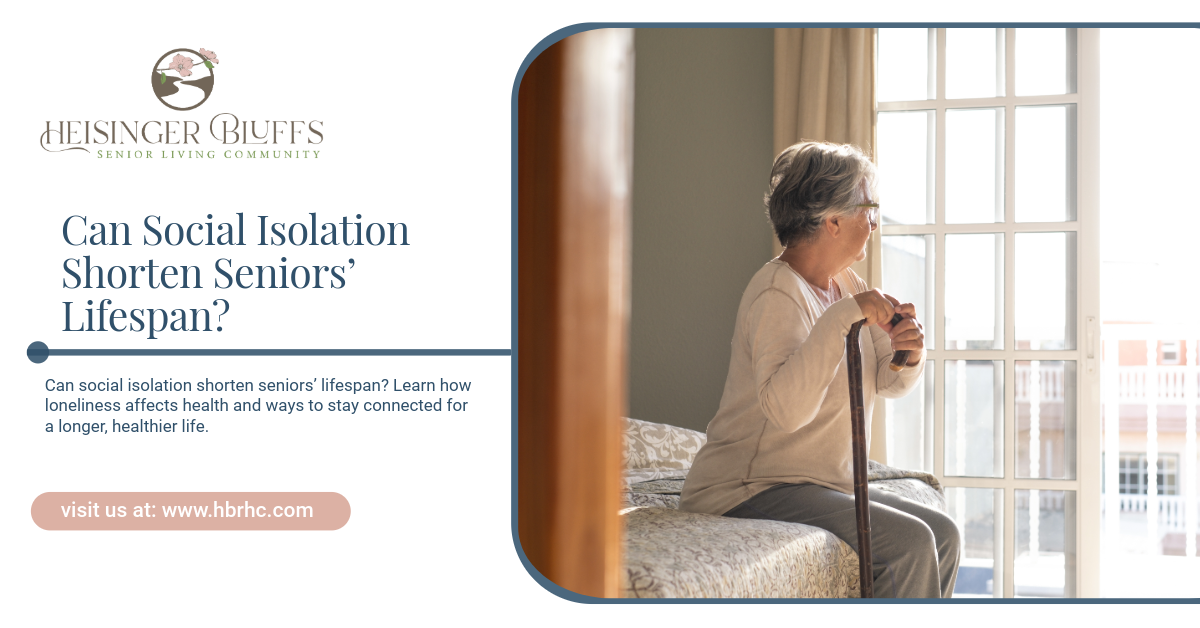
Many wonder, can social isolation shorten seniors’ lifespan? Research shows that prolonged loneliness and social isolation can have serious effects on health, potentially increasing the risk of illness and reducing life expectancy.
Social isolation can lead to higher stress levels, weakened immune function, and increased risk of heart disease. It is also linked to cognitive decline, depression, and anxiety, all of which can impact overall health and longevity.
Maintaining social connections is crucial. Regular interaction with family, friends, or community groups helps seniors stay mentally and emotionally healthy. Activities such as group classes, volunteering, or even phone and video calls can make a significant difference.
Healthy routines, physical activity, and social engagement collectively support longer, more fulfilling lives. At Heisinger Bluffs, residents are encouraged to stay active, socially connected, and engaged in community life, helping to improve both health and quality of life.
Frequently Asked Questions
Does loneliness really affect physical health?
Yes, prolonged loneliness can increase risk of heart disease, high blood pressure, and immune problems.
Can social activities improve lifespan for seniors?
Yes, staying socially active can reduce stress and promote better overall health.
How can seniors overcome social isolation?
Joining community programs, maintaining regular contact with loved ones, and participating in group activities helps reduce isolation.
Sources:
- https://www.cdc.gov/social-connectedness/risk-factors/index.html
- https://www.nia.nih.gov/health/loneliness-and-social-isolation/loneliness-and-social-isolation-tips-staying-connected



Share This Article
You May Also Like To Read