Key Highlights
- A well-maintained community calendar gives residents a predictable rhythm to their week, which reduces uncertainty and encourages participation.
- Seeing a variety of activities laid out in advance lowers the mental effort of deciding whether to join, making it easier to say yes.
- Anticipating an upcoming event, even something small, can noticeably lift mood and motivation between now and then.
- Shared calendars help residents build friendships around common interests, from fitness classes to game nights to art sessions.
- Accessible formats, such as large print, posted boards, and digital options, matter as much as the content of the calendar itself.
- Families who follow the calendar can stay more connected to a loved one's daily life and plan visits around events that matter to them.
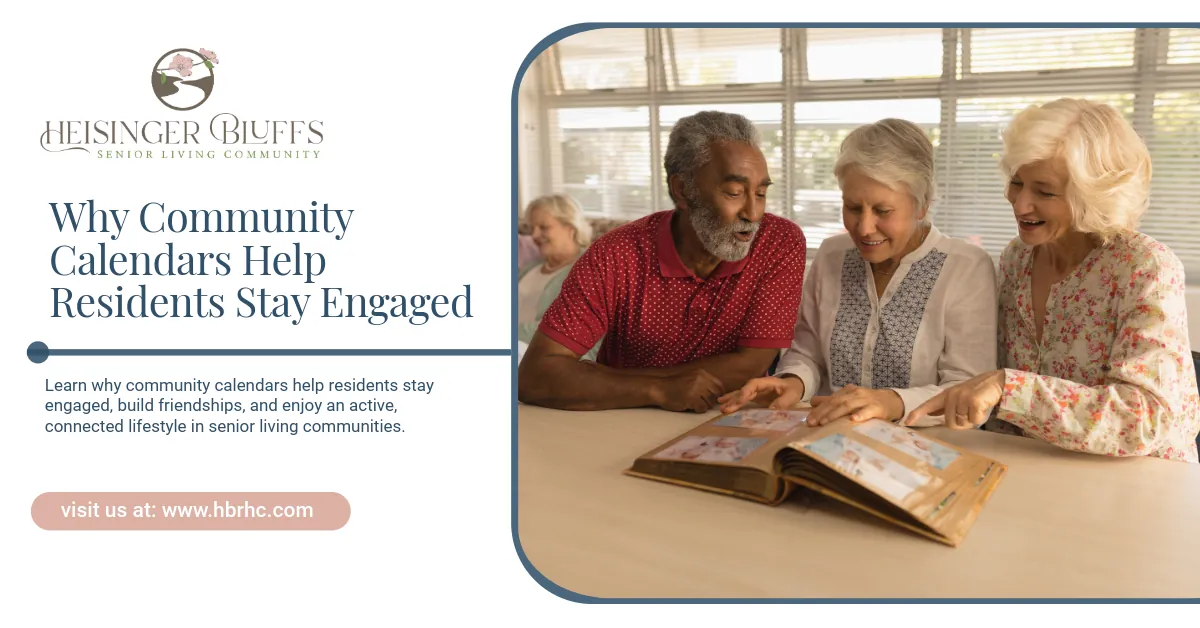
Ask any longtime staff member at a senior living community what tool has the biggest quiet impact on resident engagement, and many will point to something surprisingly simple: the community calendar. It rarely gets much attention on its own, tucked into a hallway bulletin board or handed out at the front desk, but it plays an outsized role in how connected, active, and engaged residents feel from week to week.
A calendar does more than list times and room numbers. It shapes expectations, creates anticipation, and gives residents a reliable structure to build their days around. For people who may have spent years managing packed personal and professional schedules, having a visible, dependable rhythm to community life can be one of the most meaningful comforts of moving into senior living. This article looks at why that is, and how a thoughtfully managed calendar directly supports engagement, mood, and connection.
Predictability Reduces Uncertainty and Encourages Participation
Uncertainty is quietly exhausting. When someone does not know what is happening on a given day, or whether an activity they enjoyed last week will happen again, it becomes easier to default to staying in and skipping it altogether. A calendar removes much of that uncertainty.
When residents can look at a calendar and see that chair yoga happens every Monday at ten, or that the same discussion group meets every other Thursday afternoon, that predictability builds trust. Residents start to plan their days and weeks around these fixed points, the same way many people once built routines around work meetings, family dinners, or weekend traditions.
This predictability matters most for residents who are naturally more hesitant to try new things. A first-time visitor to an activity is taking a small social risk. Knowing that an activity happens reliably, week after week, makes it easier to work up the courage to attend, because there is no urgency or fear of missing a one-time opportunity.
Lowering the Guesswork Makes It Easier to Say Yes
Deciding whether to join an activity involves more mental effort than people often realize. What is it exactly? How long does it run? Do I need to sign up? Is it too late to just show up? A clear, well-organized calendar answers most of these questions before a resident even has to ask.
Good calendars typically include:
- The name and brief description of the activity
- Start and end times, so residents can plan around them
- Location within the community
- Whether registration or sign-up is required
- Any materials residents should bring, if applicable
When this information is easy to find, residents spend less energy figuring out logistics and more energy actually deciding whether something sounds enjoyable. That shift, from logistics to genuine interest, is often the difference between a resident staying in their apartment and a resident showing up.
Anticipation Itself Boosts Mood
There is real psychological value in simply having something to look forward to. Knowing that a favorite music performance is happening on Friday, or that a grandchild's visit lines up with a scheduled ice cream social, gives residents something pleasant to think about in the days leading up to it.
This is one of the most overlooked benefits of a visible, forward-looking calendar. It is not just about the event itself. It is about the entire stretch of time between seeing it on the calendar and the event actually happening. That anticipation can lift mood, spark conversation with neighbors, and give residents a reason to structure their day, from getting dressed a little earlier to saving energy for later in the afternoon.
Building Friendships Around Shared Interests
Calendars do more than organize time. They create natural, recurring opportunities for residents to connect with others who share their interests. A resident who loves painting will likely meet the same small group of people at every art session. A resident who enjoys trivia will start to recognize familiar faces at weekly game nights.
Over time, these repeated interactions turn into real friendships. Unlike a one-time event, a recurring calendar item gives relationships room to grow gradually and naturally, without the pressure of needing to become close friends immediately.
In our experience working with residents across senior living communities, we've seen this play out clearly. One resident who rarely left her apartment during her first few weeks began attending a weekly art class after noticing it appeared on the calendar at the same time every Tuesday. The predictability made it feel low-pressure to try once. Within a couple of months, she was not only attending regularly but reminding her neighbors when the next session was coming up, effectively becoming part of how that activity stayed well attended. That kind of shift, from hesitant newcomer to informal community connector, is something a good calendar makes possible by giving residents a reliable, repeated reason to show up.
Supporting Family Involvement and Peace of Mind
Community calendars are not only useful for residents. Families who can view the calendar, whether posted in the community, shared through a newsletter, or available online, get a clearer picture of their loved one's daily life. Knowing that mom has book club on Wednesdays or that dad's favorite live music event is coming up next month helps families feel more connected, even when they cannot visit as often as they would like.
This visibility also helps families plan visits more meaningfully. Rather than arriving during a quiet, unstructured afternoon, a family member might choose to visit during a special event, sit in on an activity with their loved one, or simply time their visit around something their loved one is genuinely excited about that week. That small bit of alignment can make visits feel more connected and less like a routine check-in.
Accessibility Matters as Much as Content
A calendar full of wonderful activities does little good if residents cannot easily read or access it. Accessibility should be treated as a core part of calendar design, not an afterthought.
This includes:
- Large, easy-to-read print for posted calendars
- High-contrast colors and clear fonts
- Calendars posted in multiple common areas, not just one location
- Digital versions available for residents and families who prefer checking a screen or receiving updates by email
- Verbal reminders from staff for residents who benefit from an extra prompt
Communities that take accessibility seriously tend to see higher participation across a wider range of residents, including those with vision changes, memory-related challenges, or simply a preference for older, more familiar formats like a printed monthly sheet taped to the refrigerator.
Common Categories Found on a Well-Rounded Community Calendar
| Category | Purpose | Example Activities |
|---|---|---|
| Physical wellness | Supports mobility, strength, and overall health | Chair yoga, walking groups, balance classes |
| Social connection | Builds relationships and reduces isolation | Game nights, coffee socials, happy hours |
| Creative expression | Encourages hobbies and self-expression | Art classes, music sessions, writing groups |
| Lifelong learning | Keeps the mind engaged and curious | Guest speakers, book clubs, discussion groups |
| Spiritual and reflective | Supports personal or faith-based practices | Devotionals, meditation, faith services |
| Special events | Adds variety and something to anticipate | Holiday celebrations, live performances, outings |
A calendar that balances these categories, rather than leaning heavily on just one or two, gives residents a genuine range of choices. Not every resident wants the same kind of engagement, and variety helps ensure there is something for nearly everyone.
Getting the Most Out of a Community Calendar
Residents and families can take a few simple steps to make the calendar work harder for them:
- Review it weekly rather than only glancing at it occasionally, so nothing gets missed.
- Try attending something new at least once a month, even if it feels slightly outside a usual comfort zone.
- Ask staff about activities that are not fully explained by their calendar title, since a short description often does not capture the full experience.
- Encourage a hesitant neighbor or loved one to attend an event together, since a familiar face can make a big difference in whether someone shows up.
- Give feedback to activity staff about what is working and what residents would like to see more of, since calendars work best when they reflect genuine resident interest.
Final Thoughts
A thoughtfully managed community calendar does far more than list times and locations. It creates predictability, sparks anticipation, lowers the barriers to trying something new, and gives residents recurring reasons to connect with neighbors who share their interests.
At Heisinger Bluffs, we build our activity calendar with exactly this kind of engagement in mind, offering a genuine variety of physical, social, creative, and reflective opportunities designed to fit different interests and comfort levels.
If you are exploring senior living options for yourself or a loved one in Jefferson City, Missouri, we would love to walk you through a typical month on our calendar and show you what an engaged, connected lifestyle can look like. Contact us today to schedule a visit and see it for yourself.
Frequently Asked Questions
How often should a community calendar be updated?
Most communities update their calendars monthly, with occasional adjustments for special events or scheduling changes. Weekly reminders or digital updates can help residents and families stay current between full monthly releases.
What if a resident feels overwhelmed by too many activities on the calendar?
A full calendar is meant to offer choices, not create pressure. Residents are never expected to attend everything. The goal is to make it easy to find one or two activities that genuinely interest them each week, not to fill every hour.
Can family members request that certain activities be added to the calendar?
Many communities welcome this kind of input. Family suggestions, especially around cultural traditions, hobbies a loved one enjoyed in the past, or specific interests, can help activity staff plan sessions that truly resonate with residents.
Are digital calendars replacing printed ones?
Not entirely. Most communities offer both, since residents have different preferences and comfort levels with technology. A printed calendar posted in common areas remains valuable, while digital versions offer convenience for tech-comfortable residents and family members.
How can a hesitant resident be encouraged to start using the calendar more?
Starting small helps. Encouraging a resident to try just one recurring activity, ideally alongside a friend or neighbor, tends to work better than pushing full participation right away. Staff can also walk through the calendar together with a new resident to point out a few options that match their known interests.
Sources:
- https://gretchenrubin.com/articles/a-key-to-happiness-having-something-to-look-forward-to/
- https://blog.thegoodmangroup.com/activity-calendar-for-seniors
- https://knowledgeunlimited.com/how-activity-calendars-enhance-assisted-living-communities/
- https://www.planning.org/blog/9226694/encouraging-active-living-through-community-events/