
Can Memory Loss Be Prevented in Seniors?

An elderly woman with hand on her head looking at a wall-mounted calendar.

Memory loss is a concern for many older adults, but certain habits can help reduce the risk and support cognitive health.

Key strategies to help prevent memory loss include:

  • Stay mentally active: Puzzles, reading, and learning new skills stimulate the brain.
  • Physical activity: Regular exercise improves blood flow to the brain and supports overall health.
  • Healthy diet: Foods rich in antioxidants, omega-3s, and vitamins help protect brain function.
  • Social engagement: Staying connected with friends and family reduces stress and cognitive decline.
  • Manage health conditions: Controlling diabetes, blood pressure, and cholesterol can reduce memory risk.
  • Quality sleep: Adequate rest is crucial for memory consolidation and brain health.

While memory changes are normal with aging, these habits can slow decline and maintain mental sharpness.

At Heisinger Bluffs, our team supports seniors with programs and activities designed to enhance cognitive health and quality of life.

Frequently Asked Questions

Can memory loss be completely prevented?

Not entirely, but healthy lifestyle choices can significantly reduce risk.

Do brain exercises really help?

Yes, mentally stimulating activities strengthen neural connections.

How important is diet for memory health?

Very important—nutrient-rich foods support brain function and prevent decline.


Sources:

  • https://www.nia.nih.gov/health/memory-loss-and-forgetfulness/memory-problems-forgetfulness-and-aging
  • https://www.mayoclinic.org/healthy-lifestyle/healthy-aging/in-depth/memory-loss/art-20046518

Share This Article

Facebook X / Twitter LinkedIn Email

More Posts

A caregiver talking to an elderly man sitting in a wheelchair
Article October 22, 2026

Why Continuity of Care Matters When Seniors Change Providers

By Heisinger Bluffs Editorial

Continuity of care matters when seniors change providers. Learn how to share records, keep routines, and protect health through every transition.

Read article
A woman talking to an elderly woman sitting in wheelchair
Article October 21, 2026

How Families Can Stay Involved in Care Without Overstepping

By Heisinger Bluffs Editorial

Learn how families can stay involved in care without overstepping, with practical tips on communication, boundaries, and supporting your loved one.

Read article
A senior sitting on a couch reading a book, while a girl stands behind her
Article October 20, 2026

What to Include in a Senior's Personal Care Preferences

By Heisinger Bluffs Editorial

Learn what to include in a senior's personal care preferences, from daily routines to dignity and privacy, so caregivers honor what matters most.

Read article
An adult sitting at a table, organizing her aging parent's medical records
Article October 19, 2026

How to Organize Medical Records for an Aging Parent

By Heisinger Bluffs Editorial

Learn how to organize medical records for an aging parent with a simple binder system, checklists, and digital tips that keep care organized and stress low.

Read article
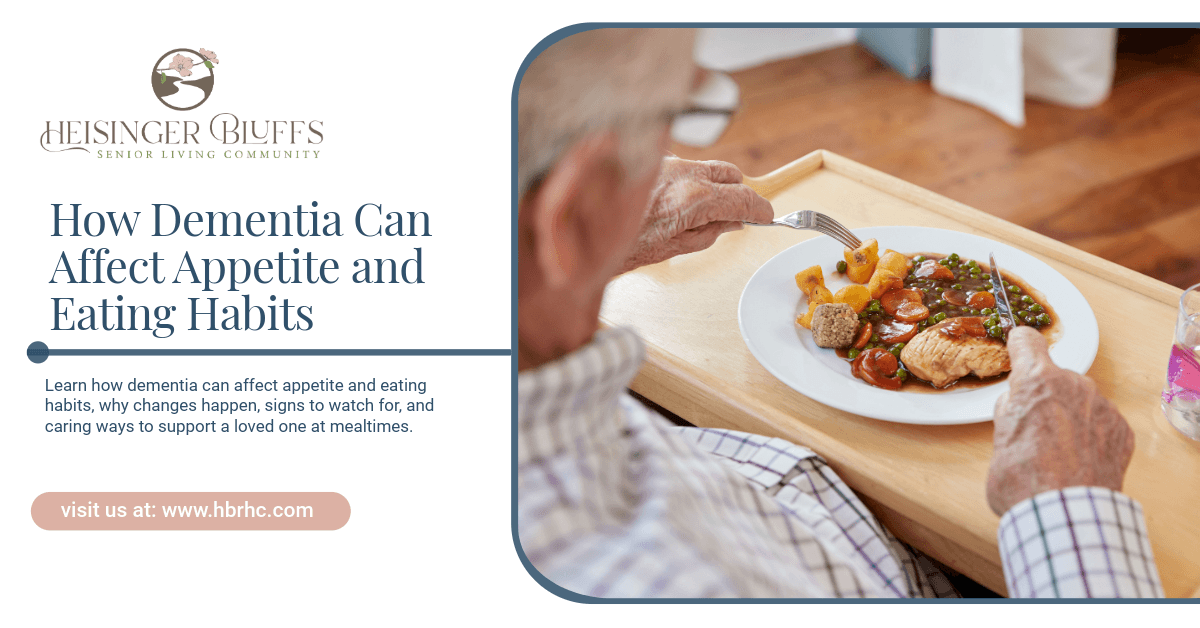
An elderly man with dementia having a meal at a table
Article October 15, 2026

How Dementia Can Affect Appetite and Eating Habits

By Heisinger Bluffs Editorial

Learn how dementia can affect appetite and eating habits, why changes happen, signs to watch for, and caring ways to support a loved one at mealtimes.

Read article
A senior happily carrying a box, moving into a senior living facility
Article October 14, 2026

How to Make a Senior Living Transition Feel Less Overwhelming

By Heisinger Bluffs Editorial

Make a senior living transition less overwhelming with practical steps for planning, downsizing, moving day, and settling in for seniors and families.

Read article

Join our newsletter

Sign up for our mailing list & get our monthly news and updates!

* indicates required