
What Age Does Dementia Start?

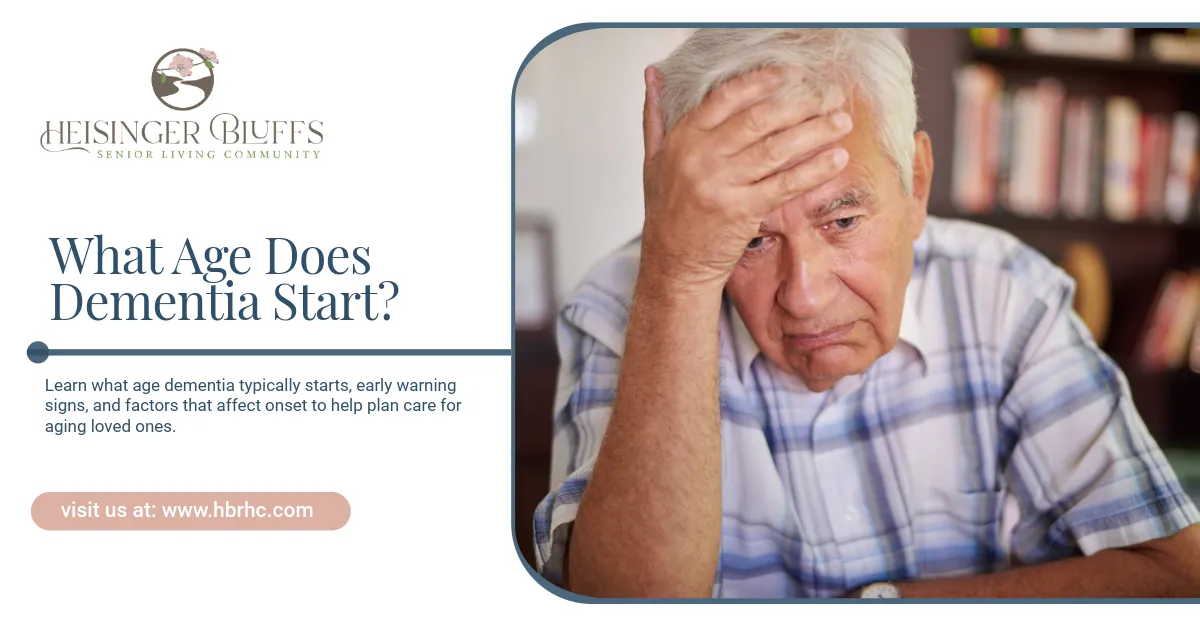
A senior with dementia is holding his head, looking concerned.

Dementia is a progressive condition affecting memory, thinking, and daily functioning. While it can occur at different ages, most cases begin after age 65. Early-onset dementia is less common and can start in individuals in their 40s or 50s, though this accounts for only about 5–10% of cases.


Several factors influence when dementia may start, including:


  • Genetics: Family history can increase risk.
  • Health conditions: Heart disease, diabetes, and high blood pressure may contribute.
  • Lifestyle: Diet, exercise, and mental stimulation can impact onset.


Early detection is key. Recognizing warning signs—such as memory loss, difficulty completing familiar tasks, confusion, or mood changes—can help families seek timely medical evaluation and care planning.


Senior living communities that specialize in memory care can provide structured support, safety, and social engagement for those living with dementia. Heisinger Bluffs offers compassionate memory care programs designed to help residents thrive while maintaining dignity and quality of life.


Frequently Asked Questions

  • Can dementia start before 60?

    Yes, early-onset dementia can appear in the 40s or 50s but is rare.

  • Are there ways to reduce the risk of dementia?

    Healthy lifestyle choices, mental stimulation, and managing chronic conditions may help.

  • How is dementia diagnosed?

    Doctors use cognitive tests, medical history, and sometimes brain imaging to diagnose dementia.


Sources:

  • https://www.alzheimers.org.uk/about-dementia/stages-and-symptoms/progression-stages-dementia
  • https://www.alz.org/alzheimers-dementia/what-is-dementia

Heisinger Bluffs logo
A nurse sitting next to an elderly woman on a couch
SCHEDULE A TOUR
Google rating average 4.65 rating out of 60 reviews

Want to know more?

Share This Article

You May Also Like To Read

A senior living community staff holding a clipboard, talking to an elderly woman.
By Heisinger Bluffs Editorial September 3, 2026
Discover how community living reduces everyday risks for older adults, from falls and isolation to delayed emergency response.
A senior and her daughter talking to a senior living community staff about future care options
By Heisinger Bluffs Editorial September 2, 2026
Explore the benefits of having future care options in one community, from smoother transitions to lasting peace of mind for families.
A family caregiver talking to seniors in a senior living community
By Heisinger Bluffs Editorial September 1, 2026
Learn how senior communities support family caregivers through respite care, education, and emotional support that eases caregiver burnout.
A senior and a rehab assistant are talking to each other
By Heisinger Bluffs Editorial August 31, 2026
Discover how seniors can prepare mentally for rehabilitation with practical tips on mindset, family support, and emotional readiness.
A senior holding on to a walker during recovery
August 27, 2026
Learn why mobility goals matter during senior recovery and how personalized rehabilitation goals can support strength, independence, and confidence.
Two seniors in a memory care facility playing board games
By Heisinger Bluffs Editorial August 26, 2026
Learn the differences between Memory Care vs. Skilled Nursing, including services, daily support, medical care, and how families can choose the right option.
More Posts