
Key Highlights
- Staying emotionally connected supports seniors’ mental and emotional well-being
- Technology makes long-distance communication easier than ever
- Consistent routines help seniors and families feel more secure
- Non-digital communication still plays an important role
- Senior living communities often support family connection efforts
When an older loved one moves into a senior living community, families often experience mixed emotions—relief, gratitude, and concern all at once. For adult children and relatives who live far away, one of the biggest worries is maintaining a close, meaningful connection despite the distance.
The good news is that staying connected in senior living is more achievable today than ever before. With thoughtful communication strategies, the right tools, and a bit of creativity, long-distance families can remain deeply involved in their loved one’s life. This guide offers practical, easy-to-follow communication tips to help families stay emotionally connected, informed, and reassured—no matter how many miles apart.
Why Staying Connected Matters for Seniors
Connection is a fundamental human need at every stage of life. For older adults, strong relationships can significantly impact emotional health, cognitive well-being, and overall quality of life.
Regular communication helps seniors:
- Feel valued and remembered
- Reduce feelings of loneliness or isolation
- Maintain a sense of identity and belonging
- Stay emotionally engaged and mentally stimulated
For families, staying connected offers peace of mind and reassurance that their loved one is supported and thriving.
Understanding the Challenges of Long-Distance Family Connections
Distance introduces unique obstacles that families may not have faced before. Busy schedules, time zone differences, and unfamiliar technology can make communication feel inconsistent or strained.
Common challenges include:
- Difficulty coordinating calls or visits
- Seniors feel hesitant about technology
- Family members are worried about missed updates
- Emotional guilt on both sides
Recognizing these challenges is the first step toward creating realistic and sustainable communication habits.
Creating a Consistent Communication Routine
Consistency is more important than frequency. Seniors often feel more secure when they know when to expect contact from loved ones.
Tips for Building a Routine
- Schedule regular call or video chat times
- Use shared calendars to avoid confusion
- Keep communication predictable but flexible
- Let your loved one help choose the schedule
Even short, routine check-ins can provide comfort and structure.
Making the Most of Technology
Technology plays a major role in staying connected across long distances. When introduced thoughtfully, it can empower seniors rather than overwhelm them.
Popular Communication Tools
- Video calling apps (FaceTime, Zoom)
- Messaging apps with voice or photo sharing
- Digital photo frames that update remotely
- Tablets designed for seniors
Start with one or two tools and build familiarity slowly. Patience and encouragement go a long way.
Helping Seniors Feel Comfortable With Technology
Some seniors may feel intimidated by new devices or fear making mistakes. Family support is key to building confidence.
Helpful strategies include:
- Providing step-by-step written instructions
- Practicing together during visits
- Choosing devices with simple interfaces
- Celebrating small successes
When technology feels manageable, it becomes a bridge rather than a barrier.
The Power of Voice and Video Communication
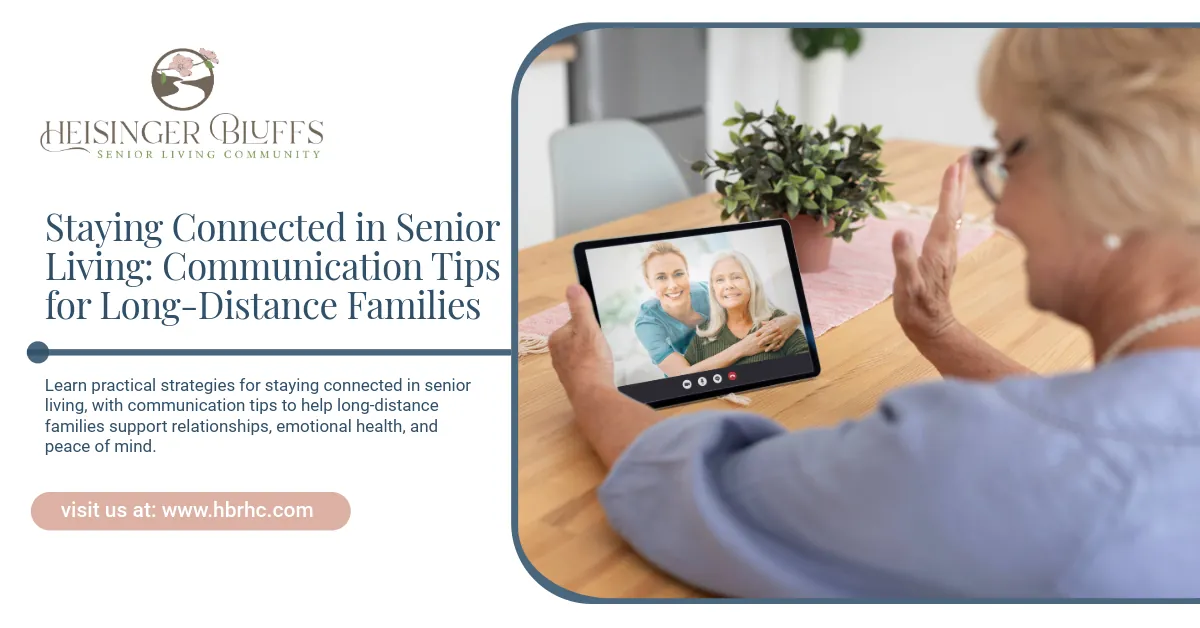
Hearing a familiar voice or seeing a loved one’s face can have a powerful emotional impact. Video calls, in particular, allow families to share expressions, surroundings, and everyday moments.
Benefits include:
- Stronger emotional connection
- Better understanding of mood and well-being
- More natural, engaging conversations
Even a few minutes of face-to-face interaction can brighten a senior’s day.
Don’t Overlook Traditional Communication
While digital tools are valuable, traditional communication methods remain meaningful—especially for seniors who prefer familiar formats.
Non-Digital Ways to Stay Connected
- Handwritten letters or greeting cards
- Printed photos with notes
- Care packages with favorite items
- Recorded voice messages
These tangible expressions of care can be cherished and revisited anytime.
Sharing Everyday Life Moments
Connection doesn’t have to revolve around major updates. Sharing small, everyday moments helps seniors feel involved in family life.
Ideas include:
- Sending photos of daily activities
- Sharing stories about work or hobbies
- Including seniors in family decisions
- Talking about memories and traditions
These moments reinforce a sense of inclusion and belonging.
Encouraging Two-Way Communication
Staying connected is most meaningful when communication goes both ways. Encourage seniors to share their thoughts, feelings, and experiences.
Ask open-ended questions like:
- “What was the best part of your day?”
- “What activities have you been enjoying?”
- “Is there anything you’d like us to do differently?”
Listening attentively shows respect and strengthens trust.
Coordinating Family Communication
When multiple family members are involved, coordination helps prevent confusion and ensures consistent support.
Helpful Coordination Strategies
- Create a shared family chat or email thread
- Designate a primary point of contact
- Share updates regularly
- Rotate communication responsibilities
This approach reduces pressure on any one person and keeps everyone informed.
Staying Involved From Afar
Physical distance doesn’t mean emotional distance. Families can remain involved in their loved one’s life in meaningful ways.
Ways to stay engaged include:
- Participating in virtual events or celebrations
- Sending encouragement before appointments or activities
- Helping plan visits or outings
- Supporting hobbies and interests
Involvement reinforces emotional closeness, even from afar.
How Senior Living Communities Support Communication
Many senior living communities actively encourage family involvement and provide tools to support communication.
Support may include:
- Wi-Fi and technology assistance
- Staff-facilitated updates or check-ins
- Organized family events
- Comfortable spaces for calls and visits
These resources help bridge the gap between residents and families.
Comparing Communication Options for Long-Distance Families
| Communication Method | Best For | Ease of Use | Emotional Impact |
|---|---|---|---|
| Phone Calls | Quick check-ins | Very easy | Moderate |
| Video Calls | Face-to-face connection | Moderate | High |
| Text or Messaging | Frequent updates | Easy | Moderate |
| Letters & Cards | Sentimental connection | Easy | High |
| Photo Sharing | Visual engagement | Easy | High |
Using a mix of methods creates a richer, more balanced connection.
Recognizing Emotional Changes From a Distance
Staying connected also helps families notice emotional or behavioral changes that may need attention.
Watch for signs such as:
- Withdrawal from conversations
- Changes in mood or energy
- Reduced interest in activities
- Expressions of loneliness
If concerns arise, gentle conversations and collaboration with community staff can help address issues early.
Making Visits More Meaningful
When visits do happen, quality matters more than quantity. Thoughtful planning can strengthen bonds and create lasting memories.
Visit tips include:
- Focusing on shared activities
- Allowing time for rest and conversation
- Respecting routines and preferences
- Following up after visits with calls or notes
Visits should feel supportive, not overwhelming.
Supporting Emotional Well-Being for Families
Long-distance caregiving can be emotionally taxing for families as well. Guilt, worry, and uncertainty are common.
Helpful reminders:
- You can still be a supportive presence from afar
- Consistent communication matters more than proximity
- Seeking support for yourself is important
Healthy communication benefits everyone involved.
Final Thoughts
Staying connected in senior living is about more than communication—it’s about maintaining relationships, trust, and emotional closeness across distance. With consistent routines, thoughtful use of technology, and meaningful engagement, families can remain deeply connected to their loved ones, no matter where they live.
At Heisinger Bluffs, residents and families are supported with a welcoming environment that values communication, connection, and peace of mind—helping loved ones stay close even when miles apart. Reach out today!
Frequently Asked Questions
How often should I communicate with a loved one in senior living?
Consistency matters more than frequency. Even brief, regular check-ins can provide comfort and reassurance.
What if my parent struggles with technology?
Start simple, offer patient guidance, and use alternative communication methods like phone calls or letters.
Can senior living communities help with family communication?
Many communities provide technology support, staff updates, and spaces for virtual or in-person connection.
How can I tell if my loved one feels lonely?
Changes in mood, withdrawal from conversations, or reduced enthusiasm may signal loneliness. Regular communication helps identify concerns early.
Is it possible to stay involved from far away?
Yes. Sharing daily life, participating in decisions, and maintaining routine communication all help families stay involved.
Sources:
- https://pmc.ncbi.nlm.nih.gov/articles/PMC6125010/
- https://www.cottagelitchfield.com/blog/how-to-prevent-social-isolation-in-senior-living
- https://my.clevelandclinic.org/health/diseases/22853-technophobia
- https://www.usatoday.com/story/news/nation/2024/02/28/tech-helps-long-distance-caregiving/72717796007/
- https://www.who.int/news-room/fact-sheets/detail/mental-health-of-older-adults