
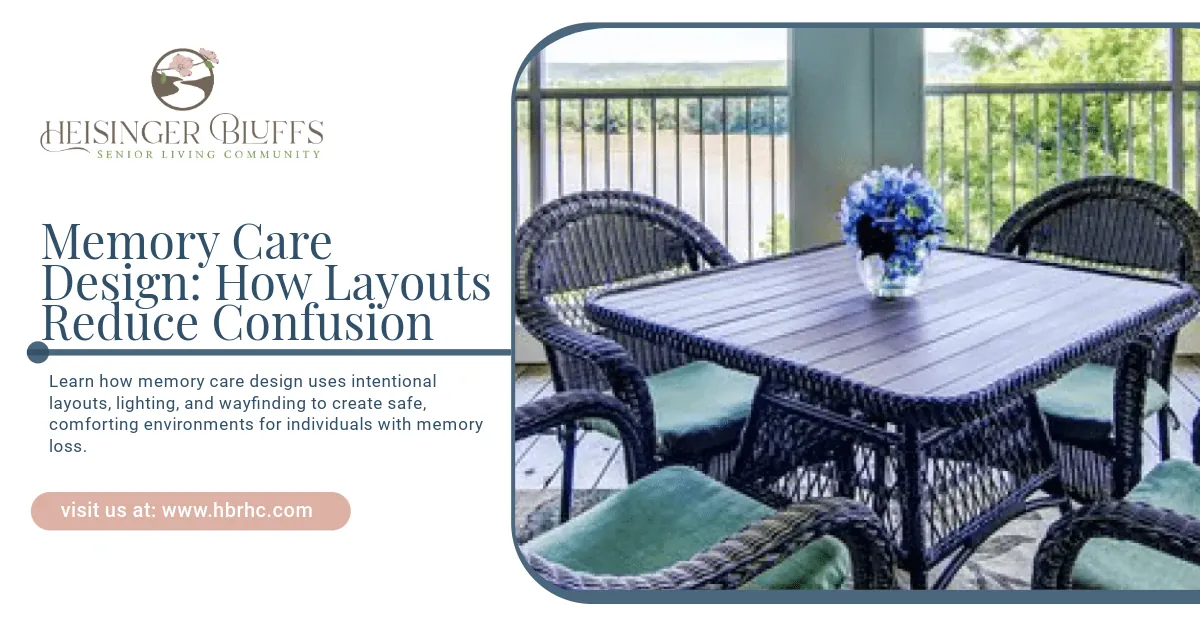
Memory care environments are thoughtfully designed to support individuals experiencing memory loss, often due to conditions like Alzheimer’s or dementia. These designs are not arbitrary; they are rooted in scientific research and aim to reduce confusion, enhance safety, and promote a sense of independence.
This blog explores the science behind memory care design, from layout planning to lighting techniques, offering insight into how these intentional choices create comforting and supportive spaces.
The Importance of Memory Care Design
For individuals with memory impairments, navigating everyday spaces can be challenging. Disorientation, confusion, and anxiety often result from unfamiliar or poorly organized environments. Effective memory care design addresses these challenges by:
- Providing clear visual cues.
- Minimizing overstimulation.
- Encouraging familiarity and routine.
Key Principles of Memory Care Design
1. Wayfinding and Navigation
Wayfinding refers to how people understand and navigate a space. In memory care, wayfinding is a critical element that helps residents find their way without assistance.
- Color Coding: Brightly colored doors or walls can designate specific areas, like bathrooms or activity rooms.
- Landmarks: Familiar objects or themed decor help residents identify locations and remember routes.
- Open Layouts: Avoiding dead ends and creating clear sightlines helps reduce confusion and frustration.
2. Lighting Strategies
Lighting plays a vital role in regulating circadian rhythms and minimizing confusion. Poor lighting can lead to increased agitation or falls.
- Natural Light: Large windows and skylights provide natural light, which supports mood regulation and sleep patterns.
- Layered Lighting: Combining ambient, task, and accent lighting ensures spaces are well-lit without being harsh.
- Night Lights: Soft, motion-activated lighting in hallways and bathrooms reduces nighttime disorientation.
3. Calming Color Schemes
Colors impact mood and cognition. In memory care design:
- Warm Neutrals: Soft tones create a soothing environment.
- Contrast: High-contrast colors distinguish walls, furniture, and floors, aiding navigation.
- Avoid Overstimulation: Busy patterns and overly bright colors can increase agitation.
4. Familiar and Home-Like Features
A homelike setting promotes comfort and reduces the stress of transitioning to a memory care community.
- Residential Furnishings: Using familiar furniture styles and decor helps residents feel at ease.
- Personalization: Allowing residents to decorate their rooms with personal items fosters a sense of identity and belonging.
5. Secure and Safe Spaces
Safety is paramount in memory care design. Features that protect residents while preserving their dignity include:
- Controlled Access: Secured doors prevent wandering into unsafe areas.
- Non-Slip Floors: Flooring materials reduce the risk of slips and falls.
- Safe Outdoor Spaces: Enclosed gardens or courtyards provide opportunities for fresh air and exercise in a secure environment.
How Science Drives Memory Care Design
Evidence-Based Practices
Memory care designs are based on research into how individuals with cognitive impairments interact with their environment. Studies show that:
- Familiar environments reduce anxiety.
- Simplified layouts improve independence.
- Consistent lighting minimizes “sundowning,” a phenomenon where confusion worsens in the evening.
Feedback from Residents and Families
Designers often collaborate with residents, families, and caregivers to identify features that enhance daily life and address specific challenges.
Innovative Features in Memory Care Communities
Sensory Rooms
Spaces equipped with calming sounds, lights, and textures can help soothe residents experiencing agitation or stress.
Circular Hallways
Designs with continuous loops prevent dead ends, reducing frustration and allowing residents to move freely.
Memory Boxes
Placing personalized memory boxes outside residents’ rooms can help them identify their space and spark meaningful memories.
Adaptive Technology
Smart lighting systems, monitoring sensors, and other technologies enhance safety and comfort while maintaining residents’ independence.
Enhancing Quality of Life Through Design
Social Interaction
Communal spaces like dining rooms and activity areas are designed to encourage socialization and reduce isolation.
Routine and Structure
Intentional layouts support predictable daily routines, which are comforting for individuals with memory loss.
Emotional Comfort
Familiar surroundings, personalized spaces, and calming elements work together to reduce anxiety and promote emotional well-being.
The Role of Families in Memory Care Design
Input and Collaboration
Families can provide valuable insights into their loved one’s preferences and routines, helping staff create personalized environments.
Encouraging Visits
Designs that include welcoming family spaces—like private dining areas or lounges—make it easier for families to stay connected.
Final Thoughts
At Heisinger Bluffs, we understand the importance of thoughtful memory care design. Our carefully planned spaces prioritize safety, comfort, and emotional well-being, ensuring that each resident feels at home while receiving the support they need. Contact us to learn more about our innovative approach to memory care.
Frequently Asked Questions
How does memory care design differ from general senior living design?
Memory care design incorporates specific features like wayfinding, calming color schemes, and secure layouts to address the unique needs of individuals with memory impairments.
Can residents personalize their spaces in memory care communities?
Yes, most memory care communities encourage residents to decorate their rooms with personal items, which helps create a sense of familiarity and comfort.
How does lighting affect individuals with memory loss?
Proper lighting regulates sleep patterns, reduces confusion, and minimizes the effects of “sundowning,” creating a safer and more calming environment.