

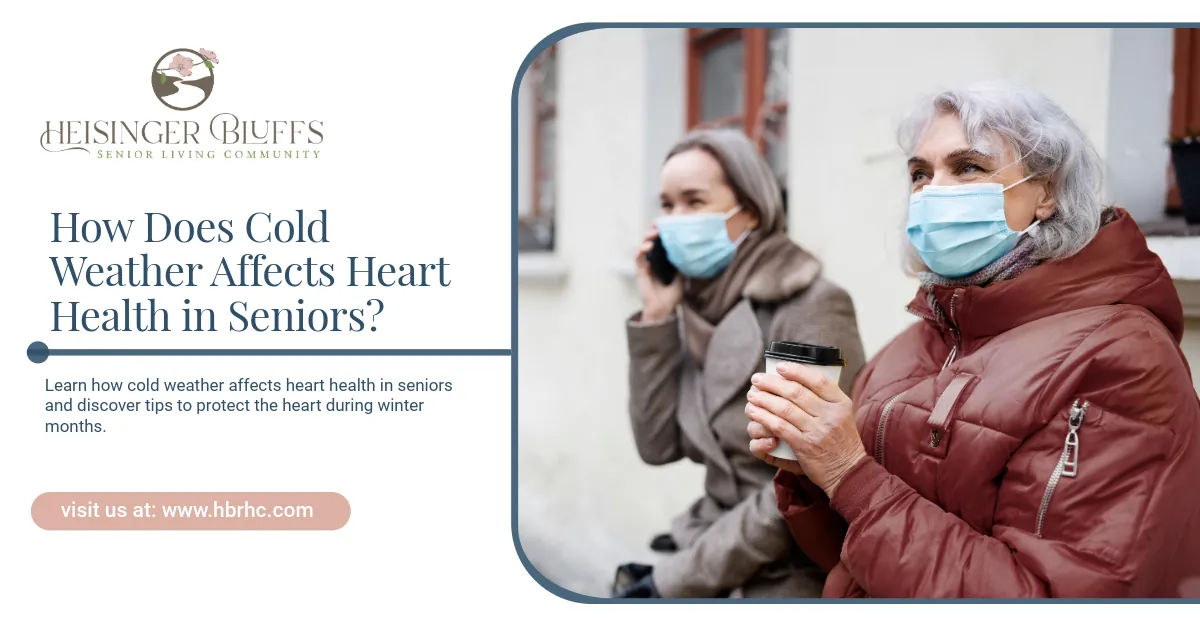
Cold weather can pose serious risks to seniors’ heart health. When temperatures drop, blood vessels constrict, increasing blood pressure and making the heart work harder. This raises the risk of heart attacks, strokes, and other cardiovascular events.
Tips to Protect Heart Health in Winter:
- Stay Warm: Wear layers, hats, and gloves to maintain body temperature.
- Stay Active: Gentle indoor exercises like stretching or walking help circulation.
- Monitor Health: Keep track of blood pressure and follow medical advice.
- Avoid Overexertion: Shoveling snow or rushing outside in extreme cold can strain the heart.
- Healthy Diet: Warm, nutrient-rich meals support heart function and immunity.
By taking simple precautions, seniors can reduce winter heart risks and maintain overall well-being. At Heisinger Bluffs, we prioritize heart-healthy practices and create a safe environment for seniors throughout the cold season.
Frequently Asked Questions
Why is cold weather more dangerous for seniors’ hearts?
Cold causes blood vessels to narrow, raising blood pressure and heart strain.
Can mild exercise in winter improve heart health?
Yes, gentle indoor activity boosts circulation without overexerting the heart.
What foods support heart health in winter?
Warm, nutrient-rich foods like soups, stews, vegetables, and whole grains help maintain heart function.
Sources:
- https://www.heart.org/en/news/2025/01/03/what-cold-weather-does-to-the-body-and-how-to-protect-yourself-this-winter
- https://pmc.ncbi.nlm.nih.gov/articles/PMC2763834/