
Key Highlights
- Pack comfortable clothing, personal care items, and properly fitting shoes.
- Bring important documents and information requested by the skilled nursing facility.
- Label personal belongings clearly to help prevent items from being misplaced.
- Ask the facility before bringing medications, medical equipment, or valuable items.
- Personal comfort items can help make an unfamiliar environment feel more welcoming.
- Avoid overpacking, since space for personal belongings may be limited.
- A thoughtful packing plan can make admission and the transition into skilled nursing smoother.
Moving into a skilled nursing facility can bring a lot of questions, especially when the admission happens quickly after a hospitalization, surgery, illness, or injury. Families may have only a short amount of time to prepare, making it easy to either forget important items or pack far more than necessary.
One of the most common questions families ask is: What should you bring to a skilled nursing facility?
The answer depends on the individual's needs, the reason for the stay, and the policies of the facility. However, there are several essential categories of belongings that most people should consider.
Packing thoughtfully can make a meaningful difference. Having comfortable clothing, familiar personal items, important information, and the right everyday essentials can help a new resident feel more prepared and comfortable from the beginning.
This guide explains what to bring to a skilled nursing facility, what you may want to leave at home, and how families can prepare for a smoother transition.
Start by Asking the Skilled Nursing Facility for Its Packing Guidelines
Before packing anything, contact the facility directly. Every skilled nursing facility may have different policies regarding:
- Clothing and laundry
- Prescription medications
- Personal medical equipment
- Electronics
- Furniture and decorations
- Food brought from home
- Valuable belongings
- Personal care products
This step is important because something that is appropriate at one facility may not be permitted or necessary at another.
For example, a family may assume they should pack all of a loved one's prescription medications. However, many skilled nursing facilities have specific procedures for reviewing, storing, and administering medications.
The Centers for Medicare & Medicaid Services explains that nursing facilities must meet federal requirements related to pharmaceutical services and medication administration.
Rather than making assumptions, ask the admissions or nursing team exactly what should be brought.
A simple phone call before admission can prevent unnecessary confusion later.
Essential Clothing to Bring
Comfortable, practical clothing is one of the most important things to pack for a skilled nursing stay. Choose clothing that is easy to put on, comfortable to wear, and appropriate for everyday activities.
Consider packing:
- Shirts and comfortable tops
- Pants or elastic-waist pants
- Sweaters or lightweight jackets
- Pajamas or comfortable sleepwear
- Underwear
- Socks
- Comfortable shoes
- Slippers with non-slip soles
- Seasonal outerwear
The exact amount of clothing needed depends on how long the person expects to stay and how laundry services are handled.
Avoid packing clothing that is difficult to put on or remove, especially if the individual is recovering from surgery, experiencing limited mobility, or participating in rehabilitation.
Choose Clothing That Supports Comfort and Mobility
Clothing should not only look appropriate. It should also support everyday movement.
For example, someone recovering from hip surgery may have difficulty bending. Someone receiving rehabilitation after a stroke may have weakness on one side of the body. Tight or complicated clothing can make dressing unnecessarily difficult.
Comfortable clothing can make it easier to:
- Participate in therapy
- Move safely
- Get dressed with less difficulty
- Stay comfortable throughout the day
Shoes deserve special attention. Supportive shoes with secure soles may be safer than loose slippers or footwear that can easily slide off.
The National Institute on Aging identifies falls as a significant concern for older adults and emphasizes the importance of addressing factors that may contribute to fall risk. Ask the rehabilitation or nursing team what type of footwear is appropriate for the person's specific needs.
Bring Personal Hygiene and Grooming Items
Familiar personal care products can help someone maintain their daily routine.
Depending on what the facility provides, useful items may include:
- Toothbrush and toothpaste
- Denture supplies
- Hairbrush or comb
- Shampoo and conditioner
- Soap or preferred body wash
- Deodorant
- Lotion
- Shaving supplies, when appropriate
- Eyeglasses
- Hearing aids and supplies
- Contact lens supplies
Before packing large quantities, ask what personal care items are already provided.
Some people have strong preferences for certain products. A familiar shampoo, lotion, or grooming routine may seem like a small detail, but familiar routines can help someone feel more comfortable in a new environment.
Do Not Forget Important Assistive Devices
If the individual regularly uses an assistive device, make sure it is discussed with the facility before admission. Examples may include:
- Eyeglasses
- Hearing aids
- Dentures
- Walkers
- Canes
- Wheelchairs
- Communication devices
These items can be essential to everyday independence and participation. The National Institute on Aging notes that assistive devices can help older adults maintain mobility and independence. Make sure personal equipment is clearly identified whenever possible.
Families should also inform staff about the person's usual routines. For example, if someone normally uses hearing aids every morning or needs glasses for reading, sharing that information can help support continuity in their daily routine.
Important Documents and Information to Have Available
Admissions teams will typically explain which documents are needed, but families should be prepared to provide important personal and medical information.
Depending on the circumstances, this may include:
- Government-issued identification
- Insurance information
- Medicare or Medicaid information, when applicable
- Emergency contact information
- Advance directives
- Power of attorney documents
- Guardianship information, if applicable
- Medical records requested by the facility
- A list of current medications
Not every document needs to be packed into the resident's room. Instead, ask the admissions team which documents should be submitted and which information should remain with the family.
It can also be helpful to keep copies of important paperwork in an organized folder.
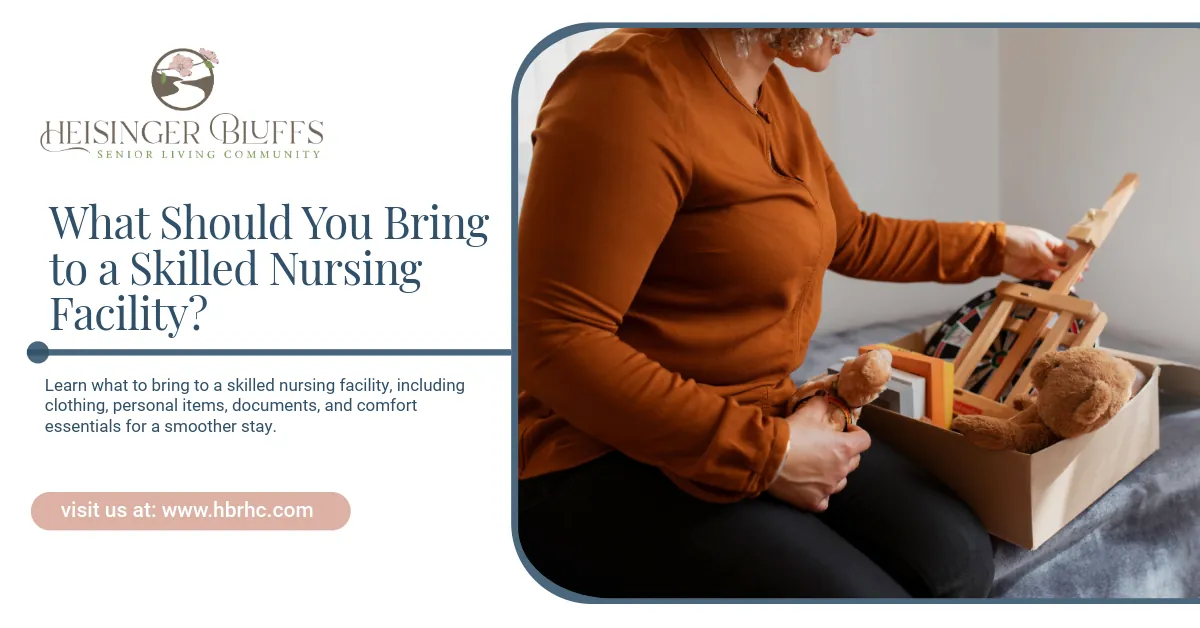
Personal Comfort Items Can Make a Big Difference
A skilled nursing stay can involve significant change. The person may be recovering from surgery, adjusting to a new medical condition, or temporarily living away from home. Familiar belongings can help make the new environment feel less unfamiliar.
Consider bringing a few meaningful comfort items, such as:
- Family photographs
- A favorite blanket
- A familiar pillow, if permitted
- Books or magazines
- Religious or spiritual items
- Small decorations
- A favorite hobby item
- Cards or letters from family
The key is moderation. A room can feel more personal without becoming cluttered.
The National Institute on Aging emphasizes that familiar surroundings and supportive environments can play an important role in helping older adults adapt to changes associated with aging and care needs.
An Example We Have Seen in Practice
We've seen families focus heavily on medical and practical packing lists while overlooking the emotional side of the transition.
In one common situation, a family carefully packed clothing, shoes, and personal care items for an older loved one entering skilled nursing after a hospital stay. Everything necessary was available, but the resident still felt unsettled during the first few days.
The family later brought a small photo album, a favorite blanket, and a few familiar books. Those items did not change the person's medical care, but they helped create a stronger sense of familiarity and routine.
The lesson is simple: practical items are essential, but comfort items matter too.
What to Bring for Rehabilitation and Therapy
Many skilled nursing residents receive rehabilitation services following hospitalization, surgery, illness, or injury.
Depending on the individual's care plan, it may be helpful to bring items that support participation in daily therapy.
Examples may include:
- Comfortable exercise-friendly clothing
- Secure shoes
- Eyeglasses
- Hearing aids
- Mobility devices used before admission
- Communication devices
For example, someone who normally wears glasses may have difficulty participating fully in therapy without them. Similarly, hearing aids can be important for understanding instructions from therapists and staff.
The American Physical Therapy Association emphasizes the role of physical therapy in helping individuals improve movement and function.
Bring the tools the person normally relies on, but always confirm with the facility before admission.
A Skilled Nursing Facility Packing Checklist
| Category | What to Consider Bringing |
|---|---|
| Clothing | Comfortable shirts, pants, sleepwear, underwear, socks |
| Footwear | Supportive shoes and approved non-slip slippers |
| Personal care | Toothbrush, toothpaste, hairbrush, preferred hygiene products |
| Vision and hearing | Eyeglasses, hearing aids, supplies, dentures |
| Insurance information | Insurance information, identification, requested documents |
| Comfort items | Photos, books, small personal decorations |
| Mobility | Walker, cane, wheelchair, or other approved equipment |
| Therapy needs | Comfortable clothing and items needed for participation |
Use this checklist as a starting point, not as a substitute for the facility's admission instructions.
Should You Bring Medications?
This is one of the most important questions families should ask before admission. Do not assume that you should simply pack every medication and bring it to the resident's room. Skilled nursing facilities have procedures for medication review, storage, administration, and documentation.
Bring a current list of medications and ask the admissions or nursing team how existing prescriptions should be handled.
The medication list should ideally include:
- Medication names
- Dosages
- Frequency
- Prescribing physicians
- Known allergies
This information can help the care team understand the person's current treatment. The U.S. Food and Drug Administration encourages patients and caregivers to maintain accurate medication information to support safe medication use. Always follow the facility's specific instructions regarding prescription and over-the-counter medications.
Label Personal Belongings
One of the simplest but most valuable steps families can take is labeling personal belongings.
Consider labeling:
- Clothing
- Shoes
- Eyeglass cases
- Hearing aid containers
- Mobility equipment
- Personal devices
Ask the facility whether it has a preferred labeling system. Clearly identifying belongings can make it easier to distinguish personal items from facility-owned equipment or items belonging to other residents.
Take an inventory before admission, particularly if the person is bringing valuable or medically important items.
A simple written list can help families keep track of what was brought into the facility.
What Should You Leave at Home?
Not everything needs to come with the resident. In fact, bringing too many belongings can create clutter and make the room harder to navigate safely.
Consider leaving these items at home unless the facility specifically approves them:
- Large amounts of cash
- Expensive jewelry
- Irreplaceable valuables
- Important original documents not required by the facility
- Excessive amounts of clothing
- Large furniture without approval
- Unsafe appliances
- Perishable food that has not been approved
Space may be limited, and the resident may only need a practical selection of belongings. The goal is to bring items that are useful, meaningful, and appropriate for the environment.
How Much Should You Pack?
Overpacking is a common mistake. Families often prepare as though their loved one is moving permanently into a large home, even when the skilled nursing stay is expected to be temporary. Instead, start with the essentials. You can always bring additional items later if needed. A practical approach is to pack enough clothing for several days while considering the facility's laundry schedule.
Ask:
- How often is laundry available?
- What personal care products are provided?
- How much storage space is available?
- Are certain items prohibited?
- Can family members bring additional belongings later?
This information can help you avoid packing items that will never be used.
Preparing for a Smoother Admission Day
Packing is only one part of preparing for admission. Try to organize belongings before arriving.
Separate items into categories such as:
- Clothing
- Personal care
- Important information
- Assistive devices
- Comfort items
If possible, keep a written checklist. Families should also communicate important information that may not be obvious from a suitcase.
For example:
- Preferred daily routines
- Communication preferences
- Dietary needs
- Important personal habits
- Hearing or vision needs
- Mobility concerns
- Family contact information
These details can help staff better understand the person beyond their medical diagnosis.
A Final Packing Strategy: Focus on What the Person Uses Every Day
When deciding whether something should be packed, ask one simple question: "Will this item help the person stay comfortable, safe, independent, or connected during their stay?"
If the answer is yes, it may be worth bringing. If the answer is no, it may be better to leave it at home. The most successful packing plans usually balance practicality and comfort. Bring the essentials needed for daily life, but also include a few familiar items that make the environment feel more personal.
Final Thoughts
Preparing for a skilled nursing stay can feel overwhelming, especially when a loved one is also recovering from a health event or hospitalization. Knowing what to bring to a skilled nursing facility can make admission more organized and help the transition feel more comfortable.
At Heisinger Bluffs, we help older adults and families in Jefferson City, Missouri, navigate skilled nursing care with compassionate support and guidance. Contact us today to learn more about our skilled nursing services, ask questions about admission, and find out how we can help your loved one feel safe, comfortable, and supported.
Frequently Asked Questions
How many clothes should I bring to a skilled nursing facility?
The amount depends on the expected length of stay and the facility's laundry schedule. Ask the facility how often laundry services are available before deciding how much clothing to pack.
Should I bring all prescription medications to the skilled nursing facility?
Always ask the facility first. Skilled nursing facilities typically have specific procedures for reviewing, storing, and administering medications. Bring an accurate medication list and follow the admission team's instructions.
Can I bring personal furniture to a skilled nursing facility?
Possibly, but you should always ask before bringing furniture. Room size, safety requirements, and facility policies may limit what can be brought into the room.
Should personal belongings be labeled?
Yes. Clearly labeling clothing, shoes, assistive devices, and other personal belongings can help make identification easier. Ask the facility whether it has a preferred labeling process.
What personal items can help someone feel more comfortable?
Small familiar items such as family photographs, books, a favorite blanket, approved decorations, or meaningful personal items can help make a new environment feel more welcoming.
Sources:
- https://www.cms.gov/medicare/health-safety-standards/conditions-coverage-participation/long-term-care
- https://www.nia.nih.gov/health/falls-and-falls-prevention
- https://www.nia.nih.gov/health/falls-and-falls-prevention/falls-and-fractures-older-adults-causes-and-prevention
- https://blog.stanbridge.edu/what-is-physical-therapy/
- https://www.apta.org/