
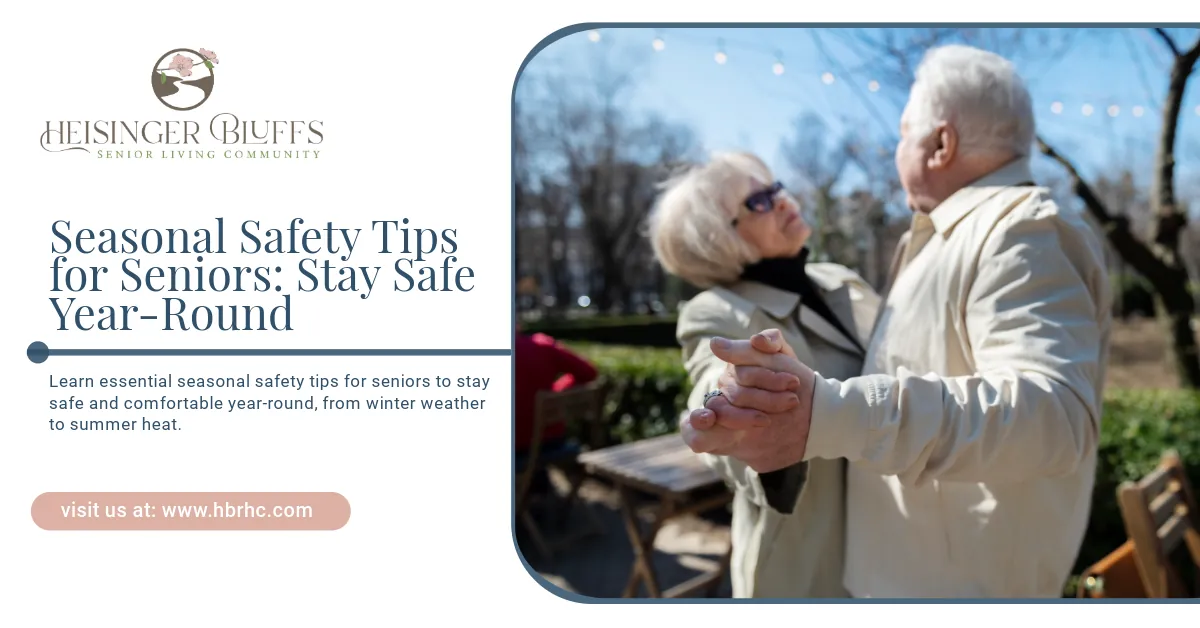
Seasonal Safety Tips for Seniors
As we age, our bodies and minds become more sensitive in various ways, requiring extra care and attention. Physical changes, health conditions, and shifting daily needs can impact overall well-being.
Each season brings unique challenges for seniors, from icy winter sidewalks to summer heatwaves. As older adults may be more vulnerable to extreme temperatures, slippery conditions, and seasonal illnesses, taking proactive steps to prepare for each season is essential.
This guide covers seasonal safety tips for seniors, helping them stay safe, comfortable, and healthy all year long.
Winter Safety Tips for Seniors
1. Prevent Slips and Falls
Winter conditions increase the risk of falls due to ice and snow. To reduce the chances of injury:
- Wear non-slip, insulated boots for better traction.
- Keep driveways and walkways clear of snow and ice.
- Use handrails and consider a cane or walker with an ice grip.
- Avoid going outside during icy conditions unless necessary.
2. Stay Warm and Avoid Hypothermia
Seniors are more susceptible to hypothermia due to decreased body temperature regulation. Stay safe by:
- Dressing in layers, including hats, gloves, and thermal socks.
- Keeping the home at a consistent warm temperature (at least 68°F).
- Using electric blankets safely, following manufacturer instructions.
- Drinking warm fluids and eating nutritious meals to maintain body heat.
3. Protect Against Seasonal Illnesses
Cold and flu season can be dangerous for seniors with weakened immune systems. Protect yourself by:
- Getting a flu shot and keeping up with other vaccinations.
- Washing hands frequently to prevent the spread of germs.
- Staying hydrated and eating a balanced diet.
- Avoiding close contact with individuals who are sick.
Spring Safety Tips for Seniors
1. Manage Seasonal Allergies
Springtime pollen can trigger allergies, making breathing difficult. Minimize exposure by:
- Keeping windows closed during high pollen days.
- Changing air filters regularly to reduce allergens.
- Washing hands and changing clothes after spending time outside.
- Taking prescribed allergy medications as directed.
2. Be Prepared for Unpredictable Weather
Spring brings storms, heavy rain, and fluctuating temperatures. Stay safe by:
- Carrying a light raincoat or umbrella when going out.
- Wearing sturdy, waterproof shoes to prevent slipping.
- Having an emergency kit with flashlights, batteries, and non-perishable food in case of power outages.
- Checking weather updates before heading outdoors.
3. Stay Active While Avoiding Hazards
Spring is a great time to enjoy outdoor activities, but safety is key:
- Walk on dry, clear paths to avoid mud and slippery surfaces.
- Stay hydrated during mild but warmer days.
- Wear sunscreen and sunglasses as UV exposure increases.
Summer Safety Tips for Seniors
1. Prevent Heat-Related Illnesses
Seniors are at higher risk for heat exhaustion and dehydration. Protect yourself by:
- Drinking plenty of water throughout the day.
- Avoiding outdoor activities during peak sun hours (10 AM - 4 PM).
- Wearing light, breathable clothing and a hat.
- Using fans or air conditioning to stay cool indoors.
2. Protect Against Sunburn and Skin Damage
Older adults have thinner skin, making sun protection essential:
- Apply SPF 30+ sunscreen when going outside.
- Wear long-sleeved, loose-fitting clothing for added protection.
- Avoid direct sun exposure by staying in shaded areas.
3. Watch for Signs of Heat Exhaustion
Symptoms like dizziness, nausea, and excessive sweating can indicate heat-related illnesses. If any of these occur:
- Move to a cool place immediately.
- Drink water and rest.
- Seek medical attention if symptoms worsen.
Autumn Safety Tips for Seniors
1. Watch for Fall Hazards
Falling leaves and early frost can create hazards. Stay safe by:
- Wearing slip-resistant shoes with good traction.
- Keeping walkways clear of wet leaves.
- Using proper lighting indoors as days get shorter.
2. Get a Flu Shot and Monitor Health
Cold weather and seasonal changes can affect the immune system. Be proactive by:
- Getting an annual flu vaccine.
- Staying active to maintain mobility and circulation.
- Eating a nutrient-rich diet to boost immunity.
3. Prepare for Cooler Temperatures
Autumn temperatures can fluctuate. Be prepared by:
- Dressing in layers to stay warm.
- Keeping emergency supplies on hand for potential storms.
- Ensuring heating systems are serviced and working properly.
Year-Round Safety Tips for Seniors
While each season brings unique challenges, some safety practices apply throughout the year:
- Have an emergency contact list: Keep numbers of family, friends, and medical providers easily accessible.
- Stay connected: Check in with loved ones regularly to ensure well-being.
- Monitor medications: Keep track of prescriptions, as some medications may cause sensitivity to extreme temperatures.
- Maintain a balanced diet: Proper nutrition supports immune function and overall health.
- Listen to your body: If you feel unwell, don’t hesitate to seek medical assistance.
Conclusion
Preparing for seasonal challenges is essential for senior safety and well-being. By taking proactive steps to address weather-related risks, seniors can enjoy each season with greater comfort and confidence.
At Heisinger Bluffs, we prioritize the safety and well-being of our residents year-round. Our community offers a safe and supportive environment tailored to seasonal needs, ensuring comfort and peace of mind. Contact us today to learn more about our senior living options and how we help residents stay safe in every season.
Frequently Asked Questions
How can seniors stay safe during extreme temperatures?
Seniors should stay hydrated, wear appropriate clothing, and use heating or cooling systems as needed. Avoiding outdoor activities during peak temperature hours also helps.
What are the best ways to prevent falls in icy conditions?
Wearing non-slip shoes, using mobility aids, and ensuring sidewalks are clear of ice and snow can significantly reduce fall risks.
How can family members help seniors prepare for seasonal changes?
Family members can assist by checking heating and cooling systems, ensuring access to weather-appropriate clothing, and creating emergency plans for power outages or severe weather events.
Sources:
- https://www.cdc.gov/heat-health/risk-factors/heat-and-older-adults-aged-65.html
- https://www.sfmic.com/safety/avoid-winter-slips-and-falls/
- https://www.uclahealth.org/news/article/older-adults-more-susceptible-to-hypothermia
- https://medlineplus.gov/ency/article/004008.htm
- https://www.medicalnewstoday.com/articles/allergies-getting-worse-with-age
- https://www.cdc.gov/flu/highrisk/65over.htm