

How Long Does Short Term Rehabilitation Usually Last?

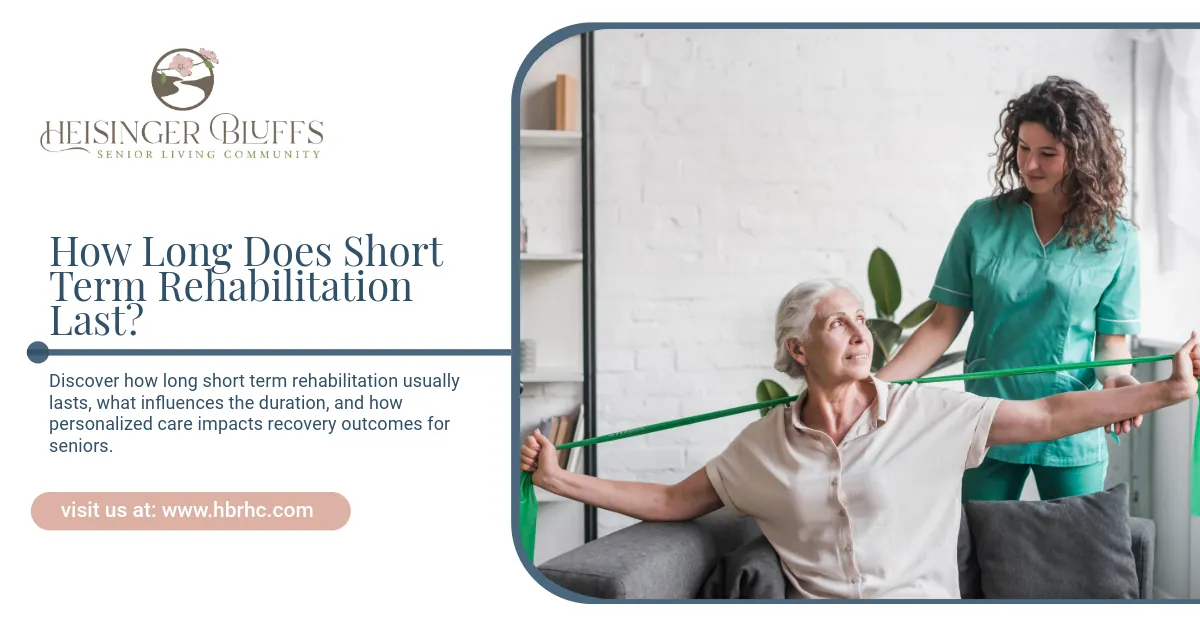
A senior rehabilitation staff member is assisting a resident

Short term rehabilitation typically lasts between 1 to 6 weeks, depending on the individual's condition and recovery goals. This type of care is often used after surgery, illness, or injury to help seniors regain strength, mobility, and independence.

The exact length varies based on several factors:

  • Type and severity of the condition
  • Personal progress and therapy response
  • Doctor’s recommendations and insurance coverage

Daily physical, occupational, or speech therapy sessions are tailored to each person’s needs. Progress is evaluated frequently to determine when the individual is ready to return home or transition to another care level.

At Heisinger Bluffs, our expert team works closely with each resident and their care providers to ensure a safe, timely, and effective recovery.

Frequently Asked Questions

Can short term rehab be extended if needed?

Yes, length of stay can be adjusted based on recovery progress.the 

Is therapy provided every day?

Most programs offer therapy 5–7 days a week, depending on the care plan.

What happens after short term rehab ends?

Residents may return home, begin outpatient therapy, or transition to long-term care if necessary.


Sources:

  1. https://www.uhhospitals.org/health-information/health-and-wellness-library/article/adult-diseases-and-conditions-v1/occupational-therapy-for-older-adults
  2. https://www.mdchealthcare.org/therapeutic-services/speech-therapy/

Share This Article

Facebook X / Twitter LinkedIn Email

More Posts

A caregiver talking to an elderly man sitting in a wheelchair
Article October 22, 2026

Why Continuity of Care Matters When Seniors Change Providers

By Heisinger Bluffs Editorial

Continuity of care matters when seniors change providers. Learn how to share records, keep routines, and protect health through every transition.

Read article
A woman talking to an elderly woman sitting in wheelchair
Article October 21, 2026

How Families Can Stay Involved in Care Without Overstepping

By Heisinger Bluffs Editorial

Learn how families can stay involved in care without overstepping, with practical tips on communication, boundaries, and supporting your loved one.

Read article
A senior sitting on a couch reading a book, while a girl stands behind her
Article October 20, 2026

What to Include in a Senior's Personal Care Preferences

By Heisinger Bluffs Editorial

Learn what to include in a senior's personal care preferences, from daily routines to dignity and privacy, so caregivers honor what matters most.

Read article
An adult sitting at a table, organizing her aging parent's medical records
Article October 19, 2026

How to Organize Medical Records for an Aging Parent

By Heisinger Bluffs Editorial

Learn how to organize medical records for an aging parent with a simple binder system, checklists, and digital tips that keep care organized and stress low.

Read article
An elderly man with dementia having a meal at a table
Article October 15, 2026

How Dementia Can Affect Appetite and Eating Habits

By Heisinger Bluffs Editorial

Learn how dementia can affect appetite and eating habits, why changes happen, signs to watch for, and caring ways to support a loved one at mealtimes.

Read article
A senior happily carrying a box, moving into a senior living facility
Article October 14, 2026

How to Make a Senior Living Transition Feel Less Overwhelming

By Heisinger Bluffs Editorial

Make a senior living transition less overwhelming with practical steps for planning, downsizing, moving day, and settling in for seniors and families.

Read article

Join our newsletter

Sign up for our mailing list & get our monthly news and updates!

* indicates required