
Aromatherapy and Memory Care: Enhancing Comfort and Calm
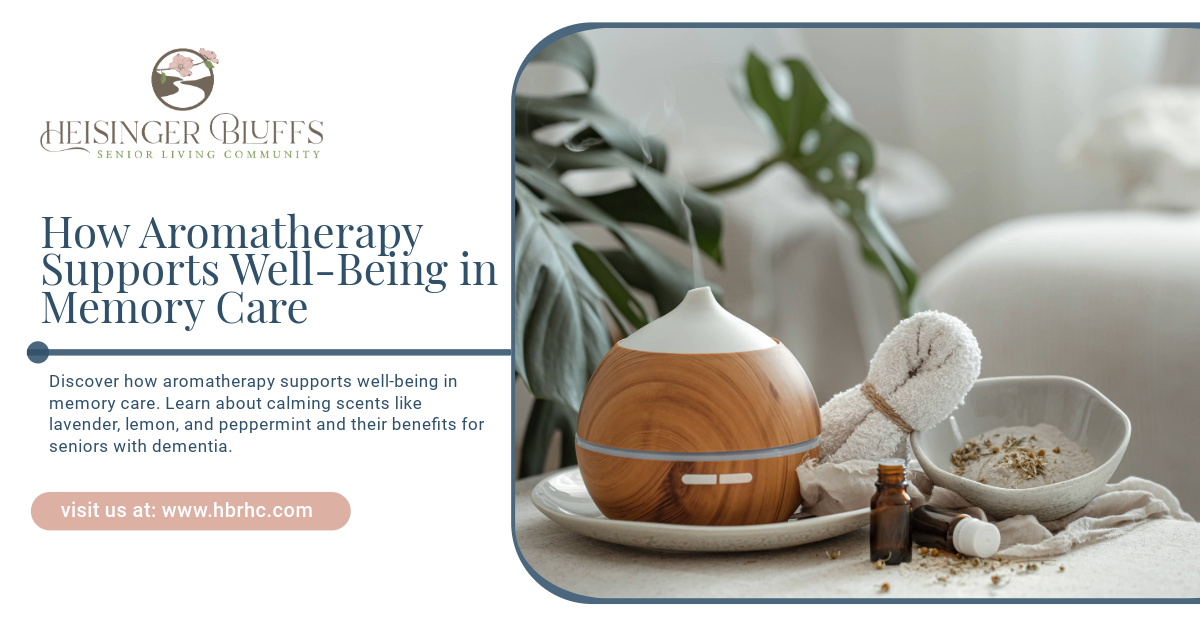
Aromatherapy, the therapeutic use of essential oils, has gained significant recognition as a complementary approach to promoting well-being, especially in memory care settings. For seniors experiencing cognitive challenges such as Alzheimer’s or dementia, aromatherapy offers a natural, non-invasive way to improve mood, reduce agitation, and enhance overall quality of life.
In this blog, we’ll explore how specific scents like lavender, lemon, and peppermint can positively impact well-being and why aromatherapy is a valuable tool in memory care.
What Is Aromatherapy?
Aromatherapy uses plant-derived essential oils to influence emotional, physical, and mental health. Essential oils are either inhaled or applied to the skin after being diluted with a carrier oil. Their therapeutic properties are believed to stimulate parts of the brain associated with mood regulation and memory, making them especially beneficial in memory care.
The Science Behind Aromatherapy in Memory Care
For individuals with memory impairments, certain parts of the brain responsible for memory and emotion are affected. Aromatherapy interacts with the limbic system, the brain’s emotional center, to stimulate positive feelings and reduce stress.
- Olfactory Connection: The sense of smell is closely tied to memory and emotion. Certain scents can evoke pleasant memories or feelings of calmness.
- Neurochemical Impact: Inhaling essential oils can influence the production of neurotransmitters like serotonin and dopamine, which regulate mood.
Studies have shown that incorporating aromatherapy in memory care can improve sleep quality, reduce agitation, and promote relaxation in seniors.
Key Scents Used in Memory Care and Their Benefits
1. Lavender: The Calming Companion
Lavender is one of the most popular essential oils used in memory care due to its calming and soothing properties.
Benefits:
- Reduces anxiety and stress.
- Improves sleep by calming the nervous system.
- Lowers agitation, which is common in seniors with dementia.
How It’s Used
- Diffused in the room during the evening to promote relaxation.
- Added to warm baths or used in pillow sprays for a restful night’s sleep.
2. Lemon: The Uplifting Energizer
Lemon essential oil is known for its refreshing and uplifting effects, making it ideal for boosting mood and focus.
Benefits:
- Enhances alertness and cognitive function.
- Reduces feelings of confusion.
- Creates a cheerful and inviting environment.
How It’s Used
- Mixed into diffusers to freshen up common areas.
- Incorporated into cleaning routines to bring an energizing aroma to living spaces.
3. Peppermint: The Stimulating Supporter
Peppermint essential oil is known for its invigorating properties, which can help with mental clarity and energy.
Benefits:
- Increases focus and mental alertness.
- Eases headaches and tension.
- Provides a refreshing scent that helps with fatigue.
How It’s Used
- Used in personal inhalers or diffused during activities requiring focus.
- Combined with a carrier oil for a gentle foot or hand massage.
Additional Scents That Support Memory Care
While lavender, lemon, and peppermint are commonly used, other essential oils also offer unique benefits in memory care:
- Rosemary: Known for improving memory and concentration.
- Bergamot: Helps reduce anxiety and uplift mood.
- Frankincense: Encourages relaxation and spiritual well-being.
Incorporating Aromatherapy into Memory Care Routines
Aromatherapy can be seamlessly integrated into daily routines in a memory care setting:
- Diffusion: Using essential oil diffusers in common areas or bedrooms creates a calming atmosphere.
- Topical Application: Oils can be diluted with carrier oils for gentle massages, enhancing both relaxation and physical connection.
- Sensory Activities: Incorporating scents into sensory games or activities can help stimulate memory and focus.
- Bathing and Skincare: Adding essential oils to bathwater or lotions can create a spa-like experience, promoting relaxation and self-care.
Benefits of Aromatherapy in Memory Care
1. Reduces Agitation and Anxiety
Many seniors with dementia experience agitation or restlessness. Scents like lavender and bergamot have been shown to have calming effects, helping seniors feel more at ease.
2. Promotes Better Sleep
Sleep disturbances are common in memory care residents. Lavender and chamomile oils can help establish a bedtime routine that promotes restful sleep.
3. Stimulates Positive Memories
Certain scents can evoke memories from earlier stages of life, bringing comfort and joy to seniors. For example, the scent of lemon or rosemary may remind them of cooking or gardening.
4. Encourages Engagement
Aromatherapy sessions, such as creating scented sachets or participating in massage therapy, encourage interaction and sensory stimulation.
5. Supports Emotional Well-Being
Aromatherapy’s impact on the limbic system can improve mood and reduce feelings of sadness or frustration.
Safety Considerations in Aromatherapy for Seniors
While aromatherapy is generally safe, it’s essential to take precautions, especially when working with seniors who may have sensitivities or medical conditions:
- Dilution: Essential oils should always be diluted to avoid skin irritation.
- Allergies: Check for any allergies or adverse reactions to specific scents.
- Personalization: Some seniors may respond differently to certain oils. Experiment with various scents to find the most effective ones.
- Consultation: Always consult with medical professionals before introducing aromatherapy, especially if the senior is on medication.
Closing Thoughts
At Heisinger Bluffs, we are dedicated to creating an enriching environment for our memory care residents, where therapies like aromatherapy enhance their well-being. Experience how we combine innovative care with a compassionate touch by scheduling a visit today.
Frequently Asked Questions
How does aromatherapy benefit seniors with dementia?
Aromatherapy helps seniors with dementia by reducing anxiety, improving sleep quality, and stimulating positive memories. Essential oils like lavender and lemon promote relaxation and mental clarity, offering a non-invasive way to enhance well-being.
Are there any risks to using aromatherapy in memory care?
While generally safe, aromatherapy should be used cautiously. Essential oils should be properly diluted, and seniors should be monitored for potential allergies or sensitivities. Always consult with healthcare professionals before starting aromatherapy.
What are the best ways to use aromatherapy in memory care?
The best ways to use aromatherapy in memory care include diffusing essential oils, adding them to massage routines, incorporating them into sensory activities, and using them in bathing or skincare routines. Personalization is key to maximizing the benefits.


Share This Article
You May Also Like To Read